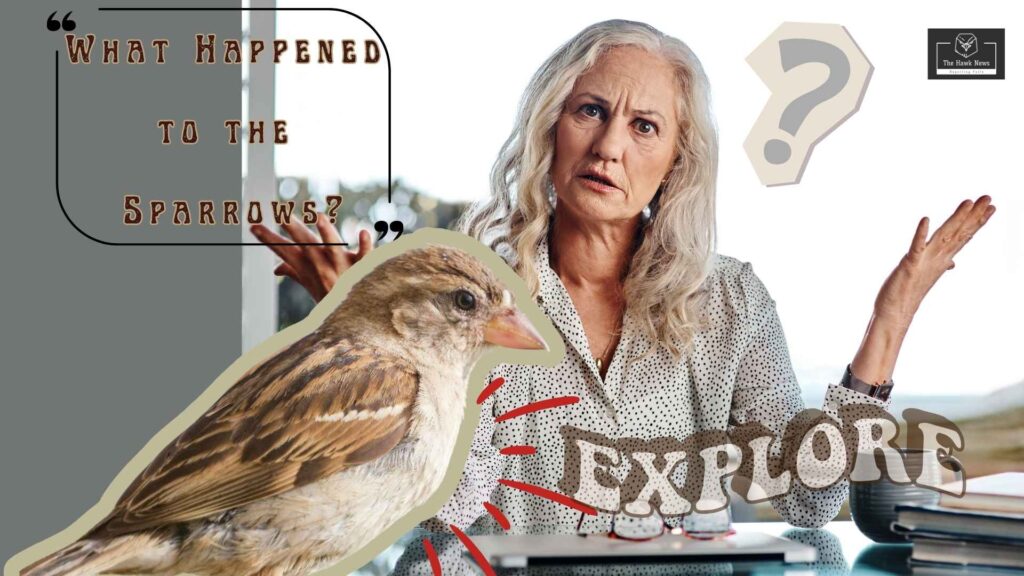
A Morning That No Longer Sounds the Same
There was a time when mornings didn’t need alarms.
They began with the soft, familiar chirping of sparrows — a sound so constant, so woven into everyday life, that it was almost taken for granted.
They sat on windowsills.
Nested in rooftops.
Hopped across courtyards and tea shops.
They lived with us.
And then, quietly… they disappeared.
Remembering the Familiar Stranger
The House Sparrow was once among the most common birds in India.
It didn’t demand attention.
It didn’t symbolize grandeur.
But it represented something deeper:
A simple, shared coexistence between humans and nature
Today, that coexistence feels distant — especially in our cities.
What Is World Sparrow Day?
Observed every year on March 20, World Sparrow Day was initiated to:
- Raise awareness about the declining sparrow population
- Encourage conservation efforts
- Remind us of the fragile balance between urban life and biodiversity
But beyond awareness, it carries a more urgent message:
What we lose quietly often matters the most
The Disappearance We Didn’t Notice
Unlike environmental crises that arrive with urgency, the decline of sparrows was gradual.
Almost invisible.
Until one day, the silence became noticeable.
Experts and observers point to multiple reasons:
- Urbanization — glass and concrete replacing nesting spaces
- Pesticides — reducing insects that sparrows feed on
- Electromagnetic radiation — still debated, but widely suspected
- Modern architecture — sealing the gaps where sparrows once lived
- Changing lifestyles — fewer open spaces, fewer human-nature interactions
Individually, these may seem like small shifts.
Together, they reshape ecosystems.
Cities That Forgot Their Smallest Residents
Modern cities are designed for:
- Efficiency
- Density
- Expansion
But rarely for coexistence.
Balconies have become sealed spaces.
Ventilators have disappeared.
Open courtyards have given way to parking lots.
In building cities for ourselves, we may have unintentionally:
Designed sparrows out of existence
A Reflection of Something Larger
The disappearance of sparrows is not just about one species.
It is a signal.
A quiet indicator of how rapidly human life has moved away from nature.
We now live in environments where:
- Sounds are digital
- Interactions are virtual
- Nature is often ornamental, not essential
And in that transition, something fundamental is changing.
When Did We Stop Noticing?
There was no single moment when sparrows vanished.
No headline.
No breaking news.
Just a slow fading away.
Which raises an uncomfortable question:
Did the sparrows disappear — or did we stop paying attention?
Because loss is not always about absence.
Sometimes, it is about disconnection.
Can They Come Back?
The answer is not entirely pessimistic.
Across cities and towns, small efforts are making a difference:
- Installing nest boxes in homes and balconies
- Placing water bowls during summer
- Growing native plants that attract insects
- Reducing chemical pesticide use
- Creating awareness among communities
These are not large-scale policies.
They are small acts of restoration.
And sometimes, that is enough to begin change.
The Larger Question We Must Ask
The story of the sparrow forces us to confront a deeper reality:
What kind of world are we building?
One that prioritizes:
- Speed over sustainability
- Growth over balance
- Convenience over coexistence
Or one that remembers:
- Even the smallest lives matter
The Final Word
The sparrow did not leave us suddenly.
It faded — as we moved further away from the world it needed to survive.
World Sparrow Day is not just about saving a bird.
It is about:
- Relearning balance
- Rediscovering awareness
- Rebuilding a connection we once had without effort
Because if a bird that lived alongside us for centuries can no longer find space in our world…
The question is no longer about the sparrow.
It is about us.