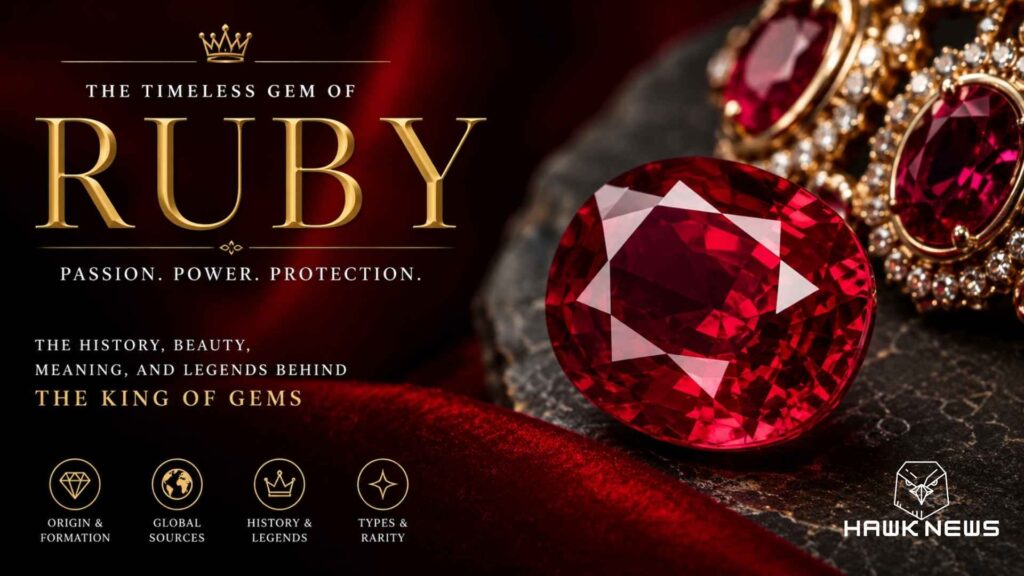
Some gemstones sparkle, and then some gemstones seem to glow from within. Ruby belongs firmly in the latter category. With its rich crimson hues and centuries of mythology wrapped around it, the ruby has long been more than a piece of jewelry. It has been a symbol of power, passion, protection, and prestige across civilizations.
From ancient royal courts to modern engagement rings, the ruby continues to hold a special place in human culture. Its fiery red appearance has inspired stories, traditions, and beliefs that stretch across continents and generations, making it one of the most celebrated gemstones in history.
A Stone Born from Fire and Time
Ruby is the red variety of corundum, a mineral known for its exceptional hardness. In fact, it ranks 9 on the Mohs hardness scale, second only to diamond. This remarkable durability has helped rubies survive the passage of centuries, often appearing in heirlooms that have been handed down through families for generations.
What gives ruby its famous color is the presence of chromium. Even tiny amounts of this element can transform an otherwise colorless crystal into a gemstone that radiates shades of scarlet, crimson, and deep blood red. The result is a stone that appears almost alive when it catches the light.
Gemologists often describe the finest rubies as possessing a vivid and saturated red that seems to glow from the inside. This visual intensity is one of the reasons ruby remains among the most sought-after gemstones in the world.
Why Red Has Always Meant Power
Human beings have long associated the color red with life itself. It is the color of blood, of the heart, of fire, and of passion. It is perhaps no surprise, then, that ruby became a symbol of strength and vitality in many ancient cultures.
Across Asia, warriors carried rubies as talismans, believing the stones could grant courage and protection in battle. In Europe, monarchs and nobles adorned crowns, robes, and ceremonial jewelry with rubies to symbolize authority and divine favor.
Ancient Indian texts referred to ruby as the “King of Precious Stones,” a title that reflected the gemstone’s unmatched status among jewels. For many societies, possessing a ruby was not merely a sign of wealth; it was a statement of power.
As the saying goes, “A ruby does not borrow its fire from the sun—it carries its own.” That belief has echoed through centuries of admiration for the stone.
The Quest for the Perfect Red
Not all rubies are created equal. The value of a ruby depends heavily on the quality and intensity of its color.
Among gemstone enthusiasts, the most coveted shade is often called “Pigeon Blood Red.” This term refers to a vivid, pure red with a subtle bluish undertone, creating a color that appears both rich and luminous. Such stones are exceptionally rare and command extraordinary prices at auctions.
Yet beauty in rubies is not limited to a single shade. Nature produces an astonishing range of reds, from delicate pinkish tones to deep crimson hues that seem almost velvety. Each variation carries its own appeal, and collectors often appreciate the unique character of individual stones.
In a world increasingly dominated by manufactured perfection, the subtle differences found in natural rubies remind us that rarity often lies in individuality.
Treasures Hidden Beneath the Earth
Rubies are found in several regions around the world, each producing stones with distinct characteristics.
For centuries, Myanmar, formerly known as Burma, has been celebrated for yielding some of the finest rubies ever discovered. The legendary Mogok Valley, in particular, has become synonymous with exceptional gemstones.
Other notable sources include Sri Lanka, Thailand, Mozambique, Madagascar, Tanzania, and Vietnam. In recent decades, African ruby deposits have gained significant attention for producing stones of remarkable quality and size.
The journey of a ruby from deep within the earth to a jeweler’s showcase can take millions of years. Every stone represents a remarkable geological story that began long before human civilization emerged.
The Mystery of the Star Ruby
Among the most fascinating varieties of ruby is the star ruby.
Unlike traditional faceted gemstones, star rubies are polished into smooth, rounded shapes known as cabochons. Within these stones are microscopic inclusions that interact with light to create a luminous six-rayed star on the surface.
As the stone moves, the star appears to glide across it, creating an almost magical effect.
Ancient cultures often viewed star rubies as sacred objects. The moving star was believed to symbolize guidance, protection, and destiny. Even today, star rubies remain among the most intriguing gemstones for collectors and jewelry enthusiasts alike.
More Than Jewelry
Throughout history, ruby has been associated with a range of symbolic meanings. It has represented love, courage, vitality, prosperity, leadership, and protection. While these associations are rooted in cultural traditions rather than scientific evidence, they continue to influence how people view and wear the gemstone.
Ruby is also the birthstone for July, making it a popular choice for birthday gifts. It is frequently given to celebrate milestone wedding anniversaries, particularly the fifteenth and fortieth years of marriage, symbolizing enduring affection and commitment.
Something is fitting about a gemstone associated with both passion and permanence. Ruby manages to embody intensity while standing the test of time.
When Nature Creates Something Rare
One of the reasons Ruby remains so valuable is its rarity. High-quality natural rubies are exceptionally difficult to find, particularly in larger sizes.
Gem experts often note that fine rubies can command prices per carat that rival or even exceed those of many diamonds. The combination of vibrant color, durability, and scarcity has ensured ruby’s place among the world’s most treasured gemstones.
Some of the most famous rubies ever discovered have achieved legendary status, appearing in museum collections, royal treasures, and record-breaking auctions.
Their stories continue to fuel fascination with a gemstone that has never truly gone out of style.
A Stone That Continues to Shine
Fashion trends come and go. Jewelry styles evolve. Yet ruby remains remarkably relevant in every era.
Perhaps its enduring appeal lies in its ability to symbolize something deeply human. Its fiery red glow speaks of passion, courage, love, and resilience—qualities that transcend cultures and generations.
As gemologist George Frederick Kunz once observed, “The ruby has a deeper red than blood and a brighter fire than flame.”
Whether admired in a museum display, passed down as a family heirloom, or worn as a modern fashion statement, the ruby continues to captivate the imagination. It is not merely a gemstone. It is a reminder that some treasures endure because they carry stories as rich as their color.