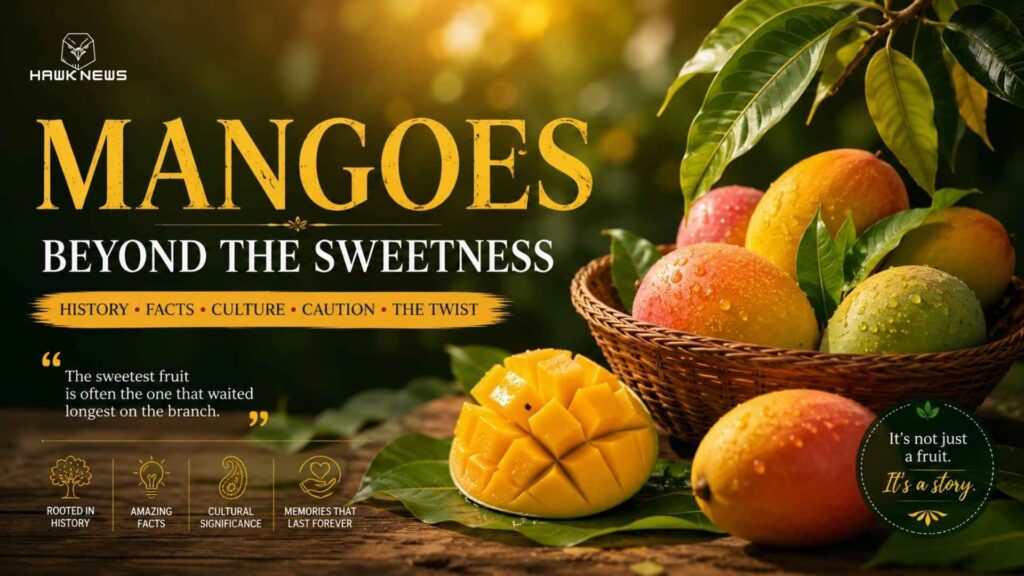
A Fruit That Carries More Than Sweetness
There is something curious about a mango. Unlike many fruits that simply arrive on a plate, a mango seems to carry a journey within it. It arrives wrapped in memory, season, geography, and longing.
Long before it becomes a golden slice in someone’s hand, it has already spent months drinking sunlight, surviving winds, and hanging quietly from a branch that asks for no applause.
Perhaps that is why mangoes feel different. They are not merely eaten; they are anticipated. In many parts of the world, people do not ask whether mangoes are available. They ask when they will arrive.
Entire summers seem to organize themselves around that expectation. Markets prepare for them, families wait for them, and children count the days until the first basket appears at home.
The Wisdom of a Mango Tree
From an isolated vantage point, standing beneath a mango tree rather than beside a fruit stall, one notices something remarkable. The tree is never in a hurry. It flowers when it is ready, fruits when the season is right, and sheds what it cannot keep. Then, without announcement or ceremony, it offers abundance.
There is a lesson hidden in that quiet rhythm. In a world that celebrates speed, the mango tree celebrates timing. It reminds us that sweetness cannot be rushed and that some rewards belong only to those willing to wait.
As an old saying beautifully puts it:
“The mango tree teaches patience, for sweetness cannot be rushed.”
The mango does not compete with the seasons. It cooperates with them. Perhaps that is why its arrival feels so satisfying. It teaches a truth that many people spend years learning: growth is not measured by speed but by readiness.
A Journey Through Time
The fruit itself carries an extraordinary history. Mangoes are believed to have been cultivated for more than 4,000 years, making them one of humanity’s oldest cultivated fruits. Originating in South Asia, they traveled across continents through traders, travelers, and empires. What began in one corner of the world eventually found a home in orchards, kitchens, and marketplaces across many nations.
Today, hundreds of mango varieties exist. Some are rich and buttery, while others are tangy and fibrous. Some offer hints of honey, citrus, coconut, or even pine. Each variety tells its own story, proving that nature rarely settles for a single expression of beauty.
The diversity of mangoes mirrors the diversity of people. Though different in appearance, flavor, and texture, each variety contributes something unique to the larger story of the fruit.
The Amazing Secret Hidden Beneath the Skin
One of the most fascinating facts about mangoes surprises many people. The mango belongs to the same botanical family as poison ivy. Both are members of the Anacardiaceae family. While the fruit is perfectly safe for most people, the sap and skin contain compounds that can irritate sensitive individuals.
Nature often hides complexity beneath beauty. The mango is no exception. Its golden flesh may appear simple, but behind it lies a fascinating network of biology, chemistry, and evolution that has unfolded over thousands of years.
Sometimes the most beautiful things in nature arrive with reminders to handle them wisely.
When a Fruit Becomes a Cultural Icon
Beyond science, mangoes occupy a unique place in culture. Across generations, they have symbolized prosperity, affection, hospitality, and abundance. Their image appears in traditional art, textiles, architecture, and folklore. Even the famous paisley motif recognized around the world is believed to have been inspired by the shape of a mango.
Few fruits can claim such influence. Fewer still can say they have inspired artists as much as they have delighted diners.
The mango is more than food. It is a cultural ambassador that has crossed borders without needing a passport. Wherever it arrives, it seems to weave itself into local stories and traditions.
The Fragrance of Memory
Part of the mango’s charm lies in its fragrance. A ripe mango often announces its presence before it is seen. The aroma drifts through homes and market lanes, creating anticipation long before the first bite. Scientists explain this through aromatic compounds released during ripening. Poets, however, tend to prefer another explanation.
“A ripe mango perfumes the air the way a memory perfumes the heart.”
Perhaps both explanations are true.
Certain scents become permanent residents in our memory. For many people, the fragrance of mangoes instantly unlocks forgotten summers, childhood afternoons, and moments shared with loved ones.
Lessons Hidden in Ripening
The ripening process itself offers another lesson worth noticing. As a mango matures, starches slowly transform into sugars. What begins firm, tart, and unremarkable gradually becomes soft, fragrant, and sweet. The transformation happens quietly, almost invisibly, yet the result is unmistakable.
Human growth often follows the same path. Wisdom, patience, kindness, and resilience rarely appear overnight. Like a mango, people are shaped by time. Some of life’s finest qualities emerge only after seasons of unseen change.
Maybe that is why mangoes appear so often in metaphors and stories. Writers compare them to fulfilled promises. Farmers see them as rewards for patience and care. Grandparents speak of them as symbols of summers that refuse to fade from memory.
As another saying goes:
“The sweetest fruit is often the one that waited longest on the branch.”
A Golden Fruit with a Gentle Warning
Still, admiration should not prevent caution. Mangoes, despite their many virtues, deserve to be enjoyed thoughtfully. They contain natural sugars and should be consumed in moderation, especially by those monitoring blood sugar levels. Eating excessive quantities may also lead to digestive discomfort in some individuals.
It is also wise to wash mangoes thoroughly before consumption. During transportation and storage, fruits may come into contact with substances that are best removed before eating. A little care ensures that the experience remains as wholesome as it is enjoyable.
The sweetest things in life are rarely improved by excess. What delights in moderation can become overwhelming when pursued without restraint. The mango quietly reinforces that principle with every season.
The Summer Clock That Never Fails
Perhaps this is why the fruit feels timeless. In an era driven by instant gratification, the mango operates according to an older wisdom. No amount of impatience can accelerate a season. No demand can persuade a fruit to ripen before its appointed time.
The tree simply continues its work. It stands through heat, rain, and changing years, trusting the rhythm written into its nature. There is something deeply reassuring about that consistency.
For many people, the arrival of mango season signals more than the availability of fruit. It signals continuity. It reminds them that despite the rapid pace of modern life, some cycles remain unbroken. Some traditions still return faithfully, carrying familiar joys with them.
The Twist: The Mango Was Never the Treasure
Yet the greatest surprise about mangoes may have nothing to do with their flavor, history, fragrance, or nutritional value.
Ask people decades later what they remember most about mangoes, and many will not describe the fruit itself. Instead, they will remember climbing trees with scraped knees and adventurous hearts. They will remember juice running down their wrists on hot afternoons. They will remember grandparents slicing mangoes with practiced hands while stories drifted through the room.
The memories often outlive the taste.
And therein lies the twist.
We spend our lives believing the mango is the treasure. But perhaps the fruit was never the treasure at all. Perhaps it was simply the invitation. An invitation for families to gather, for stories to be shared, for laughter to echo beneath leafy branches, and for ordinary summer days to become lifelong memories.
In the end, the mango’s greatest gift is not what grows on the tree. It is what quietly grows around it. The fruit eventually disappears, the season eventually passes, and the basket eventually empties. Yet the moments created around a mango tree often remain sweet long after the last fruit is gone. That may be the most remarkable harvest of all.