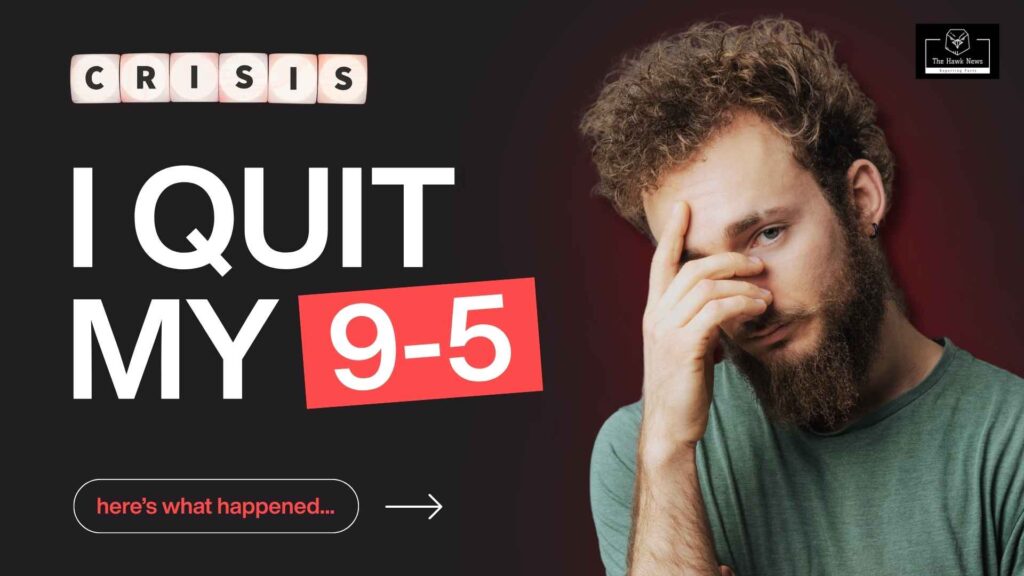
It begins quietly.
An email drafted at midnight.
A resignation letter saved, unsent.
A final breaking point that no one in the office ever saw coming.
Across continents, industries, and age groups, a striking pattern is emerging employees are walking away from their jobs without another offer in hand. Not as an act of rebellion, but as a last resort for survival.
This isn’t just a phase. It’s a global work crisis.
The Breaking Point: Burnout Is No Longer Invisible
The modern employee isn’t just tired they’re exhausted at a structural level.
The aftermath of the pandemic reshaped work culture. Remote work blurred boundaries. “Always online” became the unspoken rule. And productivity quietly turned into pressure.
According to global workforce studies, burnout has reached historic highs, particularly among younger professionals. Long hours, unrealistic expectations, and the constant fear of layoffs have created a silent psychological toll.
What’s alarming? Many are choosing uncertainty over stability.
Because for them, staying feels worse than leaving.
Layoffs and the Illusion of Stability
From tech giants to traditional industries, layoffs have become a recurring headline.
Companies that once symbolized job security are now leading waves of workforce cuts. The message to employees is clear: loyalty does not guarantee safety.
This has fundamentally altered how people perceive work.
If a job can disappear overnight, employees are asking a hard question:
Why sacrifice mental health for something that offers no long-term security?
The result: a growing number of workers are opting out before they are pushed out.
The Gig Economy: Freedom or Forced Choice?
As full-time roles lose their appeal, many are turning toward freelance work, consulting, or gig-based income streams.
On the surface, it looks like freedom.
Flexible hours. No bosses. Control over time.
But beneath that narrative lies a more complex reality.
For some, the gig economy isn’t a dream; it’s a fallback.
A system that offers autonomy, yes! but without safety nets. No health benefits. No guaranteed income. No long-term protection.
And yet, many still choose it.
Because even instability feels better than burnout.
A Generational Shift in Values
This crisis is also philosophical.
Today’s workforce, especially Gen Z and millennials is redefining success.
They are asking questions previous generations often suppressed:
- Is a high-paying job worth constant anxiety?
- Does career growth justify personal decline?
- What is the real cost of “stability”?
For many, the answers are leading them away from traditional career paths.
Work is no longer the center of identity.
Well-being is.
The Emotional Cost: Stories Behind the Statistics
Behind every resignation is a human story.
A young professional quitting after months of silent panic attacks.
A mid-career employee walking away after being overlooked repeatedly.
A top performer choosing rest over recognition.
These are not isolated incidents. They are signals.
Signals that something deeper is broken within the global work ecosystem.
What This Means for Employers
Organizations can no longer afford to ignore this shift.
The old model long hours, high pressure, minimal empathy is losing relevance.
Employees today are not just seeking salaries.
They are seeking sustainable lives.
Companies that fail to adapt risk more than attrition.
They risk becoming irrelevant.
The Road Ahead: Reset or Collapse?
The global workforce is at a crossroads.
This is not just about people quitting jobs.
It’s about people questioning the very structure of work itself.
Will companies rebuild systems that prioritize human well-being?
Or will the cycle of burnout, layoffs, and exits continue?
One thing is certain:
The phrase “I quit” is no longer impulsive.
It is intentional.
It is widespread.
And it is redefining the future of work.
Final Word
The world is not witnessing laziness.
It is witnessing a collective awakening.
Employees are no longer waiting to be valued.
They are choosing themselves sometimes at great risk.
And in that choice lies a powerful message:
Work must evolve.
Or people will continue to walk away from it.