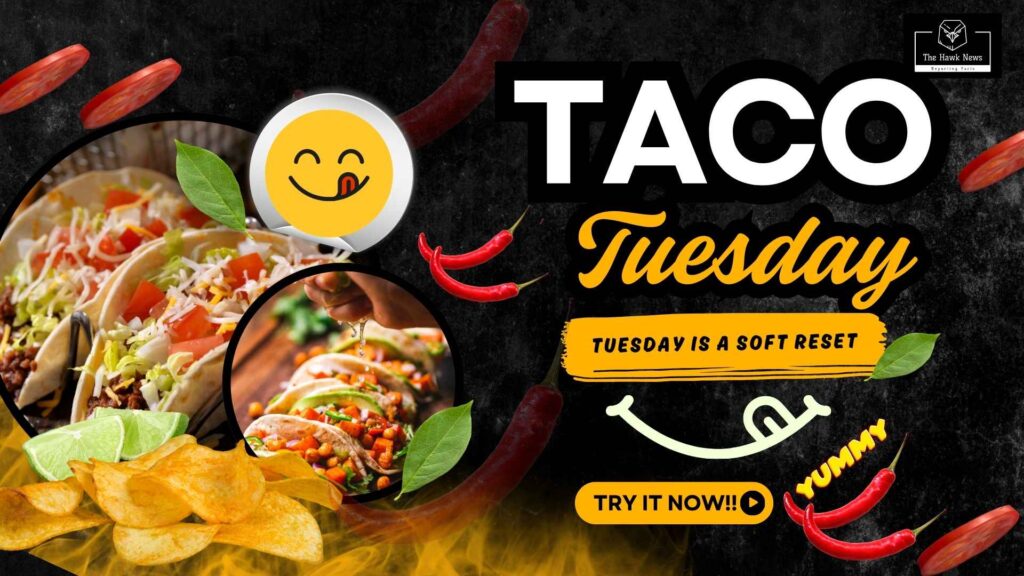
There are few things in modern food culture as beautifully uncomplicated as Taco Tuesday.
No dress code.
No reservations.
No silver cloches or whispered wine pairings.
Just warm tortillas, sizzling fillings, dripping sauces, loud laughter, and the universal understanding that somehow, for reasons nobody fully questions, tacos taste better on a Tuesday.
What began as a clever restaurant promotion has become a cultural ritual. Across cities, suburbs, food trucks, rooftop bars, and family kitchens, Tuesdays now carry the aroma of cumin, grilled meat, onions, lime, and melted cheese.
As one restaurant owner in Texas famously joked:
“Monday breaks your spirit. Tuesday repairs it with tacos.”
And honestly, the world agreed.
From Slow Business Day to Culinary Phenomenon
The origins of Taco Tuesday are surprisingly practical.
Restaurants in America noticed that Tuesdays were painfully slow. Weekends were over, payday was far away, and customers needed a reason to go out. So eateries began offering discounted tacos and drink specials.
The phrase itself was marketing gold.
Taco.
Tuesday.
Two words that rolled off the tongue like salsa across a hot skillet.
By the 1970s, local newspaper ads were already promoting Taco Tuesday deals. Soon, Mexican restaurants, diners, cantinas, and fast-food chains embraced it fully.
But what started as advertising slowly transformed into something deeper:
a weekly food ritual.
Food critic and author Jonathan Gold once wrote something that perfectly captures the spirit of street food culture:
“Great food is often the food that gathers people closest together.”
Taco Tuesday does exactly that.
The Magic of the Taco
The taco is humble by design.
It is not meant to intimidate you.
It is meant to welcome you.
A tortilla becomes a canvas:
- smoky carne asada,
- spicy chicken,
- crispy fish,
- slow-cooked barbacoa,
- charred vegetables,
- fresh cilantro,
- fiery salsa,
- crushed avocado,
- a squeeze of lime.
Every bite is architecture held together by hope and appetite.
And unlike many celebrated dishes around the world, tacos invite imperfection. The messier they become, the better the experience often is.
One food lover in Los Angeles posted online:
“If your taco doesn’t drip down your wrist, the chef didn’t love you enough.”
Crude? Perhaps.
Accurate? Completely.
Restaurants Turned Tuesday Into Theatre
Walk into a taco restaurant on a Tuesday evening, and you will notice something instantly:
People are happier.
There is noise.
There is movement.
Conversations are happening over overflowing plates and clinking glasses.
Restaurant owners understand this emotional chemistry well.
A cantina owner in Chicago once described Taco Tuesday this way:
“People don’t come for tacos alone. They come for release.”
And release is exactly what it feels like.
After long workdays and heavy traffic, Taco Tuesday offers something rare in modern dining:
casual joy.
No performance.
No culinary snobbery.
Just flavor.
The Social Media Era Made It Legendary
Then came Instagram, TikTok, and food influencers.
Suddenly, tacos were no longer just dinner. They became visual art.
Cheese pulls.
Slow-motion salsa pours.
Birria tacos dipped into rich consommé.
Flaming platters arriving at tables like edible fireworks.
Food photography elevated Taco Tuesday into a weekly online festival.
One viral foodie caption summed it up perfectly:
“Every Tuesday is a soft reset wrapped in a tortilla.”
And perhaps that explains why the tradition survived for decades while countless food trends disappeared.
Tacos never tried too hard.
A Tradition Rooted in Mexican Culinary Heritage
While Taco Tuesday is largely an American cultural invention, the taco itself carries centuries of Mexican culinary history.
Long before hashtags and restaurant chains, tortillas served as edible utensils for workers, travelers, and families throughout Mexico. Tacos were practical, affordable, and endlessly adaptable.
Modern Taco Tuesday may commercialize the experience, but at its heart remains something authentically timeless:
people gathering around simple food made with bold flavor.
That spirit cannot be manufactured.
It can only be shared.
Why Tuesdays Still Matter
Strangely, Taco Tuesday reveals something important about food culture itself.
People are not merely hungry for meals.
They are hungry for rituals.
A reason to pause.
A reason to meet friends.
A reason to laugh halfway through a difficult week.
And tacos, gloriously messy tacos, somehow became the answer.
As one chef in New Mexico said:
“Nobody argues while eating tacos. They’re too busy enjoying life.”
Perhaps that is the true secret behind Taco Tuesday’s survival.
Not marketing.
Not discounts.
Not trends.
But comfort.
Wrapped in a tortilla.