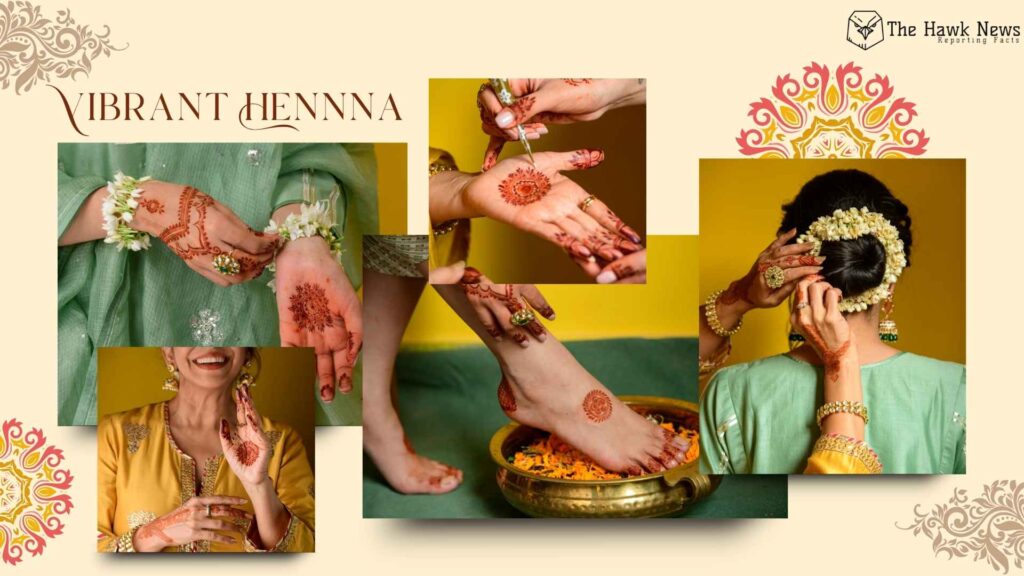
A Tradition That Endures
“Tradition is not the worship of ashes, but the preservation of fire.” — Gustav Mahler
Some traditions survive because they are useful. Others survive because they are meaningful.
Henna belongs to the second category.
For centuries, people have adorned their hands and feet with intricate henna designs. Through changing fashions and modern lifestyles, this ancient art has continued to flourish.
Its beauty lies not only in how it looks, but in what it represents.
More Than a Decorative Pattern
At first glance, henna appears to be an artistic design painted on the skin.
Look closer, and you will discover something deeper.
Henna often accompanies life’s happiest moments: weddings, festivals, family celebrations, and cultural gatherings. It becomes part of the memories that people carry long after the color has faded.
Every pattern tells a story.
Every design marks an occasion.
The Beauty of Patience
We live in an age of instant results.
Food arrives quickly. Messages travel instantly. Entertainment is available with a single tap.
Henna follows a different rhythm.
Each line is drawn carefully. Every curve requires attention. The process cannot be rushed.
Perhaps that is why the experience feels so special.
As the saying goes:
“Patience is bitter, but its fruit is sweet.” — Aristotle
A Language Without Words
Henna has a remarkable way of communicating without speaking.
A bride’s decorated hands. A festival gathering. A joyful family celebration.
No explanation is needed.
The designs themselves speak of happiness, tradition, and belonging.
They remind us that some emotions are understood best through symbols rather than sentences.
Where Art Meets Culture
Henna is more than personal expression.
It is a bridge between generations.
Mothers share traditions with daughters. Grandmothers pass on stories and customs. Artists preserve techniques that have been practiced for centuries.
In this way, henna becomes a living connection to the past.
It allows history to remain present in everyday life.
The Art of Celebration
There is something joyful about the process of applying henna.
Friends gather together.
Stories are exchanged.
Laughter fills the room.
The artwork becomes part of the celebration itself.
Sometimes the moments created around the henna are just as meaningful as the designs.
Beauty That Embraces Impermanence
Unlike a painting hanging on a wall, henna is temporary.
Its rich color gradually softens. The patterns slowly disappear.
Yet this temporary nature is what makes it unique.
Henna teaches us to appreciate moments while they are here.
As Rabindranath Tagore beautifully wrote:
“The butterfly counts not months but moments, and has time enough.”
The Memories Remain
Eventually, the designs fade.
The celebration ends.
Life moves forward.
But the memories stay.
People remember the wedding, the festival, the gathering of loved ones, and the happiness shared during those moments.
That is why henna continues to hold such a special place in many cultures.
It is not simply art applied to the skin.
It is memory, tradition, and celebration woven together into beautiful patterns.
Final Reflection
“The patterns may disappear, but the moments they represent never truly fade.”
And perhaps that is the secret behind henna’s timeless appeal.
Its beauty is temporary.
Its meaning is not.