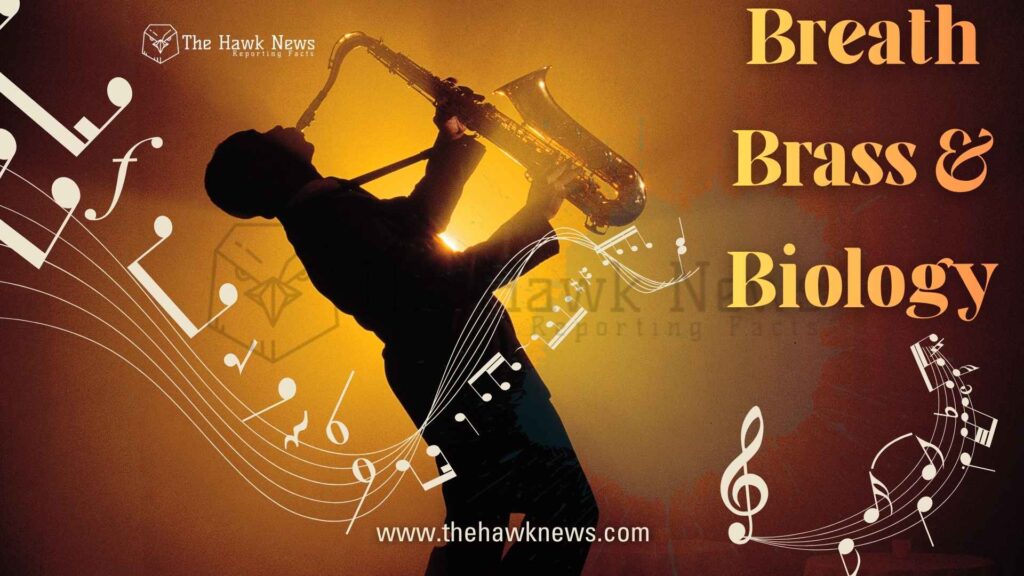
Every year on November 6, musicians across the world celebrate Saxophone Day, honoring the birth of Adolphe Sax, the Belgian inventor who reshaped the sound of modern music. Most people think of the saxophone as a symbol of jazz clubs, late-night solos, and smoky stages.
But behind that smooth gold silhouette is a truth we rarely acknowledge:
Saxophonists are athletes of the lungs.
They train like performers, breathe like swimmers, and endure like marathoners — all while producing music that feels effortless.
In the world of health and performance science, the saxophone might be one of the most underrated lung workouts ever created. This year, Saxophone Day invites us to look beyond the melody and into the body that powers it.
1. The Saxophonist’s Secret: Superior Lung Control
Playing the saxophone is not simply blowing air into a tube.
It is precision breathing, shaped and sharpened through years of training.
Most of us use only a portion of our lung capacity in daily life. Saxophonists don’t have that luxury. Their music demands:
- deep diaphragmatic breathing
- high internal air pressure
- controlled exhalation over long stretches
- sustained airflow
- rapid shifts in intensity
This is why many wind musicians show higher lung capacity and greater respiratory endurance than non-musicians.
Imagine holding a long tone for 15 seconds while maintaining perfect pitch, volume, and emotional expression.
Now imagine doing it repeatedly — for an hour-long performance.
That’s the saxophone in its barest form.
2. Your Lungs Don’t Just Blow — They Think
Breathing is usually automatic.
But for saxophonists, it becomes an art form.
To play, they must coordinate:
- breath pressure
- tongue articulation
- jaw tension
- mouth muscles (embouchure)
- finger speed
- posture
- emotional delivery
- rhythm and timing
This makes the saxophone a full-body neurological workout.
Brain scans of wind musicians reveal several enhancements:
✅ stronger neural coordination
✅ improved oxygen efficiency
✅ enhanced motor planning
✅ better stress regulation
Their lungs don’t act alone — their mind, muscles, and breath move as one seamless system.
3. Why Saxophonists Breathe Like Athletes
If you think this is exaggeration, look at the training routines of professional sax players.
They do long-tone exercises
Slow, sustained notes for 10–20 seconds at a time — similar to endurance breathwork in athletic training.
They practice diaphragmatic strength
Breathing from the diaphragm builds power the same way swimmers and runners train their core.
They perform breath-resistance drills
Controlling air against the resistance of a reed and mouthpiece is like lifting weights with your lungs.
They do cardio to support performance
Some of the greatest saxophonists — particularly jazz musicians — run, cycle, or swim to raise lung stamina.
They learn circular breathing
A technique where they inhale through the nose while simultaneously pushing stored air out of the cheeks.
It allows uninterrupted playing — used by legends like Kenny G.
This is not just practice.
This is conditioning.
4. The Health Benefits Most People Don’t Know About
Playing the saxophone is practically a natural respiratory therapy.
It strengthens multiple systems at once.
✅ Lung Strengthening
Continuous airflow exercises the diaphragm and intercostal muscles, improving breathing efficiency.
✅ Better Oxygen Use
Musicians often show higher VO₂ max levels — meaning their bodies convert oxygen more effectively.
✅ Reduced Stress
Breath control activates the parasympathetic (calming) nervous system.
✅ Heart Health Boost
Sustained breathing increases circulation and cardiovascular resilience.
✅ Mental Discipline
The concentration required sharpens focus and reduces anxiety — similar to meditation.
✅ Posture Improvement
Saxophonists develop stronger core and back muscles to support long playing sessions.
The saxophone is, in many ways, a fitness tool hidden inside a musical instrument.
6. The Challenges Saxophonists Face (That No One Talks About)
A balanced health article must acknowledge risks too.
1. “Saxophonist’s Lung” (Hypersensitivity Pneumonitis)
A rare condition caused by mold or fungus in unclean instruments.
Solution: regular cleaning.
2. Overuse of Respiratory Muscles
Excessive practice can strain breathing muscles.
Warmups and cooldowns are essential.
3. Postural Strain
The sax is heavy — back and neck pain are common if posture is ignored.
4. Embouchure Fatigue
Constant pressure on the lips and jaw can cause strain.
These challenges highlight an important truth:
Saxophonists discipline their bodies as seriously as they discipline their sound.
7. Saxophone Day: A Health Story Hidden Inside a Musical Holiday
So why should we view Saxophone Day through a health and fitness lens?
Because musicians often get romanticized — but their physical reality is rarely seen.
A sax solo might sound free and effortless, but behind that freedom is:
- lung endurance
- muscular precision
- aerobic stamina
- thousands of hours of breathwork
- posture discipline
- full-body coordination
The saxophone is a wind instrument that trains the body with the demands of an athlete and the elegance of an artist.
And this is the story today’s generation needs to hear.
In a world obsessed with gyms and fitness challenges, Saxophone Day reminds us that art itself can be a workout.
It shows that the people who give us music also invest in their physical well-being in unique, demanding ways.
Others lift weights to build strength.
Saxophonists lift sound.
8. Closing: The Body Behind the Brass
On November 6, when tributes fill the air, try listening a little differently.
Behind every smooth riff, every emotional note, every effortless glissando — there is a human body working intensely, with lungs pushing the limits of breath and discipline.
Saxophone Day isn’t just a salute to an instrument.
It is a salute to the health, endurance, and physical mastery behind the music.
Because the truth is simple:
A saxophonist doesn’t just breathe life into music — the music breathes life into them.
And that is worth celebrating every single year.