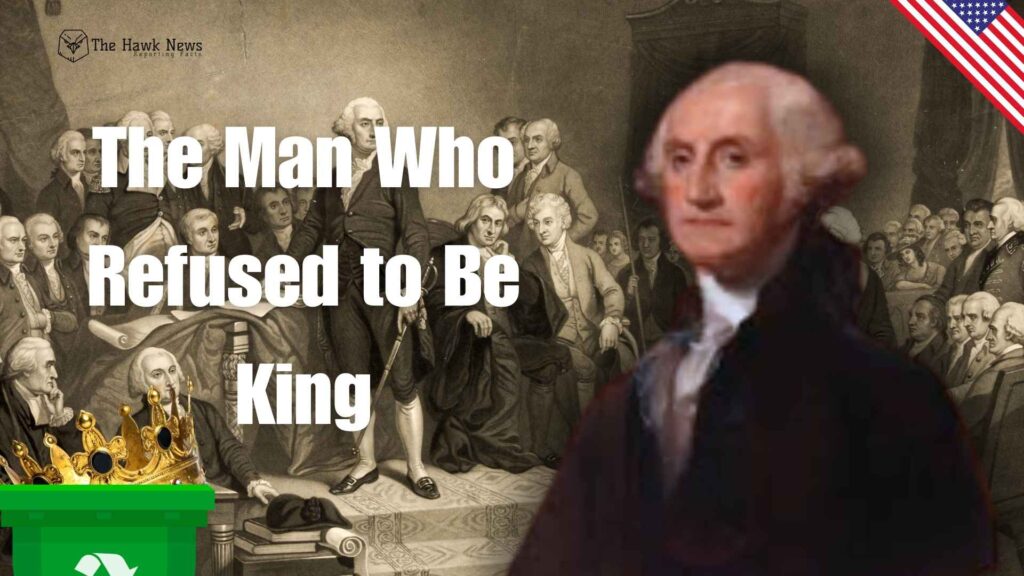
On February 4, 1789, George Washington was unanimously elected the first President of the United States.
In a world addicted to crowns, he showed that restraint could build an empire stronger than conquest.
I. The Morning of a Republic
History rarely announces its miracles with trumpet blasts.
Sometimes, it begins in silence — with a man who simply says yes to duty and no to desire.
On February 4, 1789, George Washington was unanimously chosen to lead a nation that did not yet know what leadership looked like.
The Revolution was over, the crown cast down, but power itself still lingered in the air like smoke — seductive, shapeless, and dangerous.
Washington accepted the presidency not as a privilege but as a burden. He understood that every step he took would carve the path of a fledgling democracy.
The world had seen warriors and emperors — but never a man who wielded power and then willingly laid it down.
“Few men have virtue to withstand the highest bidder.” — George Washington
He did.
II. The Crown That Tempted, and the Man Who Declined
When the newly liberated states looked toward Mount Vernon, they saw more than a hero; they saw stability itself. Voices rose suggesting he be made king.
After all, he had command, loyalty, and reverence — the makings of a monarch.
But Washington’s greatness lay in his refusal.
He turned away from the idea of a crown with quiet finality.
“I had rather be on my farm than emperor of the world,” he once wrote — not as poetry, but as principle.
That statement became the moral cornerstone of a democracy still learning to walk.
He taught a young nation that the truest victory is mastery over one’s own ambition.
III. Power Without Vanity
As President, Washington had no roadmap. Every action was precedent; every decision, an unwritten law.
He shaped the office with civility, restraint, and a profound sense of accountability to something greater than himself.
He knew that power was fleeting, but character eternal.
And when his second term ended, he did what few leaders have done since — he stepped down voluntarily.
In a letter that would become his Farewell Address, he warned against factionalism, foreign manipulation, and the corruption of unity.
“The preservation of the sacred fire of liberty… is staked on the experiment entrusted to the hands of the American people.”
He left power the way one leaves a sacred space — quietly, without applause.
That departure became a sermon for the ages.
IV. Lessons for the Age of Vanity
Today, when leadership often masquerades as spectacle and humility is mistaken for weakness, Washington’s restraint feels almost prophetic.
He governed in whispers while we campaign in noise.
He sought no legacy — yet became one.
“Nearly all men can stand adversity, but if you want to test a man’s character, give him power.” — Abraham Lincoln
Washington passed that test long before it was written.
He reminds us that leadership is not domination, but stewardship — the art of holding power with clean hands and a steady conscience.
In a world that rewards volume over virtue, his silence still teaches.
V. Reflection: The Man Who Walked Away
History often glorifies those who seize power. Rarely does it pause to honor the one who relinquishes it.
But February 4, 1789, stands as a reminder that sometimes the truest revolution is restraint.
Washington could have been a king.
Instead, he became something rarer — a servant of freedom.
He walked away not in defeat, but in discipline.
And in doing so, he taught a restless world that true leadership is not measured by how long one reigns, but by how deeply one serves.
“When pride comes, then comes disgrace, but with humility comes wisdom.” — Proverbs 11:2
“To lead the people, walk behind them.” — Lao Tzu
Perhaps that is why, even now, centuries later, the echo of his restraint still steadies the soul of a nation — and quietly rebukes every generation that mistakes applause for purpose.