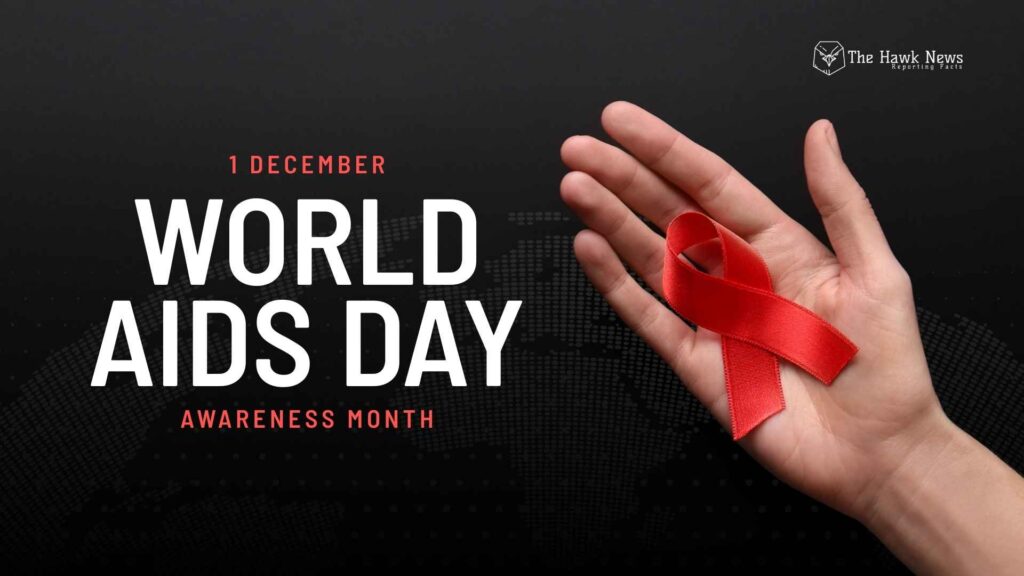
December 1 is not just another date.
It is the closest thing humanity has to a collective pause — a moment when the world remembers a pandemic that claimed over 40 million lives, reshaped public health, and exposed both the cruelty and the courage of humankind.
World AIDS Day began in 1988, the first-ever global health observance.
But in 2025, its meaning hits differently.
Because the world has changed.
But HIV?
It hasn’t disappeared.
It has only become quieter.
And that silence is dangerous.
A Pandemic That Reshaped Humanity
When HIV was first identified, fear ruled the world more fiercely than any virus.
People were fired from their jobs.
Children were forced out of schools.
Families hid diagnoses to avoid shame.
Hospitals refused patients.
Governments turned a blind eye.
The early years of AIDS were not just a public health failure —
they were a moral one.
But humanity did rise.
Scientists, activists, nurses, and ordinary people fought back.
From the ashes of stigma came breakthroughs:
- Antiretroviral therapy (ART)
- Prevention of mother-to-child transmission (PMTCT)
- PEP & PrEP
- Rapid testing
- Lifesaving global funding
Because of these, HIV is no longer a death sentence — it is a manageable condition.
But victory is not the right word.
Not yet.
The Fight Today: Progress Paired With Uneven Reality
Here’s the truth that World AIDS Day forces us to face:
- Nearly 39 million people live with HIV globally.
- 9.2 million still do not have access to treatment.
- Every minute, someone becomes newly infected.
- Adolescents and young adults form the fastest-growing group of new cases.
- Sub-Saharan Africa carries two-thirds of the global burden.
- In many countries, women and girls remain disproportionately affected.
- Stigma remains one of the biggest killers — because it keeps people from testing.
This is not a past-tense pandemic.
It is a present-tense emergency.
The New Face of the Crisis: A Generation That Thinks It’s Over
Ask teenagers today about HIV, and many will shrug.
“Isn’t that an old disease?”
“Don’t they have medicines for that now?”
“It’s not a big deal anymore, right?”
This illusion of safety is the new threat.
Young people — especially Gen Z and Gen Alpha — did not grow up seeing the funerals, the fear, the activism, the loss.
And so HIV feels distant… abstract… irrelevant.
But viruses don’t care about generational memory.
For the first time, UNAIDS warns that:
Complacency is becoming deadlier than the virus.
The Hidden Pandemic Within the Pandemic: Stigma
Science has done its job.
Society hasn’t.
Even today:
- Many still whisper about HIV instead of talking about it openly.
- Millions delay testing because they fear being judged more than being sick.
- People living with HIV face discrimination at workplaces, schools, and even hospitals.
- Families avoid conversations because “these topics are uncomfortable.”
One of the most painful ironies?
HIV is now more manageable than the stigma around it.
The virus is treatable.
The prejudice is not — unless we dismantle it deliberately.
Lessons From the Red Ribbon
The red ribbon is not fashion.
It is not a symbolic accessory.
It is a reminder:
- Of the people who died before medicine could save them
- Of the activists who fought governments, laws, and stigma
- Of the patients who swallowed dozens of pills a day in the early years
- Of the families who carried grief no one spoke of
- Of the medical workers who stepped in when the world stepped back
If the pandemic taught us anything, it is this:
The virus was ruthless.
But so was silence.
The Future: What Hope Looks Like Today
There is real hope on the horizon:
- Scientists are closer than ever to a functional cure — where HIV becomes undetectable without lifelong medication.
- mRNA vaccine technology, pioneered during COVID-19, is being tested for HIV.
- Many countries are adopting self-testing kits to reduce stigma barriers.
- Schools are beginning to adopt more comprehensive sex education.
- Global funding — though threatened — still saves millions of lives every year.
The goal set by UNAIDS — Ending AIDS by 2030 — is still possible.
But the timeline isn’t the issue.
Human will is.
India’s Reality: A Quiet Battle Still Being Fought
India has made enormous progress:
- HIV infections have dropped by over 45% in the last decade.
- Treatment is now free and easily accessible.
- Mother-to-child transmission has fallen sharply.
But challenges remain:
- Many rural and semi-urban areas still lack awareness.
- Stigma in families continues to keep people from seeking help.
- Young people often lack accurate sexual health education.
- Migrant workers, women in vulnerable communities, and LGBTQ+ groups still face disproportionate risk.
The story is moving forward.
But it’s not finished.
The Question This Generation Must Answer
World AIDS Day is not about remembering tragedy.
It’s about deciding whether we will repeat the mistakes that made the tragedy worse.
The question is simple:
Will we be the generation that looks away
because we think the crisis is over —
or the generation that finally ends it?
HIV is no longer undefeatable.
But ignorance still is.
And stigma still is.
And silence still is.
The pandemic’s future depends not on medicine alone,
but on compassion, awareness, and courage.
Because the greatest breakthroughs in HIV history did not come from labs.
They came from people who refused to look away.
And now —
it’s our turn not to look away.