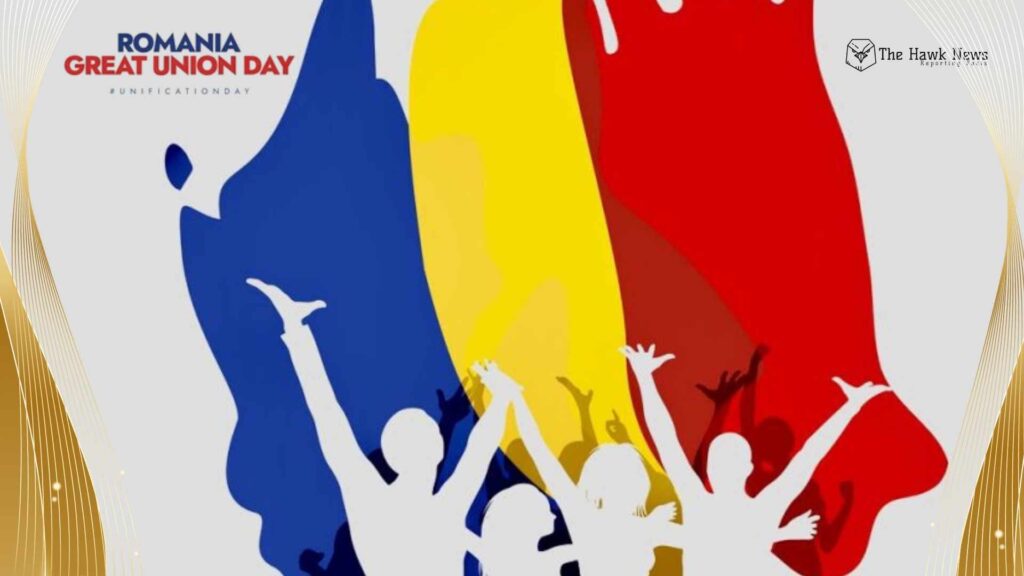
A Great Union Day Reflection for a Fractured World
On December 1, 1918, Romania didn’t just redraw borders — it redrew its imagination.
Transylvania, Banat, Bukovina, and Bessarabia were woven together with the Romanian Kingdom, not only by treaties and signatures, but by a shared longing that had lived quietly in people’s hearts.
Maps can shift with ink. But unity — real unity — happens only when minds shift first.
And that is what makes Great Union Day so much more than a national holiday. It is a lesson for a world that is once again breaking itself into smaller pieces.
As one Romanian historian once said,
“A nation is born the moment its people agree to dream the same dream.”
In 1918, Romanians dreamed of wholeness.
Today, we can barely agree on the same definitions.
The Union That Began Long Before the Union
Political documents recorded the union in 1918.
But the real union happened much earlier — in memory, in language, in songs whispered across mountains, in the quiet resilience of people who refused to forget who they were.
This is where Romania teaches us something precious:
Unity is never imposed from the outside — it grows from the inside.
People across separated regions maintained traditions, stories, and a shared identity, even when they were divided by empires. Unity was not a sudden achievement but a long-awaited return.
It is the kind of unity the modern world desperately needs: a unity that comes from shared values, not shared borders.
A Fragmented World, A Forgotten Lesson
Look around today:
Nations are more connected than ever — yet more divided than ever.
We carry the world in our pockets, yet lose each other in arguments over pixels.
Borders are not just geographical; they are emotional, ideological, generational.
The digital age has made division easy — a tap here, a swipe there, an unfollow, a block, a mute.
We are all walking with invisible fences.
Great Union Day reminds us of something uncomfortable:
Division is the natural state of the world. Unity is the miracle.
And miracles don’t happen automatically. They take intention. They take imagination. They take people deciding that being one is better than being many.
The Courage to Imagine Together
In 1918, Romania had no guarantee that unification would work.
There was no stability, no certainty, no promise that it would last.
But people chose unity anyway — not because it was easy, but because it was meaningful.
In today’s fractured climate, that kind of courage feels rare.
We fight over identities instead of building them.
We cling to differences, forgetting they can coexist.
We defend our corners without realizing a nation — or a family, or a community — is not a battlefield.
A quote from a Romanian poet echoes this truth:
“Unity is born not when we agree, but when we agree to stay together even when we don’t.”
What Romania achieved in 1918 was not perfect unity — but committed unity.
That distinction is everything.
Belonging: The Quiet Power Behind Nations
The Great Union wasn’t won only through diplomacy; it was won through something softer, quieter — belonging.
People longed for a home that felt whole.
They wanted stability after years of turmoil.
They wanted a shared destiny in place of scattered futures.
Belonging is one of humanity’s deepest needs — deeper than politics, deeper than borders.
Today, that longing is still alive:
- Immigrants search for a place where they are seen.
- Minorities fight for recognition.
- Young people seek identity beyond screens.
- Divided societies look for a middle ground.
Great Union Day is a reminder that belonging can be stronger than boundaries.
What the World Needs Today Isn’t New Borders — But New Imagination
Instead of building walls, we need to build shared vision.
Instead of fearing differences, we need to learn from them.
Instead of letting algorithms divide us, we need conversations that connect us.
The Treaty of Alba Iulia stands as proof that unity is possible — even in a world of empires, tension, and instability.
Imagine if the same courage were applied today:
- Imagine nations working for common purpose.
- Imagine communities that listen first and judge later.
- Imagine families that choose understanding over ego.
- Imagine individuals who mend bridges instead of burning them.
A Romanian saying captures this beautifully:
“Where there is heart, there is homeland.”
Unity begins there.
The Modern Lesson: Unity Is a Responsibility
The Great Union wasn’t a gift. It was a responsibility.
Once the map changed, people had to learn to live together.
Different regions had different histories, cultures, and expectations.
Unity demanded patience.
It demanded compromise.
It demanded humility.
We often forget this today.
We want unity without effort.
We want cohesion without conversation.
We want closeness without sacrifice.
But unity is a discipline — a daily one.
It is a choice you make, again and again, to move toward each other instead of away.
1918 didn’t simply join lands; it demanded that people learn to share a future.
The Takeaway for Our Generation
Great Union Day isn’t just for Romanians — it’s a blueprint for all of us.
Its message is simple:
A nation is not created by geography, but by the courage to stand together.
In a world full of noise, division, and digital outrage, this is the clarity we need:
- Unity is not sameness.
- Unity is not silence.
- Unity is not blind agreement.
Unity is choosing connection over fragmentation.
Unity is choosing understanding over ego.
Unity is choosing future over fear.
And above all —
unity is choosing imagination over isolation.
Romania did it once.
We can do it again, in our own way, wherever we live, in whatever communities we belong to.
A Final Reflection
As one writer said:
“The strength of a nation is the sum of the bridges its people are willing to build.”
On this Great Union Day, the world doesn’t just need countries to unite —
it needs people to unite.
With courage.
With clarity.
With imagination.
Because unity will never be a map.
It will always, always be a mindset.