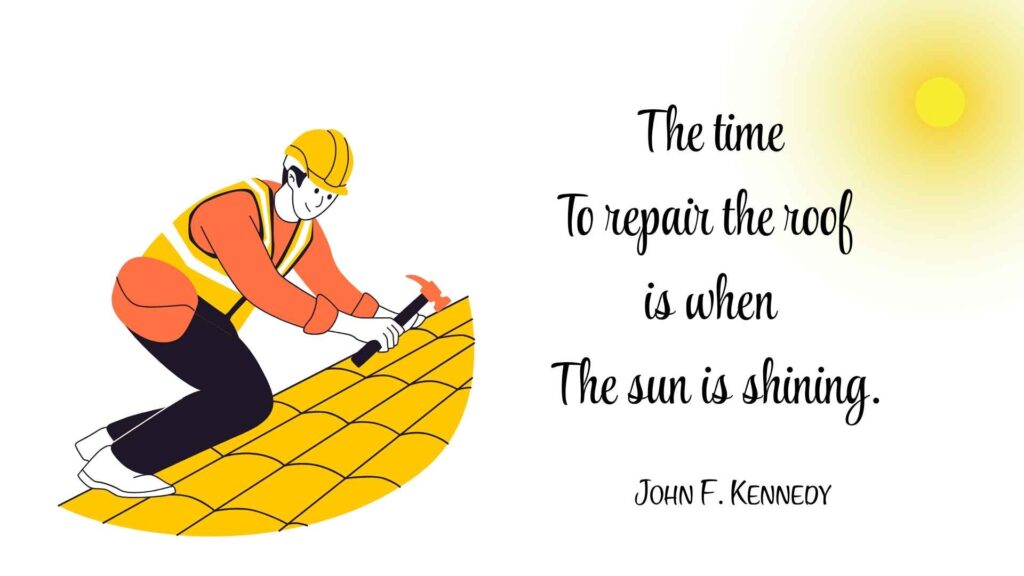
When John F. Kennedy declared, “The time to repair the roof is when the sun is shining,” he was not speaking in poetry. He was issuing a warning—one that leaders across nations continue to ignore.
His message was unmistakable: strengthen the nation during stability, not after collapse.
More than six decades later, the world remains trapped in a cycle of political short-termism. Governments spring into action after a crisis erupts, rarely before.
And in the political theatre of quick promises and reactive policymaking, Kennedy’s words stand as one of the most relevant leadership truths of the modern era.
Crisis Management Is Popular. Crisis Prevention Is Not.
Politicians across democracies and authoritarian states alike respond swiftly when disaster hits. Floods, financial crashes, health emergencies, infrastructure failures—these produce urgency, headlines, and a visible demonstration of “government at work.”
But this is performance, not preparedness.
The uncomfortable reality is that crises often expose long-ignored cracks—in administration, planning, and political courage. Leaders act with speed once the roof collapses, but few take responsibility for why it was weakening in the first place.
Kennedy’s quote highlights a fundamental failure in governance:
Most governments prefer to manage emergencies, not prevent them.
This is because prevention is quiet, invisible, and thankless.
Crises are dramatic. Prevention is not.
What Happens When the Sun Is Shining?
The “sun” in Kennedy’s metaphor represents periods of stability—economic growth, social calm, political peace. These are the moments when nations should invest in resilience:
- strengthening public institutions
- upgrading infrastructure
- preparing for climate risks
- improving healthcare systems
- regulating industry responsibly
- stabilising the economy
- fortifying cybersecurity
- building buffers for emergencies
But political systems have a habit of postponing tough decisions until they become unavoidable.
During sunshine, leaders relax.
During storms, they panic.
This cycle keeps nations permanently vulnerable.
Why Governments Delay: The Short-Term Trap
Kennedy understood the greatest enemy of good governance: short-term political incentives.
Leaders avoid fixing roofs when the sun is shining because:
- prevention doesn’t win elections
- addressing invisible risks offers no immediate applause
- structural reforms can create temporary discomfort or resistance
- voters prefer instant “relief measures” over long-term planning
- politicians want credit during their term, not after
A slow investment in national resilience can take years to show results. But a quick loan waiver, a subsidy, or a last-minute announcement delivers instant public approval.
The result:
Governments focus on symptoms, not causes.
When the Roof Finally Cracks
By the time a crisis becomes visible, the damage is already advanced:
- An economy starts dipping after ignored early indicators.
- A bridge collapses after years of deferred maintenance.
- A flood devastates a city after neglected drainage planning.
- A healthcare system collapses after chronic underinvestment.
- A financial sector weakens after insufficient oversight.
- Social unrest erupts after long-ignored inequalities.
- A cyberattack succeeds after years of patchwork security.
Kennedy’s message becomes painfully clear:
If you wait for the rain, the repair will cost far more than the prevention ever would have.
The Press and the Public: Co-Guardians of Sunshine Governance
A political editorial must also examine the role of the press and citizens.
Governments do not operate in isolation; they respond to pressure—or the absence of it.
1. The Media’s Role
A strong press highlights cracks in the roof before collapse:
- investigative reporting
- expert warnings
- accountability journalism
- data-driven analysis
But when media outlets become distracted by sensationalism or controlled by political interests, early warning collapses.
The sun keeps shining—
and no one checks the roof.
2. Citizens’ Role
Voters reward short-term benefits more than long-term protection.
Politicians know this.
In democracies, citizens must demand:
- foresight
- planning
- transparent budgeting
- climate resilience
- institutional reform
Otherwise, reactive governance continues unchecked.
Kennedy’s quote applies not just to leaders, but to societies:
If you don’t expect preparedness, you won’t receive it.
Why Kennedy’s Warning Is More Urgent Today Than Ever
The 21st century has compressed timelines.
Crises that once took decades to unfold now appear in months.
Climate change:
Extreme weather events are more frequent. Delayed action is costly.
Health systems:
Pandemics can emerge with global impact in weeks.
Cybersecurity:
Attacks strike silently and instantly.
Economy:
Global markets react rapidly to shocks.
Infrastructure:
Aging structures are reaching critical failure points.
Geopolitics:
Conflicts escalate unpredictably in a tightly connected world.
Kennedy warned during the era of Cold War tensions. Today, the risks are wider, faster, and more interlinked.
The cost of inaction is higher than at any point in modern history.
Case Study Thinking: What “Roof Repair” Looks Like in Today’s Politics
To translate the metaphor into modern policy, responsible leadership includes:
- investing in public health during calm years, not just after outbreaks
- regulating financial markets before instability erupts
- upgrading bridges, flyovers, and roads before accidents occur
- expanding renewable energy before climate pressures intensify
- strengthening data protection before breaches
- addressing unemployment before recession
- promoting social cohesion before division deepens
This is governance built on foresight, not damage control.
Leadership Requires Vision, Not Visibility
Kennedy’s quote challenges leaders to choose:
Popularity now, or stability later?
Repairing the roof when the sun is shining is the work of leaders who:
- plan beyond election cycles
- prioritize protection over praise
- confront uncomfortable truths
- act before applause
- imagine the nation years into the future
Visionary leadership is rarely glamorous.
But it is what prevents disaster.
A Closing Reminder to Today’s Leaders
The world does not need more speeches after the flood, after the collapse, after the crisis.
It needs courage before the storm touches the sky.
Kennedy’s line remains as sharp as the day he spoke it:
“The time to repair the roof is when the sun is shining.”
Because when the rain arrives, even the strongest hands can only do so much.
A nation’s best protection is preparation, not apology.