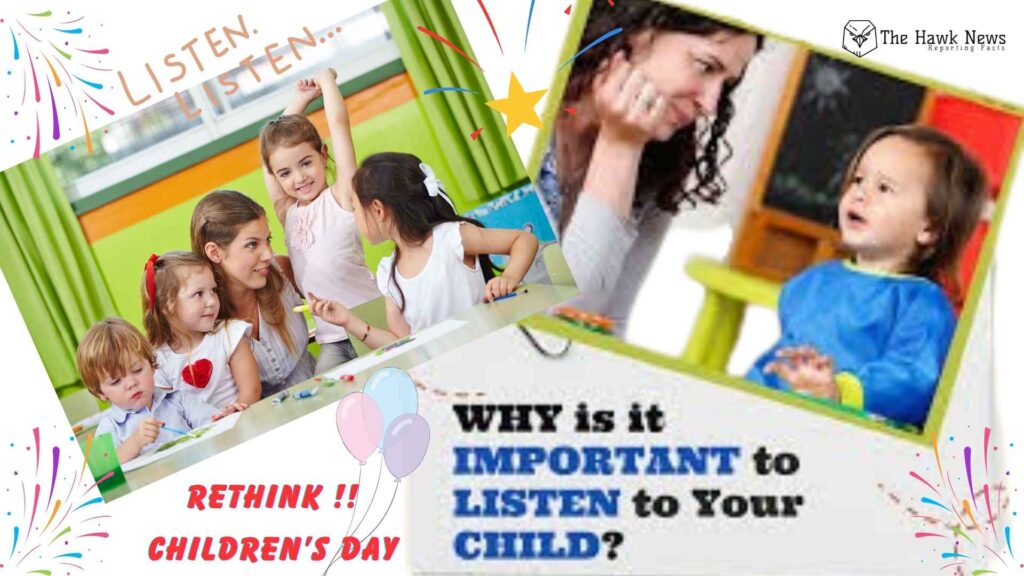
“We worry about what a child will become tomorrow, yet we forget that he is someone today.”
— Stacia Tauscher
Every year on November 14, balloons go up, ribbons are tied, schools echo with laughter, and hashtags bloom on social media — #HappyChildrensDay.
It’s a day meant to celebrate the purity, joy, and potential of childhood.
Yet behind the cheerful greetings and orchestrated performances, something feels unsettlingly hollow.
Because while we clap for our children on stage, how many of us truly hear them offstage?
The Ritual That Lost Its Meaning
Children’s Day has slowly drifted into ritual. A date marked not by reflection, but routine — a performance, a post, a quick “Happy Children’s Day!” before the scroll continues.
But what happens when celebration turns into ceremony and empathy turns into event management?
The world is full of children who smile for the camera but cry themselves to sleep.
“Childhood should be carefree, playing in the sun; not living a nightmare in the darkness of the soul.”
— Dave Pelzer
Across the globe, children are being silenced — by abuse, by neglect, by impossible expectations.
We live in a world where many children are forced to blossom before they can naturally bloom.
They are pushed to excel, to conform, to perform — often long before they even understand who they are.
The irony is painful: we celebrate “Children’s Day” with more enthusiasm than we celebrate childhood itself.
The Hidden Pain Behind the Smile
According to UNICEF’s 2024 global report, one in four children faces some form of abuse — physical, emotional, or psychological — before the age of 10.
Many of these children never speak out, not because they don’t want to, but because no one is truly listening.
We teach our children how to speak, but not that their voices matter.
We tell them to “be brave,” but when they gather the courage to speak, we silence them with “You’re overreacting.”
We insist on discipline, but forget compassion.
And so, the quiet child grows quieter.
The loud child grows angrier.
And the world keeps saying “Happy Children’s Day.”
“The way we talk to our children becomes their inner voice.”
— Peggy O’Mara
Listening Is Love in Action
Listening — real listening — is the rarest form of love.
It’s not about hearing words; it’s about catching the tremor behind them.
It’s pausing long enough to notice when a child’s laughter sounds rehearsed, when their art has lost its color, when their words have become too grown-up for their age.
When a child says, “I’m fine,” a listening heart knows to ask again.
When a child draws a dark picture, a listening parent sees the cry within it.
Psychologists say that children who grow up feeling heard are less likely to develop anxiety, depression, and behavioral disorders. Their sense of security stems not from what they receive, but from being received — emotionally, mentally, spiritually.
“Children don’t need more toys. They need more time, more tenderness, more listening.”
— Anonymous
Forced to Bloom Too Soon
In many homes, childhood is being replaced by performance.
Academic scores, dance classes, coding workshops — the calendar of a child mirrors that of a corporate executive.
Even playtime has become productivity.
We call it preparation for the future. But in truth, we’re stealing their present.
A child’s brain develops best through curiosity, wonder, and rest — not through comparison, pressure, and perfection.
When we force children to bloom before they are ready, we don’t get flowers. We get wilted souls.
“Every child is an artist. The problem is how to remain an artist once we grow up.”
— Pablo Picasso
Let them be artists a little longer. Let them dream without deadlines.
Beyond Abuse: The Silent Killers
Child abuse isn’t always visible. Sometimes, it’s subtle — neglect, emotional dismissal, or even the absence of presence.
The parent constantly on the phone. The teacher who praises marks more than kindness.
The system that rewards obedience over originality.
These are silent killers of spirit.
The truth is, a bruised child may heal faster than a dismissed one.
When a child says, “You never listen to me,” they are not being dramatic — they are announcing a wound.
“Children are not things to be molded, but people to be unfolded.”
— Jess Lair
A New Way to Celebrate
This Children’s Day, what if we stopped buying balloons and started building bridges?
What if, instead of posting a quote, we sat quietly beside our child and asked:
“Tell me what made you smile this week.”
“Tell me what made you sad.”
And then — we listened.
No advice. No interruptions. No correcting. Just listening.
Because every time you listen, you teach your child that they matter.
You teach them that their emotions are valid, that their mind has value, and that their soul deserves space.
“To be heard is so close to being loved that for the average person, they are almost indistinguishable.”
— David Augsburger
Listening is the seed from which confidence, creativity, and compassion grow.
From Ritual to Relationship
Let’s make a promise — not to celebrate children once a year, but to celebrate listening every day.
Let’s turn the ritual into a relationship.
Let’s make kindness louder than lectures and empathy more enduring than events.
“Don’t just raise your voice; raise your child.”
Because the greatest gift we can give a child isn’t money, toys, or achievements —
It’s the assurance that they can always come home to a pair of ears that will hear and a heart that will understand.
Final Reflection
So this Children’s Day, skip the hashtags. Skip the slogans.
Sit on the floor, beside your child, and listen — truly listen.
Because every child who is heard grows into an adult who listens.
And maybe, just maybe, that’s how we change the world.
“Kind words cost nothing, but their echoes last a lifetime.”