A reflection on truth, media, and the silent erosion of trust
The Age of Noise
Screens glow brighter than ever, but our clarity dims.
Every second, new headlines scream for attention — breaking stories, shocking updates, dramatic debates. In this relentless hum of information, we’ve mistaken volume for veracity.
Truth has not vanished; it’s been buried beneath abundance.
Not denied, but diluted. Not censored, but crowded out.
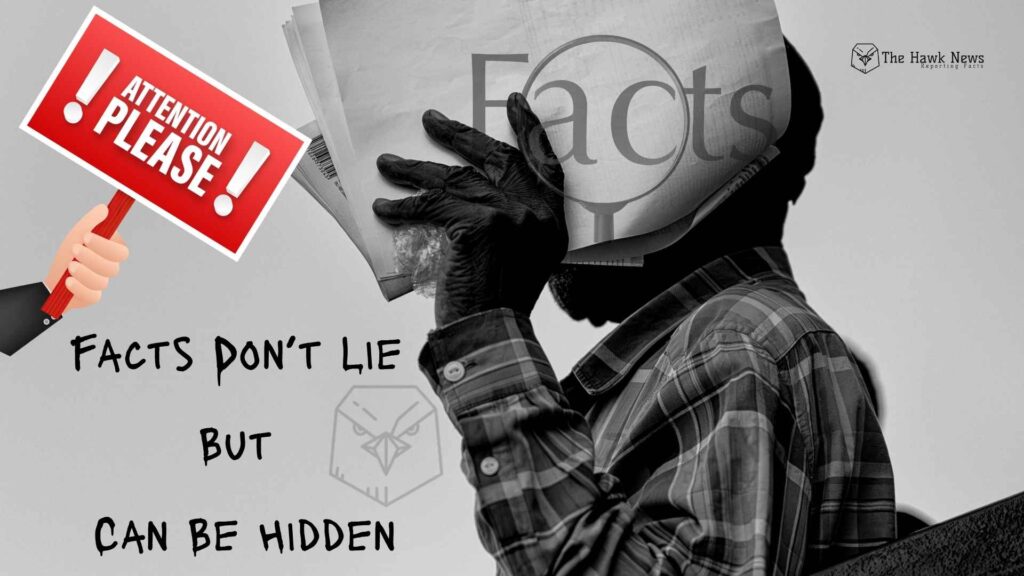
“Facts don’t lie,” we say. And they don’t. But facts can be hidden — behind clever framing, selective storytelling, and the noise of ten thousand half-truths that feel easier to believe.
We live in the age of content, not context.
The tragedy isn’t that people are lying more. It’s that truth has become harder to hear.
From Reporting to Shaping
Journalism was once a window — clear, transparent, unadorned. Today, it often feels more like a mirror — reflecting the biases of its beholder.
The shift from reporting to shaping truth happened quietly.
Stories became products. Outrage became a currency. Headlines were engineered not to inform but to provoke.
Once, the journalist’s creed was simple: “Tell it as it is.”
Now, it’s too often: “Tell it so they click.”
In this new ecosystem, facts don’t need to be falsified to be distorted. They just need to be reframed — cropped, edited, or strategically omitted.
The story isn’t just what happened; it’s how it’s told, who tells it, and why.
The Power of Omission
A lie is easy to spot. But a half-truth? That’s far more dangerous.
It carries the scent of honesty, the appearance of credibility.
Show one side of a conflict, and the other becomes invisible.
Report one statistic without its context, and data turns into deception.
The modern weapon isn’t falsehood — it’s selectivity.
And in this curated reality, even truth can become a tool of manipulation.
As one veteran editor once said, “What you choose not to publish shapes the world as much as what you do.”
That is how truth can hide — not in darkness, but in plain sight.
We See What We Want to See
But media is only half the equation. The other half is us.
Algorithms are not villains — they are mirrors.
They feed us what we’ve shown we want to see. Our digital footprints shape the stories that find us.
And so, unknowingly, we build our own echo chambers, where we no longer seek truth but confirmation.
It’s comforting, isn’t it? To read what validates us. To hear what agrees with our worldview.
But comfort is the enemy of clarity.
Truth demands discomfort — the willingness to be challenged, the humility to be wrong.
Awareness begins not with the media, but with the mirror.
The Moral Cost of Hidden Truth
When truth erodes, trust follows.
And when trust collapses, societies fracture.
Without trust, every headline becomes suspicious. Every voice sounds biased.
The result is chaos — a generation that believes nothing fully, questions everything vaguely, and surrenders to cynicism.
Democracy doesn’t die through censorship alone — it dies through confusion.
When people no longer know what to believe, they stop believing altogether.
The real crisis, then, isn’t fake news.
It’s the quiet fatigue that makes people stop caring whether something is true at all.
When Media Stops Asking Questions
We should be alarmed when journalism stops investigating and starts echoing.
When headlines are written for reactions, not revelations.
When debates become entertainment, not enlightenment.
A few subtle signs of decay:
- News that tells you how to feel, not what to think about.
- Panels that argue louder, but say less.
- Influencers replacing investigators.
- Outrage trending faster than facts.
Each of these is a symptom of a deeper sickness — the loss of curiosity.
And curiosity is the root of all truth-finding.
The Responsibility of Awareness
We can’t change every newsroom.
But we can change the way we consume.
Awareness begins with intention — a conscious choice to pause before we share, to question before we believe.
- Verify before you amplify.
Don’t share a post because it’s powerful; share it because it’s proven. - Read beyond headlines.
The headline is bait; truth lives in the body. - Question your sources.
Who benefits if you believe this? Who loses if you don’t? - Diversify your news diet.
Read left, right, and center. Truth is rarely one-sided.
Truth doesn’t need defenders — it needs seekers.
The Silent Erosion
There was a time when silence hid truth. Now, it’s the opposite — noise does.
Every day, truth is drowned not by suppression, but by saturation.
It’s not that we lack information; it’s that we’re too overwhelmed to discern.
And so, the modern challenge isn’t censorship — it’s attention.
Whoever controls your attention controls your perception.
And whoever controls your perception controls the story.
We’ve entered a paradoxical age where people shout “truth” louder than ever, but listen less than before.
Reclaiming the Lens
To see clearly again, we must first slow down.
Clarity doesn’t come from consuming more; it comes from observing deeper.
Truth is never lost. It simply waits — quietly — beneath layers of noise.
Our task is to peel them back.
Because, when truth is hidden, light fades — not suddenly, but gradually, like dusk swallowing day.
Yet even dusk has one promise: light returns to those who wait and watch.
Closing Reflection — Beneath the Noise
“Facts don’t lie, but they can be hidden.”
In that single line lies the challenge of our times — not to find truth, but to recognize it through the fog.
The world is not suffering from a shortage of facts; it’s suffering from a shortage of focus.
So look again.
Listen deeper.
Question what comforts you and verify what angers you.
For if truth is hidden, it is not because it disappeared —
but because we stopped looking for it.
Endnote:
Truth, like light, doesn’t fear darkness — it only fears neglect.
And perhaps, the greatest act of journalism now is not just to reveal the truth,
but to remind the world that it still matters.