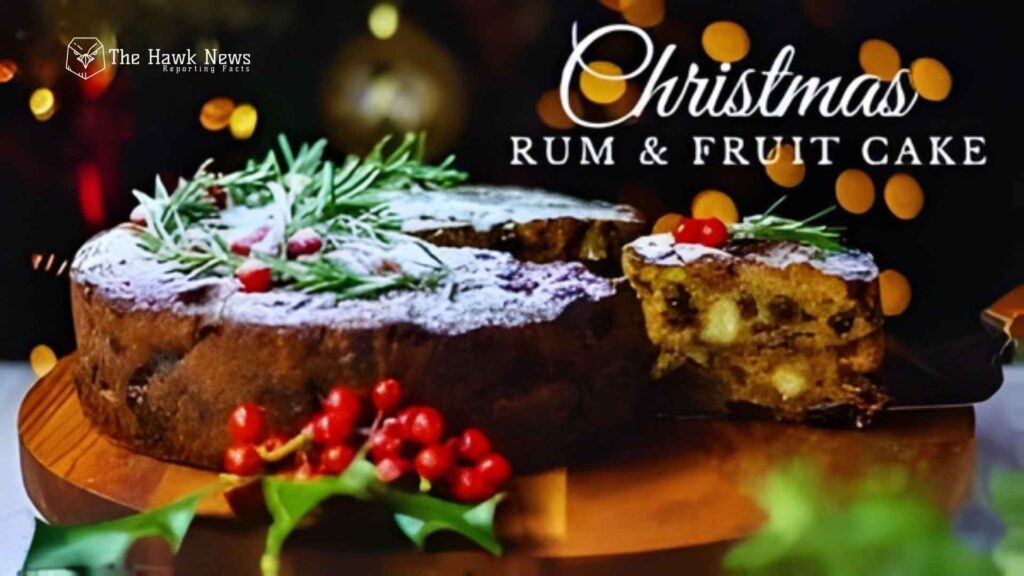
Few foods are as misunderstood—or as enduring—as the Christmas cake.
Often dismissed as overly dense or old-fashioned, the traditional Christmas cake is, in reality, one of the oldest surviving festive foods still eaten today.
It is not merely a dessert but a cultural artifact: shaped by ancient survival needs, medieval religious customs, colonial trade routes, and the science of preservation long before refrigeration existed.
Christmas cake did not begin as indulgence. It began as necessity.
From Survival Food to Seasonal Symbol
The earliest ancestor of Christmas cake can be traced back to ancient Rome, where soldiers and travelers consumed compact, long-lasting mixtures of grain, honey, dried fruits, and nuts. These early “cakes” were designed to sustain energy over time, not to delight the palate.
This concept evolved in medieval Europe into frumenty, a porridge-like dish made from boiled wheat, dried fruits, spices, and sometimes alcohol.
Frumenty was commonly eaten during winter festivals, including early Christmas observances, when communities gathered after long periods of fasting.
Over centuries, frumenty thickened, sweetened, and transformed—gradually becoming something recognizably closer to cake.
The Medieval Turning Point: When Cake Became Celebration
By the Middle Ages, Christmas cake had become both culinary and symbolic.
The expanding spice trade introduced cinnamon, nutmeg, cloves, and ginger—luxuries that only the wealthy could afford. Sugar, imported through colonial networks, replaced honey as a sweetener. These ingredients elevated the cake from sustenance to celebration.
Christmas cake came to signify:
- The end of Advent fasting
- Abundance after scarcity
- Community, generosity, and faith
In an era when food scarcity was common, a rich cake filled with fruits and spices was a statement: survival had been achieved, and gratitude followed.
Why Christmas Cake Is Dense—By Design
The most distinctive feature of Christmas cake—its density—is intentional.
Its core components act as natural preservatives:
- Dried fruits resist spoilage
- Sugar reduces moisture
- Alcohol inhibits bacterial growth
Long before refrigeration, this combination allowed cakes to be baked weeks or even months in advance. The tradition of “feeding” the cake with brandy or rum was not merely ritualistic; it was practical food science.
The cake improved with time. Flavor deepened. Texture matured.
Few modern foods are designed to age gracefully. Christmas cake is one of them.
The British Standard and Global Spread
The Christmas cake most familiar today took shape in 18th- and 19th-century Britain, where recipes stabilized and traditions formalized.
Typically, the cake includes:
- Raisins, currants, and sultanas
- Candied citrus peel
- Butter, eggs, flour
- Warm spices
- Brandy or rum
Once baked, it is wrapped tightly, periodically fed with alcohol, and finally sealed with marzipan and icing—creating a protective outer layer that further preserves the cake.
As the British Empire expanded, Christmas cake traveled with it, adapting to local climates and ingredients.
Regional Variations Around the World
India
In India, Christmas cake—often called plum cake—absorbed local influences. Cashews, cardamom, dark rum, and regionally available dried fruits became common. In Kerala especially, plum cake is deeply woven into Christmas identity, transcending religious boundaries.
The Caribbean
Caribbean versions are darker and heavily soaked in rum or wine, sometimes aged for months. Here, Christmas cake reflects both colonial legacy and tropical abundance.
Australia and New Zealand
With Christmas falling in summer, cakes tend to be lighter, less alcohol-heavy, and sometimes served chilled—proof that tradition adapts to climate.
Continental Europe
Elsewhere, the concept evolved differently:
- Germany’s Stollen: bread-like, dusted with powdered sugar
- Italy’s Panettone: airy, yeast-based, celebratory
Different forms, same principle: preservation, fruit, and festivity.
Superstition, Symbolism, and Ritual
Christmas cake has long carried symbolic weight.
Traditionally, ingredients were stirred while making wishes. Objects such as coins or rings were sometimes baked inside, turning the cutting of the cake into a moment of fortune-telling.
Even its round shape was meaningful—symbolizing eternity and unity.
The cake was not just eaten; it was performed.
A Dessert People Love—or Avoid
Christmas cake is famously polarizing.
For some, it represents nostalgia, memory, and continuity. For others, it feels too heavy, too sweet, or too old-fashioned.
Yet its endurance is undeniable. Few foods inspire such strong emotional reactions across generations.
Reinventing the Tradition
Today’s bakers continue to reinterpret Christmas cake:
- Alcohol-free versions
- Vegan and gluten-free adaptations
- Reduced-sugar recipes
- Miniature or personalized cakes
Innovation has not erased tradition—it has kept it alive.
Why Christmas Cake Still Matters
In an age of instant gratification, Christmas cake stands as an outlier.
It requires planning.
It rewards patience.
It improves with time.
More than dessert, it is a reminder that some traditions endure precisely because they refuse to rush.
Christmas cake is not about sweetness alone.
It is about time, memory, and survival—baked slowly into something meant to last.
And long after the decorations are packed away, it remains—quietly waiting, just as it always has.