“Autumn is a second spring when every leaf is a flower.” – Albert Camus
There is something quietly transformative about autumn. The world shifts, leaves turn gold and crimson, and the air grows crisp with a whisper of change.
As nature prepares to shed what is no longer needed, it mirrors the deeper seasons of our own lives—moments where letting go becomes both necessary and beautiful.
Autumn is not just a season; it is a teacher, offering lessons in impermanence, humility, and the gentle art of surrender.
The Beauty in Letting Go
As leaves detach from trees, they do not resist. They fall gracefully, returning to the soil to nourish new life. There is a profound wisdom here: life is cyclical, and nothing is meant to remain forever.
Many of us cling to old habits, grudges, and fears as though they are permanent fixtures of our identity. Autumn teaches that holding on too tightly only prevents growth.
Philosopher Alan Watts once wrote, “The only way to make sense out of change is to plunge into it, move with it, and join the dance.”
Each fallen leaf is a gentle reminder that release can be beautiful and that endings can carry the seeds of new beginnings.
Reflection on the Colors of Life
The riot of colors in autumn—fiery reds, deep oranges, muted browns—reflects the spectrum of human experience. Life is rarely monochrome; joy and sorrow, success and failure, laughter and tears, all mingle together. Like the leaves, every moment is fleeting.
“Life starts all over again when it gets crisp in the fall.” – F. Scott Fitzgerald
Autumn invites us to reflect on our journey. Are we embracing the lessons of our experiences? Are we recognizing the beauty even in the moments of decay and decline? There is grace in acknowledging imperfection, in seeing that even the most fragile or fading aspects of life hold their own quiet glory.
Silence as a Teacher
Walk beneath autumn trees, and you notice something profound: a stillness in the world. The air feels different, quieter, reflective. This silence is not empty—it is instructive.
Modern life is often filled with noise: screens, deadlines, chatter, and endless stimulation. Autumn reminds us to pause, to listen, and to connect with our inner world.
The rustling leaves teach us the rhythm of patience, the cadence of introspection, and the importance of slowing down to truly see what matters.
Rainer Maria Rilke beautifully captured this idea: “Let everything happen to you: beauty and terror. Just keep going. No feeling is final.” Autumn, in its transient glory, embodies this principle.
Cycles and Spiritual Insight
Just as nature moves through cycles of growth, harvest, decay, and rest, so too does the human soul. We grow, we achieve, we face loss, and then we rest—only to begin again. These seasons are not random; they are divine rhythms.
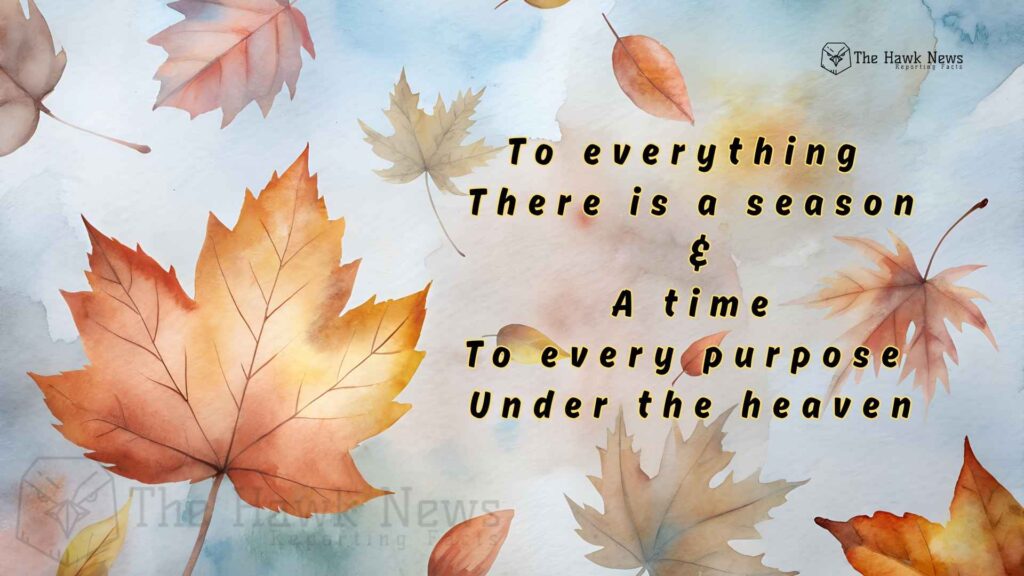
Biblically, the cycle of life and seasons is a metaphor for God’s plan and timing. Ecclesiastes 3:1–2 reminds us: “To everything there is a season, and a time to every purpose under the heaven: a time to be born, and a time to die; a time to plant, and a time to pluck up that which is planted.”
Autumn, in its letting go, teaches obedience to divine timing.
There is wisdom in understanding that some things must pass, not as punishment or loss, but as preparation for what is yet to come.
Lessons in Humility and Gratitude
As trees shed their leaves, they stand bare, vulnerable, yet resilient. Autumn encourages humility. In our lives, we too must accept seasons of vulnerability and uncertainty. There is no shame in letting go; there is strength in trusting the process of change.
Gratitude, too, is a lesson of autumn. Each leaf, though destined to fall, contributes to the life around it.
Every moment, every relationship, every experience—even those that end—adds to the tapestry of our lives. A grateful heart recognizes the beauty in transience and the gift inherent in every fleeting moment.
Self-Introspection and Personal Renewal
Autumn is an invitation to ask: What am I holding onto that no longer serves me? What fears, regrets, or attachments can I release to grow anew?
Through reflection, we find clarity. By surrendering what is unnecessary, we make space for what truly matters—love, purpose, faith, and peace. Just as the forest floor nourishes the next season’s growth, our introspection becomes the fertile ground for spiritual renewal.
John Keats once wrote: “The poetry of earth is never dead.” In autumn, this poetry whispers to our souls, urging us to align with life’s deeper rhythms.
Biblical Perspective: Eternal Lessons in a Temporary World
Autumn reminds us that life is temporary, yet God’s promises endure. Psalm 1:3 likens a person rooted in God’s word to a tree planted by streams of water, yielding fruit in its season, leaves never withering.
Our earthly experiences, like autumn leaves, may fall, fade, and change, but in Christ, there is eternal continuity. Each season, each lesson, each moment of letting go is an opportunity to draw closer to God’s purpose. By embracing the wisdom of autumn, we cultivate patience, resilience, and a heart attuned to eternal truths.
Romans 12:2 further exhorts: “Do not conform to the pattern of this world, but be transformed by the renewing of your mind.”
Autumn teaches transformation—not in resistance, but in harmony with divine timing, teaching us to release what is temporary and cherish what is eternal.
Conclusion: Embracing the Lessons of Autumn
Autumn leaves remind us that change is natural, beauty exists in impermanence, and surrender is not defeat but grace. They invite us to reflect deeply, to cultivate gratitude, and to embrace the rhythm of life’s cycles.
In a world often obsessed with permanence, speed, and accumulation, autumn encourages pause, reflection, and renewal.
As we watch the leaves fall, let us consider the lessons in our own lives: what to let go, what to nurture, and how to align with God’s eternal purposes.
“For everything there is a season, and a time for every matter under heaven.” – Ecclesiastes 3:1
May this autumn not only color our surroundings but illuminate our hearts, teaching us that in letting go, in reflecting, and in trusting, we find the eternal beauty of God’s design.