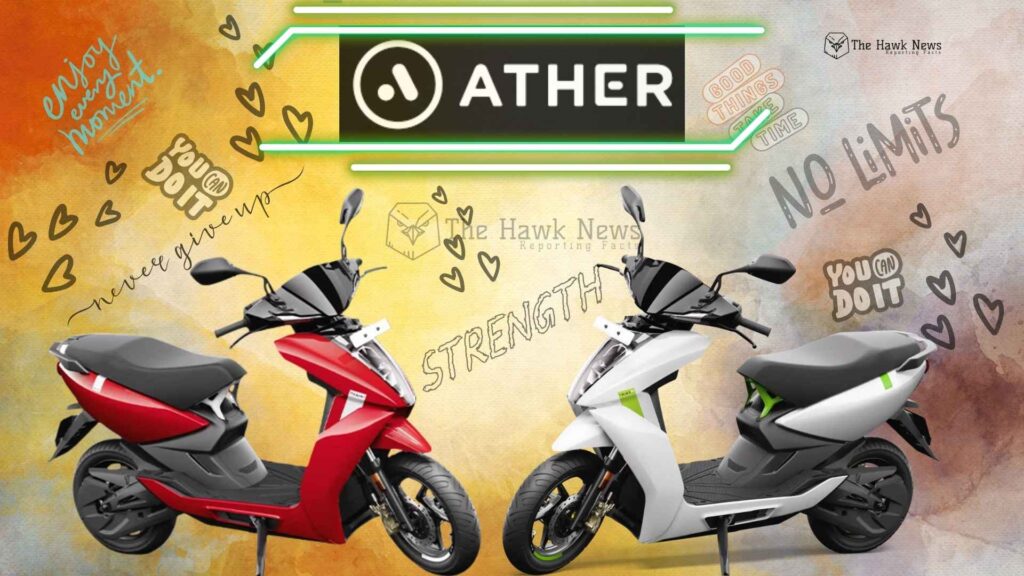
Introduction: A Brand at the Crossroads
When Ather Energy launched its first electric scooters, it positioned itself as India’s answer to Tesla—sleek, tech-forward, and unafraid to dream big. Today, nearly a decade later, the company finds itself at a pivotal moment.
On one hand, Ather is pushing the boundaries of EV technology, unveiling futuristic platforms, rider-centric software, and bold concept vehicles.
On the other, it faces financial scrutiny, mounting competition, and the enormous challenge of scaling fast enough to keep pace with India’s booming EV adoption.
The question isn’t just whether Ather can survive—but whether it can lead.
The Tech Frontier: EL Platform and Beyond
At its Community Day 2025, Ather showcased what it sees as the foundation of its next growth wave: the EL Platform. Unlike traditional models, this new architecture emphasizes simplification and scale—reducing assembly time by 15% and extending service intervals to every 10,000 km.
Safety is woven into the design. Features like AEBS (Autonomous Emergency Braking System)—once reserved for high-end cars—are now being engineered into scooters. In a country where road safety is a persistent challenge, this could be a game-changer.
But Ather didn’t stop there. It pulled the covers off Redux, a concept scooter designed less as a commuter and more as a mobility revolution. With posture-adaptive frames, rapid acceleration, and futuristic ergonomics, Redux looks like Ather’s attempt to reimagine what a two-wheeler can be in an EV-first future.
A Smarter Ride: Software That Learns You
If Ather’s hardware sets it apart, its software stack is the secret sauce.
The launch of AtherStack 7.0 signaled a shift from scooters as machines to scooters as smart companions. The update brings:
- AI-powered voice controls, tuned to Indian accents.
- Proactive alerts like pothole detection, crash warnings, and ParkSafe notifications.
- Remote-control features, allowing riders to interact with their scooters from anywhere.
The beauty of this ecosystem is its OTA (over-the-air) delivery—meaning even older Ather models instantly become smarter without needing a hardware upgrade.
In a market crowded with budget-first EVs, this “tech premium” helps Ather stand apart.
Scaling the Hills of Expansion
Innovation alone doesn’t secure dominance. For Ather, the next challenge is reach.
Currently, its presence is strong in metros and Tier-1 cities. But as India’s appetite for EVs expands, the company is betting on rapid retail growth—doubling its network to 700 outlets by March 2026.
Much of this momentum comes from the runaway success of the Ather Rizta, a family-focused scooter that now accounts for 60% of the brand’s sales. In less than a year, Rizta sold 100,000 units, proving that Ather can appeal not just to tech enthusiasts but also to everyday families seeking reliability, space, and affordability.
To meet this demand, Ather is building a new facility in Aurangabad, designed to roll out EL-platform scooters by the 2026 festive season.
Partnerships and Pressure: The Dual Reality
Growth comes with both enablers and challenges.
On the enabler side, Ather signed a strategic MoU with Infineon Technologies, giving it access to advanced semiconductors and system solutions critical for LEVs (light electric vehicles), charging infrastructure, and rider safety systems. Such alliances help future-proof its technology stack against global competitors.
On the pressure side, however, Ather’s IPO debut disappointed investors. Despite the hype, its muted listing raised questions about profitability, market share, and whether the company can sustain long-term growth amid cutthroat competition from Ola Electric, TVS, and Bajaj.
This dual reality—of cutting-edge products and financial caution—frames Ather as both a trailblazer and a company under the scanner.
The EV Landscape: Room to Grow, Room to Stumble
Ather’s ambitions must also be seen in the context of India’s wider EV market. Today, two-wheelers dominate the conversation, and Ather predicts penetration will rise to 40–75% by FY31.
If true, the opportunity is massive—but so is the race.
Key rivals are not standing still. Ola Electric is ramping up aggressively, TVS and Bajaj bring decades of brand trust, and Hero MotoCorp—the world’s largest two-wheeler manufacturer—has its own EV roadmap.
In this crowded space, Ather’s play seems clear: win on innovation, differentiate on experience, and scale on reliability.
The Consumer Pulse: Why Ather Still Matters
Despite financial noise, Ather retains a unique place in India’s EV story: it is seen as the innovator’s brand.
- Tech-first image: Riders often compare owning an Ather to owning an iPhone—sleek, premium, and ahead of the curve.
- Community-driven growth: The company invests heavily in customer engagement, with events, forums, and user feedback loops shaping its roadmap.
- Sustainability ethos: Ather continues to frame its products not just as vehicles but as lifestyle choices aligned with a greener future.
For many consumers, buying an Ather isn’t just about range or speed—it’s about being part of a vision.
Conclusion: The Road Ahead
Ather Energy stands at a defining juncture. With the EL Platform, Redux concept, AtherStack 7.0, and Rizta’s success, it has shown both vision and execution.
Yet, its financial undercurrents and the relentless rise of rivals mean the company cannot afford missteps.
The road ahead will require Ather to balance dreaming and delivering—innovating boldly while grounding itself in sustainable business growth.
In a way, this is fitting. After all, the company built its identity around charging into the future.
The only question is: will India follow?