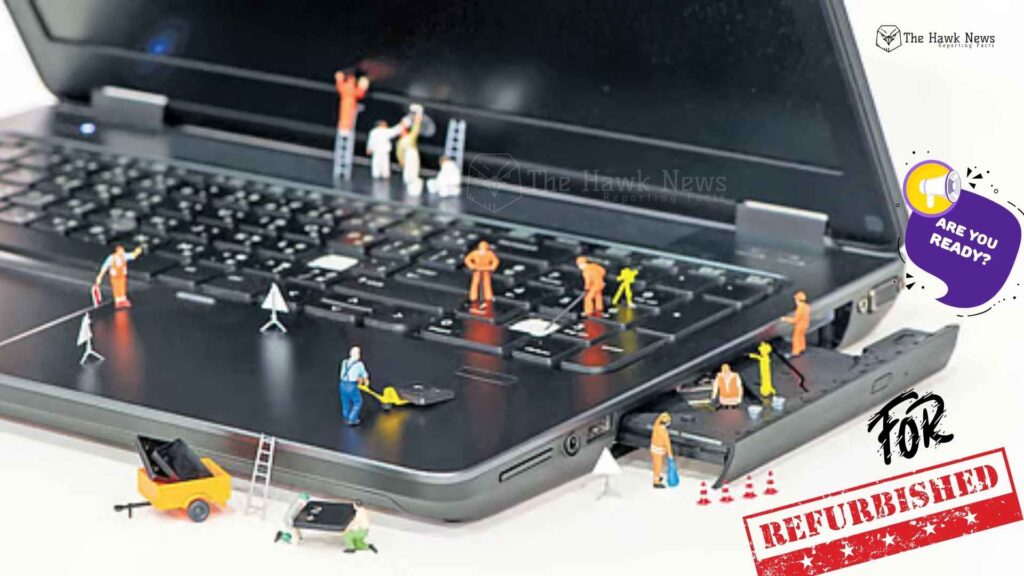
Walk into an electronics store or scroll through an online marketplace, and the choice stares you in the face: a brand-new laptop gleaming with possibility, or a refurbished model promising similar power at a fraction of the cost.
The decision is no longer just about money; it’s about mindset.
In an age where every purchase doubles as a reflection of our values, how we buy technology reveals much about who we are, and perhaps even more about where we are headed as a society.
The Allure of “New”
For generations, “new” has been synonymous with progress, pride, and prestige. A new laptop isn’t just a tool; it’s a badge. It signals success, status, and self-reward.
The seal being broken on untouched packaging carries a thrill no “renewed” product can quite replicate.
Psychologists call this the novelty effect — the dopamine rush we feel when acquiring something shiny and unblemished. In cultures that prize individual success, this effect is amplified.
A new device is more than functional; it is aspirational.
But is this allure still as strong in today’s buyer?
The Shift in Generational Values
Enter Gen Z and Millennials, generations defined not just by their digital fluency but by their growing concern for sustainability and financial pragmatism.
Rising student debts, inflation, and a volatile job market have made them careful spenders. At the same time, their awareness of climate change and environmental damage has instilled a moral lens into shopping habits.
For many young buyers, refurbished no longer means “second-hand” in a negative sense — it means “smart.” It means maximizing value while minimizing waste. It’s less about flaunting the newest release and more about making conscious, responsible choices.
Surveys increasingly show that younger consumers are more open to refurbished electronics than their parents.
To them, a laptop that performs well doesn’t need to be the newest model; it just needs to meet their needs without draining their wallet or the planet.
The Trust Gap
Still, the refurbished market faces a stubborn barrier: trust. The word “refurbished” can raise eyebrows. Questions surface: Was it broken before? Will it last? Is this just a used product dressed up as good as new?
This trust gap explains why many buyers instinctively reach for new products despite the higher cost. Peace of mind often outweighs potential savings.
After all, no one wants a laptop that quits mid-semester or crashes mid-presentation.
Yet here’s the shift: major players like Apple, Dell, HP, and Amazon are actively bridging this gap. Their certified “renewed” programs come with warranties, quality checks, and return policies that rival those of new products.
By professionalizing the refurbishment process, they are legitimizing what was once a risky choice.
Trust, once the Achilles heel of refurbished goods, is being repaired one warranty at a time.
The Sustainability Factor
Beyond cost and trust lies a bigger story: sustainability. Technology is one of the fastest-growing sources of e-waste globally. Millions of laptops, smartphones, and tablets are discarded each year, often still functional, but deemed “obsolete.” These devices end up in landfills, leaching toxic materials into the environment.
Refurbishing interrupts this cycle. By extending the life of a laptop by even two or three years, buyers are not only saving money but also reducing waste, conserving resources, and cutting carbon footprints.
For Gen Z — a generation that grew up watching climate change unfold in real time — the sustainability factor isn’t just a perk. It’s a priority. In this sense, choosing refurbished is more than a personal decision; it’s a statement of values.
Consumerism vs. Consciousness
But let’s not oversimplify. The desire for new isn’t vanishing. Consumer culture still thrives on launches, upgrades, and marketing hype.
When a tech giant announces a new product, queues still form. Influencers still unbox. Social media still amplifies the “latest and greatest.”
The battle, then, isn’t between “new” and “renewed.” It’s between consumerism and consciousness. It’s about whether buyers will continue to equate identity with novelty or shift toward choices that balance practicality with principle.
This is where refurbished laptops find their place: as a middle path. They allow buyers to embrace technology without feeding the endless cycle of consumption. They challenge the notion that value lies in newness, suggesting instead that it lies in usefulness, durability, and intention.
The Economic Angle
Let’s not forget the sheer economics. A refurbished laptop can cost 20–50% less than its new counterpart. For students, freelancers, or young professionals just starting out, this price difference can be the deciding factor.
During economic downturns or in markets where purchasing power is limited, refurbished products offer access to quality technology at an accessible price point. In this way, they democratize access — ensuring that innovation isn’t reserved for the wealthiest but shared more broadly.
And as tech giants expand their refurbished programs, these devices are no longer limited to shady outlets or risky second-hand stores. They are becoming mainstream, trustworthy, and, importantly, fashionable.
The Cultural Rebrand
Ultimately, the refurbished market is undergoing a cultural rebrand. What was once considered “settling for less” is now reframed as choosing wisely. Buying renewed no longer signals lack of means; it signals smart priorities.
Think of how vintage fashion, once dismissed as “used clothes,” is now celebrated as chic and sustainable. Refurbished tech is on a similar trajectory — moving from stigma to status, from compromise to culture.
Conclusion: The Choice Ahead
So, where does this leave us? The question of new versus renewed is not just about laptops. It’s about values colliding with habits. It’s about whether this generation will continue the cycle of wasteful consumerism or carve out a path of conscious consumption.
Yes, the allure of “new” still sparkles. But the rise of refurbished tech signals that many are no longer dazzled by surface shine. They seek depth — in price, in purpose, and in planet-friendly practices.
In the end, the decision between new and renewed is not merely transactional. It is generational. It is cultural. And, in many ways, it is ethical.
The real question isn’t whether people will buy refurbished laptops. It’s whether we, as a society, will recognize that progress doesn’t always mean new — sometimes, it means making the old live again.