The Day the Sky Roared
On February 28, 2026, the world watched the dawn break differently over the Middle East.
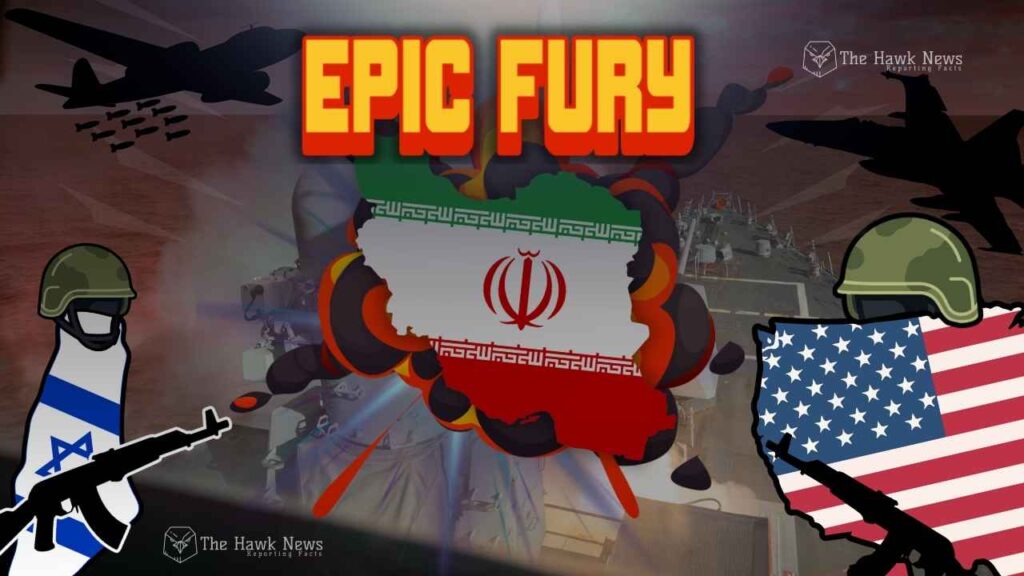
The calm horizon of Iran lit up in fire and thunder as U.S. and Israeli forces launched coordinated airstrikes under the codename Operation Epic Fury — one of the most significant military offensives of the decade.
The targets: Iranian missile bases, air defense systems, nuclear research sites, and command centers.
The objective: to cripple Iran’s military and nuclear capability before it could further destabilize the region.
The offensive, as confirmed by the U.S. Central Command (CENTCOM), involved hundreds of aircraft, long-range missiles, and naval assets — the largest concentration of American firepower in the region since the Iraq invasion of 2003.
“This operation aims to degrade Iran’s ability to threaten U.S. forces and allies,” said CENTCOM officials in their press release.
Within hours, the skies over Tehran, Isfahan, and Shiraz blazed red. The echoes of detonation reached beyond borders — and the world took notice.
Why the Operation Began
For months leading up to the assault, tensions had been simmering.
Iran’s nuclear enrichment activities and growing network of regional militias were pushing diplomatic efforts to the edge.
Intelligence assessments from Washington and Tel Aviv warned that Tehran was nearing “irreversible progress” in developing a nuclear weapon — a line both nations vowed would never be crossed.
Behind closed doors, U.S. and Israeli officials forged a joint operational framework:
- “Operation Epic Fury” — the U.S.-led strike campaign.
- “Operation Roaring Lion” — Israel’s simultaneous assault.
Both operations began within the same hour — coordinated, calculated, and relentless.
“This was not a symbolic act,” said a senior defense analyst. “It was a message — that deterrence would now be enforced, not negotiated.”
The Cost of Fury
War, however surgical, is never bloodless.
Within the first 24 hours, CENTCOM confirmed three U.S. service members killed and five seriously wounded during combat operations in or around Iran-linked positions.
Dozens of Iranian soldiers were reported dead or injured, with civilian casualties emerging in localized areas — though numbers remain unverified.
Iran responded swiftly, launching missile and drone attacks toward U.S. installations and Israeli territories.
The ripple of retaliation ignited fears of regional escalation, as Iraq, Syria, and Lebanon braced for possible spillover.
“Every strike in modern warfare creates two kinds of shockwaves — one on land, and one in conscience,” noted a Middle East observer.
A Region on the Edge
The death of Iran’s Supreme Leader, Ayatollah Ali Khamenei, during the strikes added an explosive new dimension.
With leadership uncertain and military retaliation intensifying, analysts warn that the region could enter a power vacuum marked by proxy wars and political fractures.
Neighboring nations — from Saudi Arabia to Turkey — are now recalibrating alliances, wary of how far the United States and Israel intend to push.
European capitals are urging restraint, while the United Nations Security Council has called for an emergency session to discuss humanitarian safeguards.
Meanwhile, oil prices have surged, trade routes have tightened, and global markets have responded with anxiety.
“The Middle East once again finds itself at the intersection of prophecy and policy,” said a senior international correspondent.
The Questions That Linger
As the dust of Operation Epic Fury settles, several questions hang heavy in the air:
- Will this offensive neutralize Iran’s military ambitions — or ignite a wider regional war?
- Can deterrence sustain peace, or will it breed deeper resistance?
- And above all — at what cost does security come, when peace itself becomes a casualty?
Military historians note that every major strike in the Middle East carries unintended consequences — new insurgencies, displaced civilians, and fractured societies.
The echoes of previous wars remind us: wars are easy to begin, but rarely end with victory alone.
The Human Thread
Beyond politics and power, lies the quiet story of human cost.
Families fleeing under red skies. Soldiers waiting for orders in unfamiliar deserts.
Children in classrooms silenced by the sound of jets above.
The images coming from the ground tell of fear, confusion, and resilience — of a people caught between national pride and global politics.
“The tragedy of war is that it always punishes those who didn’t start it.”
The Road Ahead
At present, Operation Epic Fury continues — though officials hint that its initial phase has concluded.
The U.S. Central Command asserts that “key military objectives have been achieved,” but regional observers warn that Iran’s retaliation could extend across months.
International responses remain split — some hail it as a decisive move against aggression, others decry it as a reckless escalation.
In the halls of diplomacy, the debate grows louder:
is this the rebirth of deterrence, or the reawakening of endless conflict?
In Closing
In the history of modern warfare, Operation Epic Fury may stand as a turning point — one that redefined not just alliances, but ethics.
Because every time the world wages war in the name of peace, it must ask — who measures the price?
“Strength without conscience is destruction.
Peace without vigilance is illusion.”
And in between, there lies humanity — bruised, waiting, hoping that one day, the skies will burn only with the light of dawn, not the fury of nations.