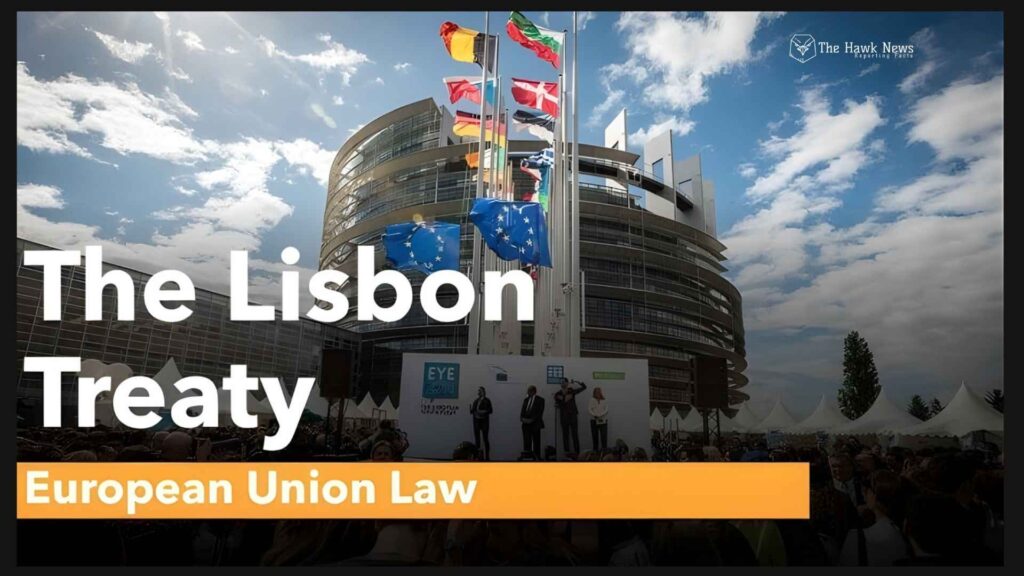
On December 1, 2009, the Treaty of Lisbon officially came into force — a moment that quietly but fundamentally rewired how the European Union works.
At the time, it was framed as an institutional upgrade: streamline decision-making, strengthen cooperation, modernize the EU for the 21st century.
But with the benefit of hindsight, Lisbon wasn’t just a treaty.
It was Europe’s attempt to answer a question the whole world is still asking today:
How do you hold diverse nations together in an age where everything pulls them apart?
Fifteen years later, as global politics fractures and alliances wobble, the Treaty of Lisbon reads less like a bureaucratic blueprint and more like a warning — and a lesson — for a generation navigating its own version of chaos.
The Moment Europe Hit “Update”
The Treaty of Lisbon was born out of crisis.
The EU had expanded rapidly in the early 2000s, taking in countries with different histories, economies, political cultures, and expectations. The existing system — built for a much smaller union — was creaking under the weight.
Lisbon was the patch.
It created:
- A more powerful European Parliament
- A streamlined European Council President
- A unified voice in diplomacy through the High Representative for Foreign Affairs
- Faster decision-making through changes in voting rules
- A clearer division of powers between the EU and its member states
Its purpose was simple:
If Europe wanted to act like one bloc, it needed to function like one.
But Lisbon emerged just as a new global era was beginning: the age of uncertainty.
A Treaty Born for Stability — Thrown Into Instability
Only a year after the treaty took effect, the Eurozone debt crisis exploded.
Then came:
- The migrant crisis
- Brexit
- Populism
- Russia’s invasion of Ukraine
- An energy crisis
- COVID-19
- Inflation waves
- A new Cold War-like world
The Lisbon Treaty’s promise of unity and coherent action was immediately stress-tested — sometimes stretched, sometimes strained, sometimes triumphant.
The Successes
When the EU imposed coordinated sanctions on Russia or negotiated vaccine deals as one bloc, Lisbon’s signatures were visible.
The strengthened foreign policy machinery helped Europe speak louder.
The Failures
But Lisbon couldn’t erase deep divides.
Immigration policies split nations.
Brexit exposed raw faultlines.
Economic asymmetries still create tension between the North and the South.
In other words:
Lisbon could improve the system.
It couldn’t erase human politics.
Why Lisbon Matters Now
Because the world today looks eerily similar to the world Europe feared in 2009 — only amplified.
We live in:
- A fragmented digital ecosystem
- Politically polarized societies
- Economies that rise and fall overnight
- An era where misinformation spreads faster than truth
- A period where alliances are both essential and fragile
The Lisbon Treaty wasn’t just Europe fixing its institutions.
It was Europe predicting the future — a future in which survival depends on collective response.
In 2025, as nations reconsider what unity means, Lisbon offers a rare vantage point.
The Modern Parallels: How This Treaty Speaks to Today’s Generation
1. Unity Requires Structure — Not Emotion
Movements, collaborations, and global alliances can’t run on vibes.
Lisbon reminds us that systems matter — whether in governments, corporations, or online communities.
Your generation calls it “building frameworks.”
Lisbon was Europe building its framework for the storms ahead.
2. Diverse voices make decisions harder — but stronger
The EU has 27 member states.
A Zoom meeting with three friends is chaotic; imagine running a continent.
Yet diversity is the EU’s superpower.
Lisbon didn’t silence differences — it formalized how they could be negotiated without breaking the union.
Today’s hyper-pluralistic world needs that exact skill:
The ability to disagree without dissolving.
3. Young people want transparency — Lisbon was an early attempt at it
By shifting power towards the European Parliament, the treaty placed more decisions into an elected, visible space rather than backrooms.
For a generation obsessed with accountability and representation, Lisbon reads like a precursor to “open governance.”
4. The world is shifting toward blocs — Lisbon was designed for a bloc-first future
Whether we like it or not, the global order is reorganizing into rival spheres:
- U.S.
- China
- EU
- Global South
- Regional alliances
Lisbon was Europe saying:
If we want a seat at the table, we must act as one.
The same applies to industries, communities, and even online creators — collaboration amplifies power.
5. Global problems don’t care about borders
Pandemics, climate change, cybercrime, AI ethics — none of these can be solved by one country.
Lisbon’s entire logic was built around that truth.
Today’s generation understands this instinctively:
The future is shared — or not at all.
The Real Story: A Treaty That Became a Mirror
The Lisbon Treaty wasn’t glamorous.
It didn’t have a moment like the moon landing or the fall of the Berlin Wall.
But it quietly answered a question every generation eventually faces:
How do you build unity in a world that keeps breaking apart?
Its answer wasn’t perfect.
But it was honest:
You don’t build unity with slogans.
You build it with structure, with compromise, with mechanisms that hold even when people disagree.
And that is why Lisbon matters today more than ever.
Because the fractures we see around the world aren’t failures of culture — they’re failures of structure.
The Lisbon Treaty is a reminder that societies must keep upgrading their systems if they want their ideals to survive.
A Lesson for a Fragmented Generation
Fifteen years later, the Treaty of Lisbon stands as a quiet symbol — not of Europe’s success, but of its effort.
In a time where the world is split by borders, beliefs, algorithms, and echo chambers, Lisbon whispers one truth:
If you want to stay together, you have to decide how to stay together.
Nations, communities, friendships, companies — every kind of collective today faces the same question Europe faced in 2009.
And the answer is the same:
Strength isn’t in uniformity.
Strength is in organized diversity.