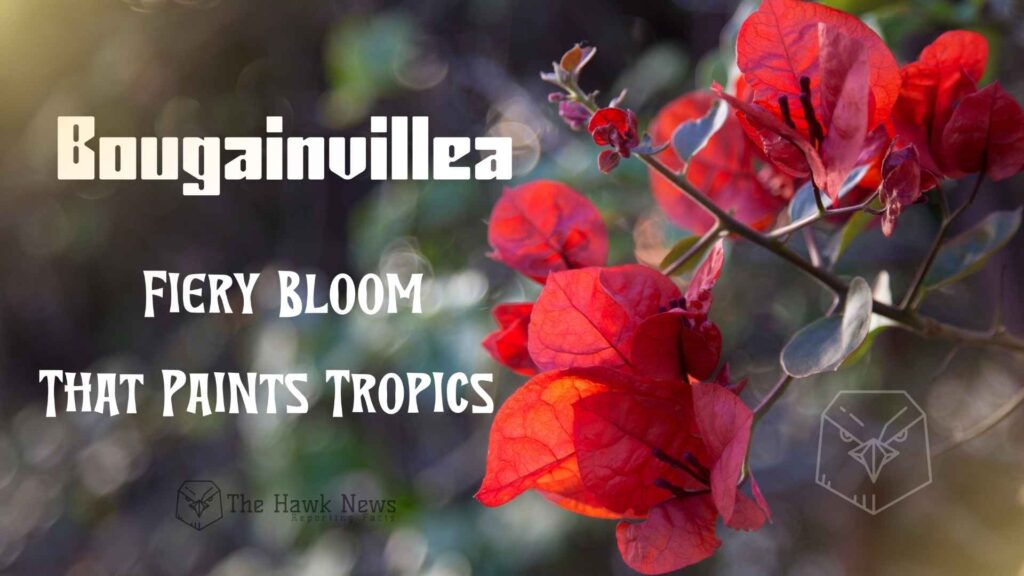
The Flower That Isn’t a Flower
At first glance, bougainvillea seems to burst with purple, pink, or fiery red petals — but here’s the twist:
those aren’t petals at all.
What you see are bracts — modified leaves — surrounding the plant’s tiny white, true flowers.
It’s this deception of beauty that makes bougainvillea fascinating to botanists and beloved by gardeners.
“Bougainvillea doesn’t bloom; it blazes,” says a horticulturist from The Royal Horticultural Society.
Native to South America, the plant was first discovered in the late 18th century by French explorer Louis Antoine de Bougainville, after whom it was named.
Since then, it’s traveled the world, becoming a symbol of tropical vibrancy and resilience.
The Science of Its Brilliance
Bougainvillea’s beauty is not just visual — it’s ecological.
It thrives where other plants struggle — in harsh sun, poor soil, and minimal water.
Its intense color serves a simple biological purpose: to attract pollinators despite its tiny, inconspicuous flowers.
And its thorny vines? They’re nature’s armor — protecting the plant from grazing animals and giving it a wild edge that makes it both ornamental and defensive.
Scientifically, bougainvillea belongs to the Nyctaginaceae family and comes in multiple hybrids and cultivars, including:
- Bougainvillea glabra (less thorny, smoother leaves)
- Bougainvillea spectabilis (rougher leaves, denser growth)
- Bougainvillea peruviana (a favorite for bonsai and fences)
The Green Infrastructure Hero
Beyond its beauty, bougainvillea plays a growing role in urban landscaping and climate adaptation.
In tropical and subtropical cities, it’s used for:
- Vertical gardening and natural fencing, providing shade and privacy.
- Air purification, as its dense foliage absorbs pollutants and dust.
- Erosion control, with roots that stabilize soil in dry slopes and coastal regions.
Urban planners in Chennai and Mumbai now encourage bougainvillea for green corridors, as it demands little maintenance yet enhances visual and ecological quality.
“It’s the perfect city plant,” notes environmentalist Dr. Meenakshi Rao. “It’s drought-tolerant, pollutant-resistant, and endlessly beautiful.”
The Cultural and Emotional Connection
In many regions, bougainvillea is more than a plant — it’s a metaphor.
Its thorns remind us of life’s resilience; its brilliance, of hope after heat.
In India, it’s often called ‘Paper Flower’ for its papery bracts.
In Greece and Spain, its bright walls drape white villages with color.
In Brazil, it’s nicknamed ‘Primavera’ — meaning Spring — symbolizing renewal and celebration.
“Bougainvillea teaches that beauty and endurance can coexist,” says author Elizabeth Gilbert, who described its bloom as “summer’s handwriting on the walls of life.”
Caring for the Blaze
Despite its dramatic presence, bougainvillea is surprisingly simple to care for:
- Sunlight: Needs at least 5–6 hours of direct sunlight daily.
- Soil: Prefers well-drained soil — neglect it a little, and it rewards you with color.
- Watering: Moderate; too much water causes leaf growth over flowers.
- Pruning: Regular trimming encourages denser flowering and shape.
And for those with balconies or terraces — dwarf varieties like ‘Raspberry Ice’ or ‘Barbara Karst’ make excellent potted companions.
Beyond Beauty — The Medicinal Bloom
In traditional medicine, bougainvillea has found its place as well.
Extracts from its leaves and flowers are used in herbal treatments for:
- Cough and sore throat relief
- Blood sugar regulation (experimental)
- Anti-inflammatory and antimicrobial purposes
While these uses are still being studied, they remind us that even the most ornamental plants can hold healing within.
(Note: Always consult a medical professional before using plant-based remedies.)
In Bloom and in Meaning
As climate change pushes cities toward sustainable greenery, bougainvillea stands as a resilient reminder:
beauty need not be delicate to be divine.
Its roots grip dust.
Its thorns guard life.
And its colors — fierce, unapologetic — speak of the strength that thrives under sunlight.
“Bougainvillea is proof that endurance can be gorgeous,” says landscape designer Ritika Khanna.