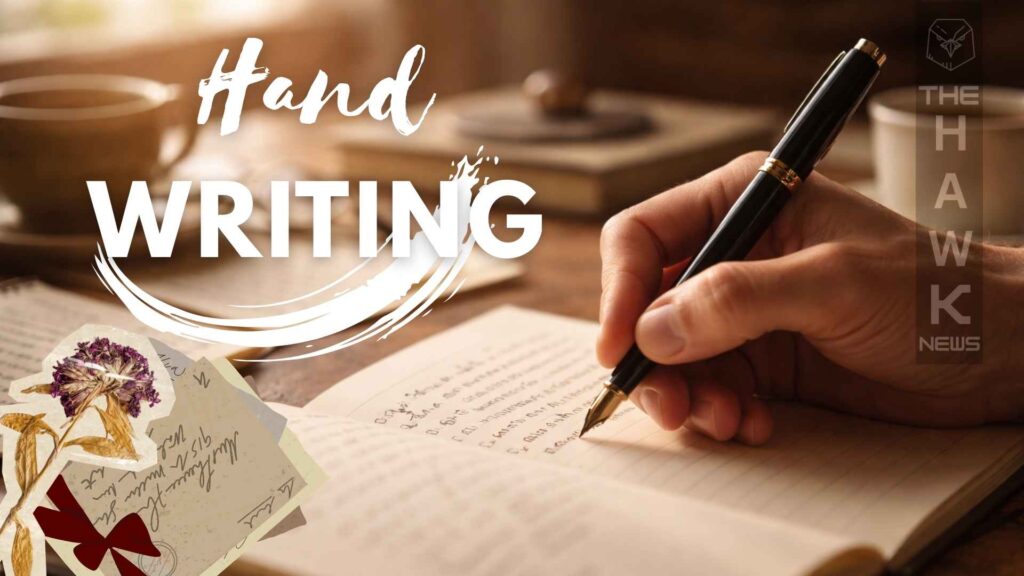
The Quiet Death of the Pen
In classrooms across the world, fingers now glide across glass instead of paper.
Assignments are typed, notes are dictated, and even signatures are scanned.
The pen, once a bridge between thought and soul, now lies mostly untouched — a relic in an age of touchscreens.
We are living in the most literate century in history — yet fewer people write.
Handwriting, once the heartbeat of learning and emotion, is fading into nostalgia.
“We used to pour ourselves onto paper. Now, we simply press send.”
But the loss of handwriting isn’t just aesthetic — it’s neurological, emotional, and deeply human.
The Science of Handwriting — Thinking Through the Fingers
Modern neuroscience has rediscovered what ancient scribes already knew:
when we write by hand, our brains light up differently.
Studies from the Norwegian University of Science and Technology and Princeton University reveal that handwriting activates more complex neural circuits than typing.
It strengthens memory, comprehension, and creativity — because writing by hand forces the brain to process slowly, deliberately.
Typing records information.
Writing translates it.
The physical rhythm of shaping letters deepens understanding and emotional connection.
“When you write something by hand, you don’t just learn it — you remember yourself learning it.”
The Emotional Weight of Ink
Handwriting carries warmth that no font can mimic.
Each stroke tells a story — of mood, pace, even temperament.
The slight pressure of pen on paper, the loops, pauses, and slants — they form a map of the writer’s inner world.
Think of a letter from a loved one, a diary entry, or even a signature — each one uniquely human, impossible to duplicate.
To write by hand is to leave a trace of your soul behind.
“A typed word may reach your eyes, but a handwritten word reaches your heart.”
The Vanishing Classroom
Across schools, notebooks are giving way to tablets.
Children now type before they truly learn to write.
And though digital literacy is vital, something crucial slips away —
the tactile connection between hand, mind, and meaning.
Teachers note that handwriting fosters focus, patience, and motor coordination.
Children who write their notes retain information longer and think more sequentially.
Typing may make them fast — but writing makes them thoughtful.
“Speed builds skill. Stillness builds understanding.”
The Pros and Cons — Progress and Pause
Pros of Digital Writing:
✅ Accessibility — information at your fingertips.
✅ Collaboration — instant sharing and editing.
✅ Sustainability — less paper, faster updates.
Cons of Losing Handwriting:
⚠️ Reduced motor control and neural engagement.
⚠️ Shallow learning and shorter memory retention.
⚠️ Emotional detachment from personal expression.
⚠️ Loss of individuality — every typed letter looks the same.
Technology, by itself, isn’t the enemy.
It’s the absence of balance that dulls the edge of expression.
Overcoming the Barrier — Writing as Renewal
Reclaiming the art of handwriting doesn’t mean rejecting technology.
It means using it wisely.
It means choosing — at least sometimes — to let the mind slow down enough to feel the weight of its own words.
Here’s how we can begin:
✏️ 1. Write a little every day.
Keep a short journal, even five lines — not typed, written. It reconnects your thoughts with your senses.
📜 2. Send handwritten notes.
A birthday card, a thank-you note, even a one-line letter can outlive dozens of texts.
📖 3. Encourage children to doodle and copy by hand.
It’s not old-fashioned; it’s brain-building.
🕊️ 4. Keep a pen near your workspace.
Let it remind you that not every idea needs to be typed to be true.
“The pen slows the hand, and the hand slows the mind — until thought becomes art.”
Handwriting isn’t about calligraphy.
It’s about connection — between heart and hand, between memory and meaning.
Words to Awaken the Writer Within
“To write by hand is to write twice — once in ink, once in memory.”
— Unknown
“Writing is the painting of the voice.”
— Voltaire
“In every letter lies the rhythm of a soul learning to speak.”
— Editorial reflection, The Hawk News
When you write, you remember.
When you pause to form words, you give your thoughts shape and permanence.
Each curve of ink is an act of defiance against the digital haze —
a declaration that your mind still breathes on paper.
Closing Reflection — A Call to Ink
Perhaps the future will still need pens — not for bureaucracy, but for beauty.
Not to sign contracts, but to remember contact.
The act of writing by hand is not regression; it’s restoration.
A return to stillness, patience, and identity —
to remember that the human mind was never meant to run, only to flow.
“The next time you write, don’t do it for efficiency.
Do it to remember what it feels like to think slowly.”
— Editorial reflection, The Hawk News