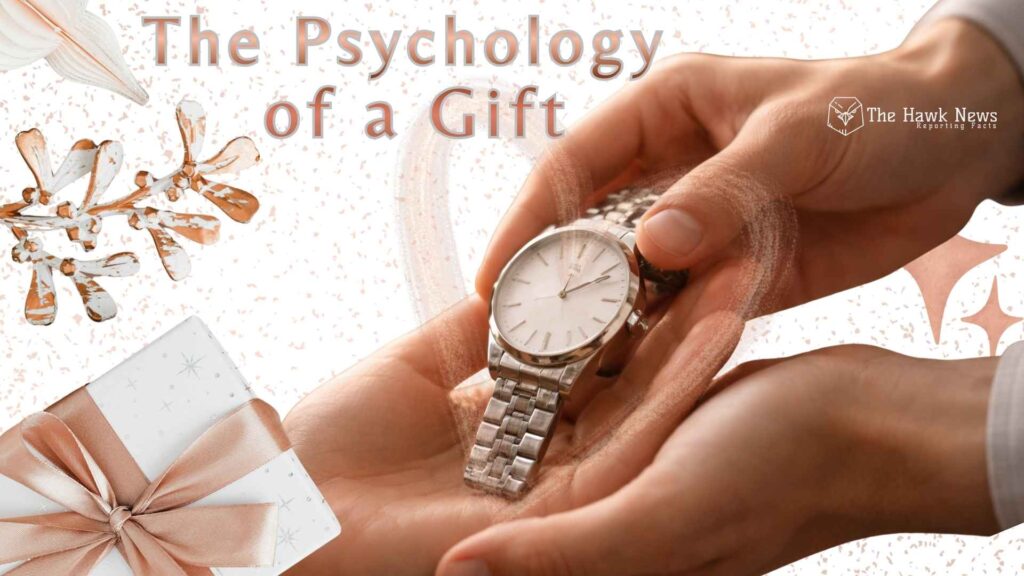
The Gift That Tells a Story
When we buy something — a watch, a dress, a book — it makes us happy.
But when someone gifts us that same thing, the joy feels deeper, almost radiant.
Why does it happen? Is it emotion, illusion, or the chemistry of our brains?
Perhaps it’s all of them, woven together — the science of hormones meeting the poetry of being seen.
Because joy, as it turns out, doesn’t just live in what we get.
It blooms in what we mean to someone else.
Ownership vs. Connection — Two Kinds of Happiness
Buying something for ourselves brings the warm satisfaction of achievement — I earned this.
It affirms effort, taste, and independence.
But being gifted something changes the equation completely.
It transforms the joy of ownership into the joy of connection.
A gift says, “You were seen. You were thought of. You were worth remembering.”
That feeling touches something far deeper than material happiness — it touches belonging.
Buying gives pleasure.
Being gifted gives meaning.
And meaning always lingers longer.
The Chemistry of Joy — When Hormones Tell a Story
Yes, science dances beneath the sentiment.
When you buy yourself something, your brain releases dopamine — the spark of anticipation, the thrill of newness. It’s exciting, but fleeting.
When someone gifts you something, your brain releases oxytocin and serotonin — the hormones of trust, gratitude, and connection.
The emotional temperature changes. The moment warms.
It’s the difference between “I got something” and “Someone thought of me.”
The first activates pleasure.
The second awakens peace.
It’s not illusion, — it’s biology wrapped in grace.
Being Seen — The Deepest Human Gift
A thoughtful gift says more than “Happy Birthday” or “Congratulations.”
It whispers, “I notice you.”
Psychologists call this emotional mirroring — when someone reflects back your identity, your tastes, your essence.
That reflection satisfies a primal need — to be understood.
That’s why a gift, however small, carries memory energy.
We remember the giver, the moment, the thought — because we remember being recognized.
“A gift,” writes Shiphrah, “is not about the thing itself, but the moment it says, you were remembered.”
Grace Over Earning — The Spiritual Layer
Buying something feels like victory.
Being gifted something feels like grace.
One is earned; the other is given.
And that difference carries a quiet spiritual truth.
When we receive a gift, we experience a miniature echo of divine generosity — love that expects nothing back.
It’s a reminder that the most meaningful things in life cannot be bought: kindness, thoughtfulness, time.
Every thoughtful gift is, in its own way, a small reflection of how God gives — freely, abundantly, lovingly.
That’s why being gifted something moves us in ways a purchase never can.
It’s not about possession — it’s about presence.
The Heart’s Economy — What Truly Lasts
So, is the joy different? Yes — completely.
One fills a shelf.
The other fills a memory.
Buying something says, “I can.”
Receiving something says, “I matter.”
And perhaps that’s why gifted joy feels lighter, brighter, and longer-lasting.
Because while dopamine fades, gratitude stays.
In the End — Happiness with a Pulse
There’s nothing wrong with buying what you love.
But the next time someone hands you a wrapped box or a small note — pause.
That heartbeat you feel isn’t just surprise or delight.
It’s the soul recognizing love in motion.
Because happiness multiplies not in what we own,
but in how deeply we are known.