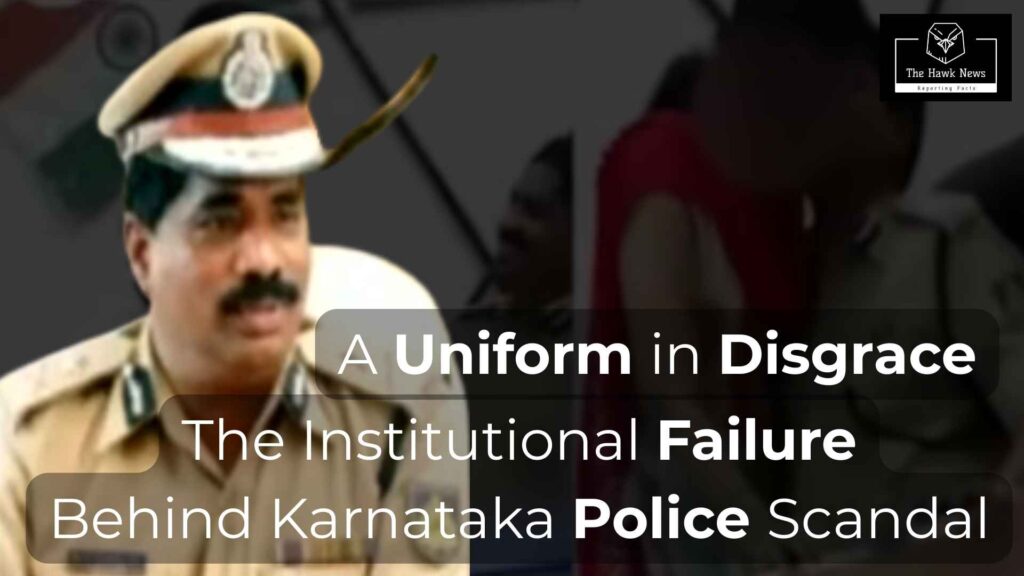
This controversy is not about scandal or voyeurism.
It is about authority, ethics, and institutional decay.
When a senior police official of Karnataka is accused of indulging in illicit behaviour inside an official premise, outrage is inevitable. A police office is not a private space. It is a symbol of state power and public trust. Violating that space is not a personal lapse. It is an institutional insult.
The suspension of K Ramachandra Rao, a DGP-rank officer, forces Karnataka to confront uncomfortable questions it has long avoided.
How Dare a Senior Police Official Do This Inside an Official Premise
A senior police officer is not an ordinary government employee. He represents authority, discipline, and control. His conduct defines the moral boundary of the force operating under him.
When such an officer allegedly treats an official office as a private space, it is not just shameful. It is dangerous. It sends a message that power has no limits and that rules apply only to the powerless.
This is not about individual morality.
This is about institutional credibility.
This Is Not About a Video. This Is About Power
The system did not act because of conscience.
It acted because evidence circulated.
Videos surfaced. Public outrage followed. Pressure mounted. Only then did the government move. This was not proactive accountability. This was reactive damage control.
The uncomfortable truth is simple.
Without public exposure, silence would have continued.
That reality itself exposes how accountability functions only when embarrassment becomes unavoidable.
“It Is an Old Video” Is Not a Defence
The claim that the video is old does not reduce the seriousness of the act.
An official office was never an acceptable space for such behaviour. Not in the past. Not now. Not ever. Time does not convert misconduct into morality.
Abuse of authority does not expire.
Shame does not fade with age.
Using time as a shield only deepens public distrust.
An Official Office Is Not Personal Territory
A police office carries the weight of the state.
Citizens enter such spaces seeking justice, protection, and dignity. Women enter police premises believing they are safe within those walls. When allegations suggest that senior officers misuse that space, trust collapses instantly.
This is not about private life.
This is about public responsibility.
Once authority spaces are violated, the damage extends far beyond one case.
When the Top Feels Immune, the Force Weakens
Policing is hierarchical by design. Behaviour flows downward.
If a senior-most officer allegedly acted without fear inside an official premise, it indicates something deeper. It suggests that consequences were never a concern.
That confidence does not appear overnight. It grows in an ecosystem of silence, protection, and unchecked authority.
This is not an isolated lapse.
It is a cultural warning.
What Is Really Happening Inside Karnataka Police
This incident did not emerge in isolation.
Over the years, Karnataka police has repeatedly faced allegations of power misuse, political pressure, and internal shielding. Each time, the response follows the same pattern.
Suspend.
Order an inquiry.
Wait.
Move on.
Structural reform rarely follows. Accountability rarely moves upward. This case forces a blunt question. How many warning signs were ignored before this reached the public?
Women Safety and Institutional Hypocrisy
The most disturbing contradiction lies here.
Police institutions regularly speak about women safety. Campaigns are launched. Awareness drives are conducted. Helplines are promoted.
But when allegations point towards a senior officer himself, that moral authority collapses instantly.
If women cannot feel safe even within police workplaces, the promise of protection outside becomes hollow.
That contradiction is what fuels public anger.
Power Without Accountability Becomes a Threat
Uniforms amplify power. Rank multiplies it.
Without strict accountability, power turns predatory. Senior officers enjoy insulation. Complaints struggle to move upward. Whistleblowers fear retaliation. Silence becomes survival.
This ecosystem does not prevent abuse.
It normalises it.
That is the real danger exposed by this controversy.
Suspension Is Not Justice
Suspension is administrative.
Justice is corrective.
Suspension protects the institution temporarily. Justice protects society permanently. Real accountability requires transparent inquiry, independent investigation, and public disclosure of findings.
Not internal reports buried in files.
Not quiet exits.
Not symbolic punishments.
Anything less is deception.
Responsibility Does Not End With One Officer
Focusing only on one name is convenient.
But accountability must extend wider.
Who reviewed his conduct over the years?
Who approved promotions?
Who ignored red flags?
Who benefited from silence?
Institutions fail when responsibility is personalised and systems remain untouched.
Political Caution Is Not Moral Leadership
Political responses have been carefully measured.
Statements about rule of law and inquiries sound firm, but they avoid discomfort. Moral leadership demands more than safe sentences. It demands courage to reform the system even when it hurts.
Silence from leadership is not neutrality.
It is protection.
The Damage to Public Trust
Police authority rests on trust, not fear.
Every scandal fractures that trust. Every denial deepens cynicism. Every delayed action tells citizens that power protects itself first.
When people stop believing in police integrity, democracy weakens. And when democracy weakens, abuse thrives.
The Question Karnataka Cannot Avoid
This case is not about one video or one officer.
It is about whether power is being distributed without accountability. Whether uniforms matter more than dignity. Whether citizens safety, especially women safety, is real or rhetorical.
If power is handed to those who misuse it without fear, citizens are not protected. They are exposed.
That is the real shame.
That is the real danger.