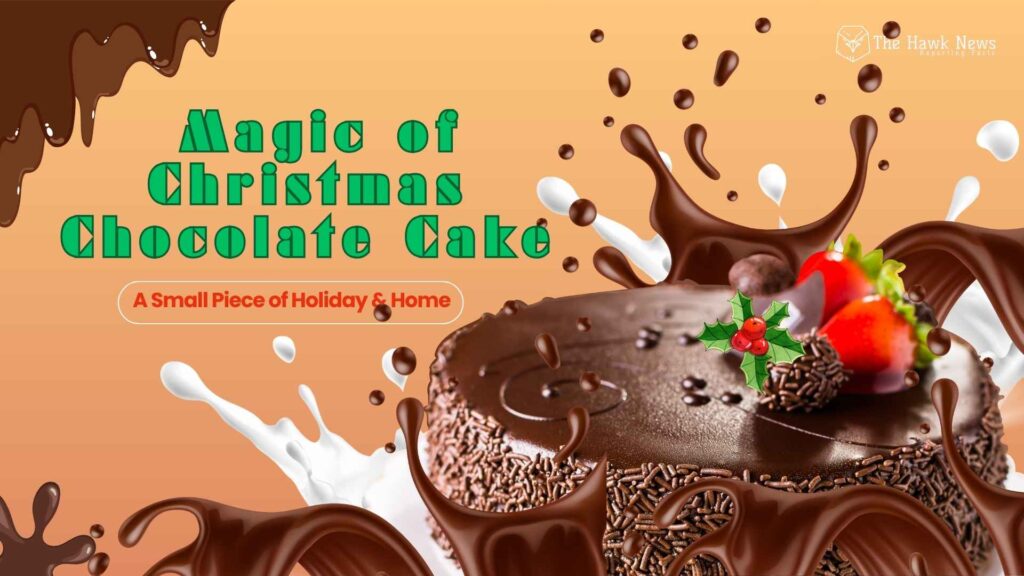
There are Christmas desserts that feel festive — and then there are Christmas chocolate cakes, which feel like home.
Year after year, across homes, bakeries, and celebrations, this single dessert has managed to become both a tradition and an emotion.
It is familiar yet indulgent, simple yet luxurious, and shared by every generation — from children sneaking spoonfuls of batter to adults savoring quiet midnight slices beside the tree.
But why has the Christmas chocolate cake become such a global obsession? And what does chocolate itself do to the human brain that makes us associate it with joy, comfort, and warmth?
This Christmas, let us unwrap the flavours, science, history, and heart behind this beloved festive dessert.
A Tradition That Traveled the World
Unlike the classic British fruitcake, the Christmas chocolate cake is a much more modern tradition.
Its rise began in the early 20th century — when chocolate became more accessible, affordable, and widely available.
By the 1950s, Christmas cookbooks across Europe, America, and Asia began featuring chocolate-based cakes, truffles, and logs as alternatives to dense fruitcakes.
In many parts of India, the Middle East, and Southeast Asia, chocolate cake became the perfect blend of “Western Christmas flavor” and local preference.
Families who didn’t enjoy traditional rum-soaked cakes embraced chocolate instead — making it the dessert of choice in countless households.
Today, Christmas chocolate cake has no single recipe. It evolves with each kitchen — dark chocolate sponges, fudge layers, peppermint frosting, cranberry drizzles, ganache, chocolate-orange zest, hazelnut crunch, mocha swirls, or simple home-style cocoa icing.
Every version carries a family story.
“Christmas is not a date. It is a flavor.”
The Science of Chocolate: Why It Feels Like Happiness
Chocolate doesn’t just taste good — it does something to us.
When we eat chocolate, the brain responds with a chemical celebration:
1. Dopamine — the pleasure signal
Chocolate activates the brain’s reward system. This makes us feel satisfied, comforted, and calm.
2. Serotonin — the mood stabilizer
Cocoa contains tryptophan, which helps the body create serotonin, the chemical linked to happiness and emotional balance.
3. Theobromine — the gentle stimulant
Unlike caffeine, theobromine gives a soft, warm energy boost — the kind that feels like a cozy hug inside.
4. Phenylethylamine — the “love chemical”
This is the same chemical the brain releases when someone is falling in love. No wonder chocolate is synonymous with romance and affection.
5. Endorphins — the stress relievers
Chocolate encourages the release of endorphins, reducing anxiety and making holiday moments feel easier, lighter, and brighter.
So when we say chocolate makes people feel good — it is not poetic exaggeration. It is neuroscience.
“Chocolate is happiness you can eat.”
Why Chocolate Feels Like Christmas
During December, several emotional threads come together:
• Cold weather encourages warm, rich desserts
• Family gatherings deepen nostalgic tastes
• Holiday stress makes comfort food more appealing
• Chocolate’s natural mood-boosting chemistry enhances the festive energy
But most importantly, chocolate desserts create moments.
A slice shared between siblings. A secret recipe passed from grandparents. A mother icing a cake late at night. Friends gathering around warm ovens.
Lovers exchanging holiday treats. Couples cutting cakes as midnight approaches.
Christmas chocolate cake is not just dessert — it is memory in edible form.
The Warmth of Indulgence: Why We Seek It During the Holidays
We often hear that indulgence is unhealthy. But during Christmas, indulgence is emotional nourishment — a reminder that we are allowed to pause, enjoy, rest, and receive.
Chocolate symbolizes:
Comfort — a moment of relief in a busy year
Celebration — a signal that the season has arrived
Togetherness — a treat that invites sharing
Love — a gesture of care, sweetness, and generosity
And because chocolate activates the same neural pathways associated with affection, choosing chocolate cake during Christmas is almost instinctive.
It warms the body. It softens the mind. It reconnects us with childhood.
“Some desserts feed the stomach. Chocolate feeds the soul.”
Youth and the Chocolate Christmas Trend
Today’s younger generation — your readers, my fren — connect deeply with chocolate-based holiday desserts because:
• It’s Instagram-friendly
• It’s customizable
• It fits modern taste preferences
• It’s shareable (digitally and literally)
• It’s available in budget-friendly and premium options
• It feels modern yet nostalgic
From molten chocolate puddings to Ferrero Rocher cakes to minimalist dark chocolate slabs, the Gen-Z and young adult Christmas aesthetic is heavily chocolate-coded.
Because chocolate carries both comfort and coolness.
The Yule Log Connection
One of the most iconic Christmas chocolate cakes today is the Bûche de Noël, or the Yule Log cake — a rolled chocolate sponge covered in ganache. Inspired by the ancient tradition of burning a large Yule log to bring warmth and good fortune, the modern chocolate version symbolizes:
• Hope
• Light
• Renewal
• Protection
• The warmth of home
The chocolate Yule Log is more than dessert — it is cultural storytelling.
Why Christmas Chocolate Cake Endures
Every year, more desserts enter the holiday market — cookies, pies, cheesecakes, tartlets, puddings. But chocolate cake remains undefeated.
Because it is more than a sweet; it is an emotion wrapped in flavour, memory, chemistry, and warmth.
Chocolate whispers reassurance.
It reminds us that sweetness survives even tough years.
It transforms gatherings into celebrations.
And during Christmas — it becomes edible joy.
“Christmas isn’t just seen or heard. Sometimes, it is tasted.”