Why discernment—not bluntness—is the real wisdom of modern life
When Truth Comes at a Price
There is an old proverb that slips into the mind like a whisper and settles there with uncomfortable clarity:
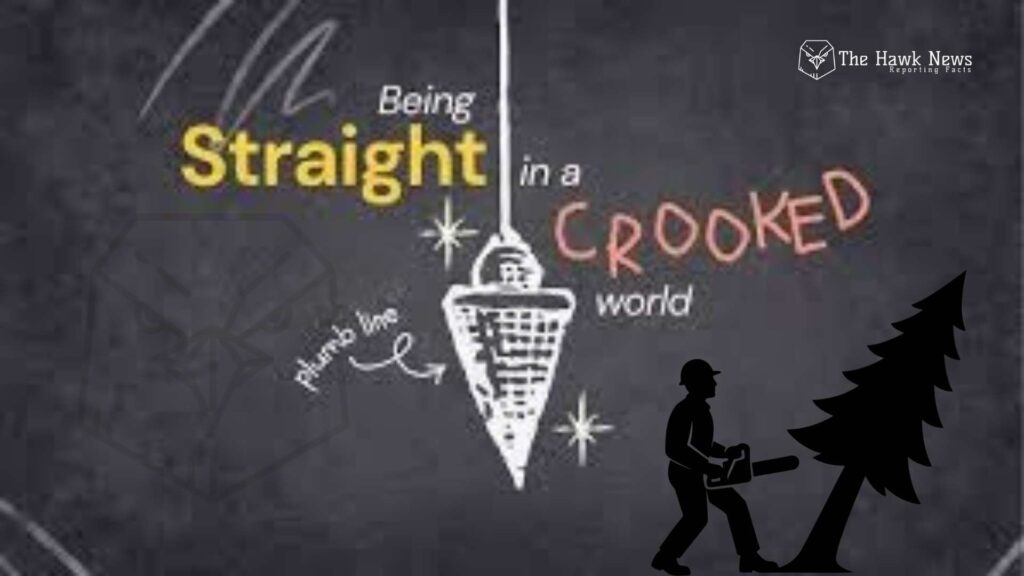
“Even the straightest trees are the first to be cut down.”
At first glance it feels poetic, almost harmless, but the more you sit with it, the more it reveals the truth most people learn the hard way — that in a world where masks are celebrated and subtlety is survival, being too honest can place you directly in the line of fire.
And yet, honesty alone isn’t the danger.
It is honesty without wisdom.
Honesty without timing.
Honesty offered to the wrong audience.
Because the modern world does not always reward what is pure; it rewards what is strategic.
Why Standing Straight Makes You Visible — and Why Visibility Attracts Sharp Edges
In a forest, the woodcutter never chooses the twisted, bent, or tangled tree first. He chooses the tall, straight, perfect one — the one that looks most useful, most valuable, most appealing.
People are the same.
The person who speaks plainly becomes the easiest to blame.
The one who exposes truth becomes the one exposed.
The one who refuses to play games becomes the target of those who thrive in them.
The one who stands upright in integrity becomes the one others try to cut down to size.
Honesty, when carried without caution, becomes a spotlight that blinds the very person holding it.
Not because honesty is wrong,
but because not everyone can handle the light.
The Modern Dilemma: We Praise Authenticity but Punish the Authentic
It is ironic that we live in a world that constantly urges people to “be real,” “speak your truth,” “live boldly,” and “say what you feel.”
But in practice?
People often reward:
- diplomacy over directness,
- politeness over truth,
- performance over sincerity,
- filtered emotions over honest conversation.
We claim to love authenticity,
but most only love it when it is comfortable,
agreeable,
or flattering.
The moment honesty becomes inconvenient,
the straight tree becomes a threat.
Honesty Is Not the Opposite of Wisdom
Some people confuse wisdom with silence,
and honesty with bluntness.
Both are misunderstandings.
Wisdom is not silence;
wisdom is timing.
Honesty is not bluntness;
honesty is alignment — between what you feel and what is safe, necessary, and constructive to express.
The wise do not speak less.
They speak precisely.
Not every truth needs to be spoken immediately.
Not every correction needs to be delivered openly.
Not every insight needs to be shared widely.
A truth spoken at the wrong moment feels like a blow.
A truth spoken to the wrong person becomes a weapon.
A truth spoken without sensitivity wounds both giver and receiver.
The heart must hold truth gently.
The mind must release it wisely.
The Emotional Cost of Being “Too Honest”
People who are naturally honest often face the same pattern:
They give sincerity.
They receive suspicion.
They speak openly.
They attract criticism.
They stand upright.
People push them.
And eventually, the weight of being “too real” in a world that prefers illusions becomes exhausting.
Some grow quiet.
Some turn guarded.
Some lose pieces of themselves trying to fit into a world that punishes clarity.
But the answer is not to become crooked.
It is to learn discernment.
The straight tree does not need to bend —
but it must choose where it stands.
Discernment: The Skill That Protects the Honest
Discernment is the quiet boundary that saves honest people from unnecessary pain.
It is the art of knowing:
- when to speak
- when to pause
- when to hold back
- when to reveal
- when to step away
- when truth will heal
- and when truth will harm
Not every space is safe.
Not every crowd is worthy.
Not every relationship can handle raw honesty.
Truth has value, but value requires protection.
In a World of Axes, Learn Where to Plant Your Roots
The secret is not becoming crooked like others.
The secret is learning strategic straightness.
Stand firm where integrity is honored.
Stand tall where honesty is respected.
Stand open where vulnerability is safe.
But where the ground is hostile,
where the air is sharp,
where the audience is unkind,
learn the silent strength of the forest:
Some trees survive not by bending,
but by choosing where they grow.
The Gentle Conclusion: Honesty Needs Direction, Not Restraint
The world does not need fewer honest people.
It needs more wise honest people —
those who know how to speak truth with empathy,
how to set boundaries around their openness,
and how to protect their soul while offering their sincerity.
Being straight is beautiful.
Being honest is noble.
But protecting your truth is necessary.
Because the straightest trees are cut down first,
not because they stood tall,
but because they stood tall in the wrong place.