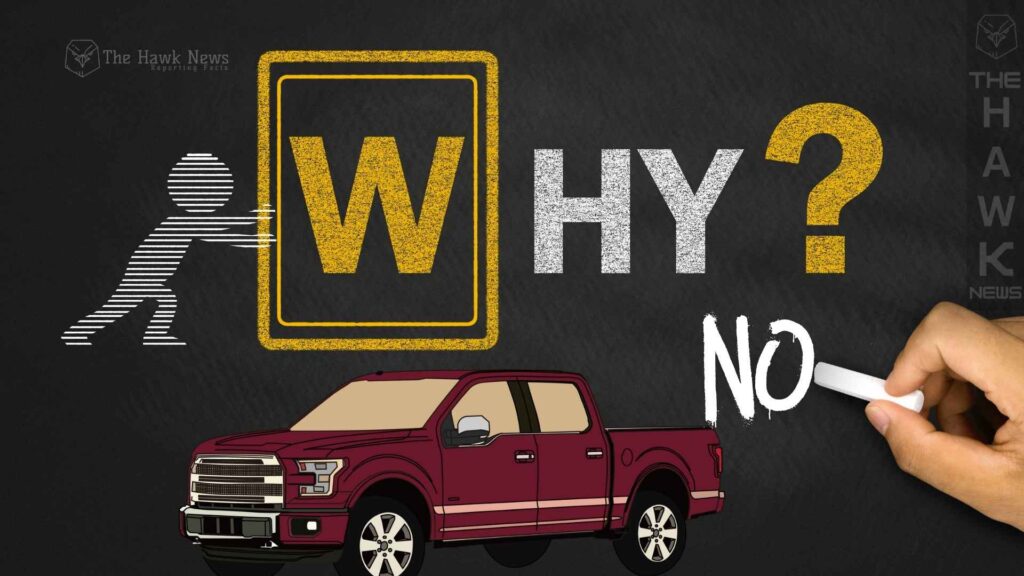
“When the pickup never picked up — decoding India’s unspoken automotive preference.”
When you think of America, you think of the Ford F-150 — the rolling symbol of grit, independence, and freedom. Australia has the Toyota Hilux, its trusty companion across dusty red roads. Even Thailand and South Africa love their pickups, part utility, part lifestyle.
But in India? The sight of a pickup SUV still turns heads — not out of admiration, but mild confusion. “Who drives that?” someone might ask, as a lone Isuzu D-Max V-Cross rumbles down a street lined with hatchbacks and compact SUVs.
So here’s the question: Why did pickups never pick up in India?
The Symbolism We Never Adopted
Globally, the pickup is more than a vehicle — it’s a statement.
It says: I can haul my world behind me and drive into the horizon. It’s freedom on four wheels, a declaration of self-reliance and adventure.
But in India, cars are rarely extensions of individuality. They’re part of the collective. They carry families, not egos. Groceries, not gear. Here, a car isn’t a personal escape — it’s a shared responsibility.
Our auto choices mirror our mindset: togetherness over individuality.
The pickup, which thrives on solitude and self-sufficiency, simply didn’t fit the Indian story.
Practical Roads, Practical Minds
There’s also the pragmatic layer.
Indian buyers are economists at heart — our car decisions come down to fuel efficiency, resale value, parking ease, and maintenance.
Pickups, with their long beds, heavy bodies, and powerful engines, tick few of those boxes. They’re harder to maneuver in crowded streets, guzzle more fuel, and cost more to maintain.
And while in the U.S. a pickup might double as a daily drive and a work truck, India’s urban design and driving patterns don’t allow for such versatility.
In a land where a scooter often suffices, a two-ton machine feels excessive.
The Missing Lifestyle
But beyond the economics lies something deeper — the missing culture of adventure.
In America, the pickup’s open bed means road trips, camping, and backyard hauling. In Australia, it’s weekend surfing and outback exploration.
But in India, the outdoors isn’t part of our mainstream lifestyle.
Our leisure often leans inward — malls, cafés, multiplexes.
The open road, the tent, and the bonfire belong to a small niche.
Without the lifestyle that celebrates the “pickup personality,” the vehicle itself had no cultural soil to grow in.
Failed Attempts: When the Market Said No
Automakers tried — oh, they did.
- Tata Xenon promised rugged utility but was seen as too industrial.
- Mahindra Getaway looked muscular but lacked refinement and aspirational marketing.
- Isuzu D-Max V-Cross came closest — sleek design, strong engine, global DNA. But at its price point, it appealed more to enthusiasts than everyday buyers.
India’s roads, and wallets, weren’t ready for a pickup that wasn’t purely commercial.
Our “trucks” belong to farmers, construction sites, and logistics hubs — not families going for Sunday drives.
To most Indians, the sight of an empty truck bed looks wasteful, not liberating.
Urban Density and the Death of Size
The Indian dream car must squeeze through chaos.
Our roads are narrow, our cities denser, our parking spots — elusive. A pickup’s wide stance feels claustrophobic in Indian traffic.
We want cars that slip, not stomp.
That’s why the compact SUV — from the Maruti Brezza to the Tata Nexon — became India’s sweet spot.
They promise strength without the size, freedom without the bulk, and adventure without inconvenience.
The Cultural Code: Family Over Frontier
Underneath it all lies a deeper truth.
Where the Western dream is about the self — the lone driver chasing sunsets — the Indian dream is about the circle: family, home, community.
When we drive, we rarely drive alone. There’s always a child, a parent, a neighbor catching a lift.
A pickup, with its open bed and two-seat cabin, doesn’t fit that narrative.
It’s a car for the individual; India thrives on the collective.
Maybe that’s why, even subconsciously, we never warmed up to it.
Changing Lanes: Could Gen Z Change the Gear?
Yet, something is shifting.
The younger generation, raised on YouTube car culture, Instagram road reels, and the romance of travel, sees pickups differently.
The Isuzu D-Max V-Cross and Toyota Hilux now carry an aspirational glow — rugged, outdoorsy, and influencer-friendly. They’ve become a visual shorthand for adventure and rebellion.
Camping clubs are rising. Off-road events are no longer niche.
A quiet subculture is forming — small, yes, but persistent.
As Indian lifestyles evolve, and “digital nomadism” grows, the pickup could find its second chance.
Maybe it’ll never replace the family SUV — but it might just become a symbol of the free-spirited Indian.
A Lesson in Identity
Automobiles have always been mirrors.
They reflect what societies value, what people dream of, and how they define success.
So when we look at India’s love for compact cars and SUVs, it’s not just about price or practicality — it’s about who we are.
We’re a nation that finds beauty in togetherness, function in simplicity, and meaning in shared journeys.
The pickup, for all its charm, speaks a different language.
And maybe that’s the beauty of it.
Every culture drives differently — not just in how we handle the wheel, but in what we believe it represents.
The Road Ahead
The world is moving towards electric pickups, automated logistics, and shared mobility. India, too, will evolve — perhaps with smaller electric trucks designed for dual use, both work and leisure.
But until then, the pickup will remain an exotic visitor on Indian roads — admired, photographed, but rarely owned.
Because in the end, what we drive reflects what drives us.
And India, for now, still drives on connection — not conquest.