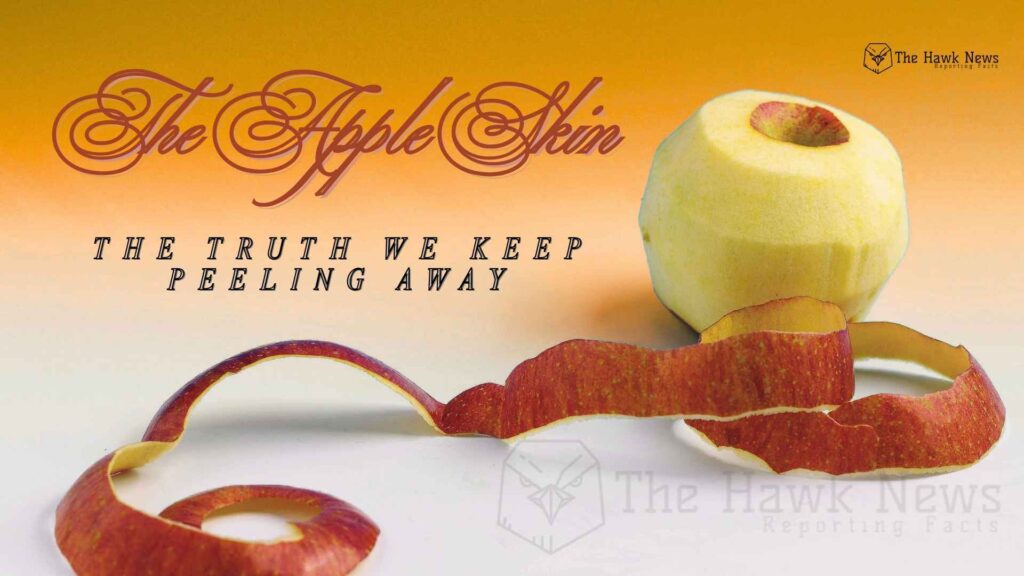
Somewhere between habit and hurry, we’ve learned to peel our apples.
A small act, almost automatic — a flick of the wrist, a spiral of red or green curling into the sink. We call it tidying, refining, making it more palatable. But in that simple motion, we throw away the very thing that was holding most of the fruit’s goodness.
Science now tells us what wisdom once intuited: the skin of the apple carries more health power than its flesh. It’s rich in compounds like polyphenols, quercetin, and flavonoids — plant-based antioxidants that reduce inflammation, strengthen immunity, support heart health, and may even slow cellular aging.
So, when we peel an apple, we don’t just lose fiber. We lose a pharmacy designed by nature.
But there’s a deeper truth here — one that stretches far beyond nutrition.
Because in many ways, we live in a world that keeps peeling away its own goodness.
The Science of the Skin
Let’s begin with the facts. Researchers have long studied the apple, one of humanity’s oldest cultivated fruits, tracing its lineage back over 4,000 years. What makes this fruit special isn’t just its sweetness, but the chemical orchestra happening just beneath its skin.
The thin outer layer — what most of us discard — contains the highest concentration of polyphenols, the compounds responsible for many of the apple’s healing properties.
These natural antioxidants work like microscopic shields inside your body, reducing oxidative stress and protecting your cells from damage that leads to chronic diseases like heart ailments, diabetes, and even certain cancers.
Then there’s quercetin, one of the most studied flavonoids in apples.
It’s known for its anti-inflammatory effects, helping the body manage allergic responses, strengthen blood vessels, and maintain healthy blood pressure.
When scientists compared peeled and unpeeled apples, they found that up to 50% of the fruit’s total antioxidant power is in the skin. That means every time you peel it, you’re halving its strength.
Even the simple texture of the peel plays a role: it slows digestion, steadies blood sugar, and helps the body feel full longer. Nature didn’t add that layer for decoration — it’s design.
So, why do we keep stripping it off?
Peeling Away the Good
It’s a question worth asking, not just about apples but about everything. Somewhere in our pursuit of refinement, we began equating “smooth” with “better.” We peeled our fruits, polished our photos, filtered our stories, and sanitized our truths.
The apple on your cutting board is a mirror of the modern mind: we’ve learned to value the look over the layers.
When you think about it, this pattern runs deep.
We remove the outer husk of grains to make them “whiter.”
We remove the natural oils from foods to make them “lighter.”
We remove imperfections from our photos to make them “prettier.”
And in every case, something essential is lost.
Maybe it’s fiber, maybe it’s nutrients, maybe it’s truth.
But the cost is always the same — we lose what keeps things real.
Processed Is the New Polished
This isn’t just about what’s on the plate.
It’s about how modern life is teaching us to strip everything down to its most consumable form.
We no longer want the full story; we want the headline.
We don’t want the full fruit; we want the juice box.
We don’t want the full journey; we want the shortcut.
And just like that, we’ve peeled away context, depth, and texture — until all that remains is the sweet, empty flesh of convenience.
Food scientists call it “nutrient loss.”
Philosophers might call it “meaning loss.”
Either way, it leaves us craving something deeper.
If health journalism teaches us one thing, it’s this: the more we refine, the more we remove.
Refined sugar, refined flour, refined oils — and now, even refined information.
And yet, beneath the layers, the truth remains the same. The real nourishment — of body, mind, and soul — lies in what we’ve learned to overlook.
Eat It Whole
There’s a quiet rebellion in choosing to eat an apple with its skin on. It’s a small act of trust — in nature’s design, in balance, in the belief that the rough edges are often the most rewarding parts.
Holistic nutritionists often say, “Eat food as close to its natural state as possible.” That’s not nostalgia. It’s wisdom. Because when you eat food as it’s made — peel, pulp, seeds, and all — you participate in its wholeness. You don’t just feed your body; you feed your awareness.
And awareness is the secret ingredient that modern wellness often forgets. Studies show that even how we eat — our mood, our presence, our gratitude — changes how food affects us. Just as stress can turn a meal toxic, calmness can turn a simple apple into medicine.
So maybe the path to health isn’t paved with superfoods and supplements, but with small, mindful acts — like choosing to keep the peel.
A Lesson Beyond the Table
What if this was never about apples at all? What if this was about how we live — how we keep peeling away the parts of life that don’t look perfect, forgetting they’re the ones that hold the nutrients of meaning?
Our scars, our rejections, our wrinkles — they’re our own “peel.” The outer layer shaped by time, trial, and truth. And maybe, just like the apple, the richness of who we are lives there.
Perhaps God designed creation that way — where beauty and strength are not hidden deep within, but displayed openly, if only we’d stop discarding them.
So the next time you slice an apple, remember: its greatest goodness is right where your knife is about to cut. And maybe that’s true for everything else in life — the lessons, the people, the truths that seem rough on the surface but radiant when we embrace them whole.
The Moral in the Peel
We live in an age obsessed with what’s shiny, fast, and filtered. But the apple — humble, ancient, and unassuming — reminds us that the best things are often hidden in plain sight.
The invitation is simple:
Slow down.
Look again.
Don’t peel away the good in your search for perfection.
Because sometimes, the health you’re missing isn’t in a new diet or supplement —it’s in rediscovering what you already have, what you’ve always had — the sweetness of life, wrapped in a thin, protective skin.