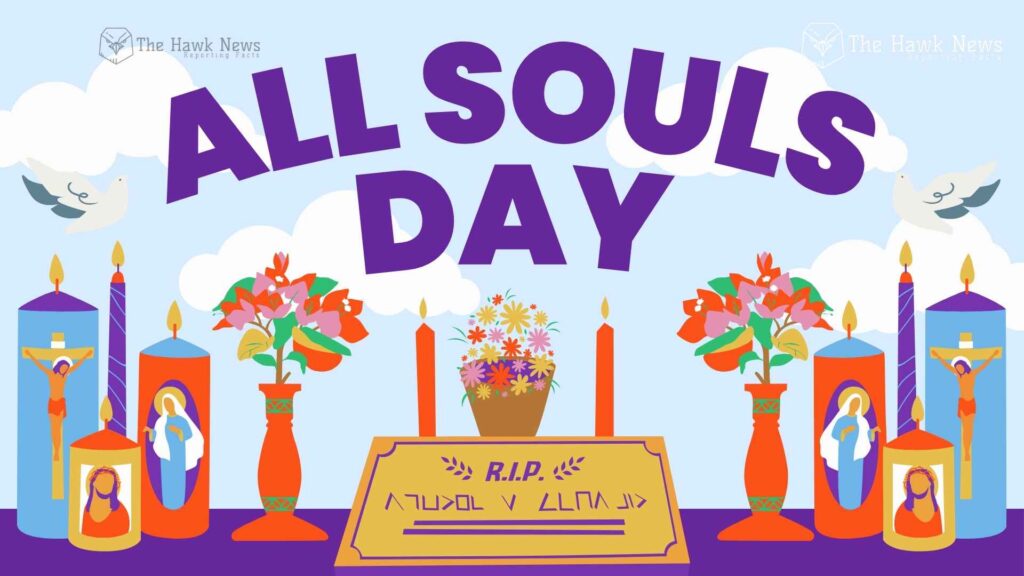
Every year on November 2, the world slows its breath — even if only for a moment. Churches glow with candlelight, graves glisten with marigolds, and people whisper the names of those who no longer speak back.
It is All Souls’ Day, the day humanity collectively remembers its dead — not just the saints, not just the famous, but everyone. It is the day for the forgotten.
Once, this day was one of deep stillness. Bells tolled, prayers rose, and families walked in silence to cemeteries where love once lived.
But as the centuries shifted, the meaning blurred. Today, remembrance is a swipe away — a “memory” notification, a digital tribute, a comment thread of hearts and crying emojis.
Yet beneath the algorithmic noise lies the same ancient ache: the human need not to forget.
A Day for the Invisible
While All Saints’ Day (November 1) honors those who’ve reached heavenly glory, All Souls’ Day is more democratic — it belongs to everyone. It’s a day for the imperfect, the unknown, the ones who never made headlines or stained-glass windows.
It’s for the mother who prayed quietly, the friend who drifted away, the homeless man under the bridge, the child who lived too briefly.
In a world obsessed with visibility, All Souls’ Day dares to honor invisibility.
“In an age chasing followers, this is the one day for those who have none.”
That’s what makes it timeless. It reminds us that worth isn’t measured in recognition, but remembrance.
Why We Remember
Psychologists say that grief doesn’t disappear; it just changes form. Remembering gives shape to that change — it keeps us whole.
Neuroscientists even suggest that remembrance rituals, like lighting a candle or revisiting a loved one’s place, release oxytocin and serotonin — the same chemicals tied to love and peace.
In other words, to remember is to heal.
But our times make it difficult. We’re surrounded by endless noise, distraction, and performance. We rush to forget pain, to move on, to delete. Yet All Souls’ Day whispers something different:
“You are not meant to erase — you are meant to integrate.”
Memory isn’t a weight to drop; it’s a bridge to cross. And every November, that bridge lights up again, if only briefly.
Candles Against the Scroll
Walk through a cemetery on All Souls’ Day in Mexico, and you’ll find laughter among the graves. Día de los Muertos isn’t mourning — it’s reunion.
In Poland, entire cities flicker with candlelight. In the Philippines, families camp overnight beside tombstones, sharing food and stories.
Meanwhile, online, another form of remembrance blooms. Memorial reels trend. Hashtags like #Remembering and #ForeverInOurHearts fill timelines. Digital candles burn on virtual altars.
But somewhere between the physical and the pixel, something sacred risks being lost.
We’re remembering more publicly, but are we remembering personally?
The screens glow brighter, but do our souls?
All Souls’ Day asks for intimacy — not an audience. It calls us to kneel, to whisper, to feel. To let our silence mean something again.
The Forgotten Ones
There’s a haunting beauty in praying for those no one remembers. The nameless, the unvisited, the lost souls of history. This act — small, quiet, invisible — might be one of humanity’s purest gestures.
Because to remember the forgotten is to resist indifference. It’s a rebellion against the idea that worth ends with recognition.
“We die twice,” wrote Ernest Becker, “once when we stop breathing, and again when someone says our name for the last time.”
All Souls’ Day stands between those two deaths. It keeps the second from coming too soon.
The Generation That Remembers Differently
Gen Z and Gen Alpha may not visit graves often, but they remember in ways the old world never imagined. They create playlists for lost friends, paint murals, make short films, share stories in digital sanctuaries.
They are redefining what mourning looks like — and in doing so, they are re-teaching the world that remembrance still matters.
In a sense, they’re bringing back the heart of All Souls’ Day — not through religion, but through relationship. Through creativity. Through connection.
The Living Lesson
Ultimately, All Souls’ Day isn’t just about death. It’s about how we live because of it. It’s a reminder that legacy isn’t measured in how long we live, but in how deeply we love.
When we remember others, we become more human ourselves.
When we light a candle, we are also lighting something within us.
When we honor those who’ve gone, we quietly learn how to stay.
So perhaps the question isn’t whether the dead can hear us — but whether the living still can.
A Whisper in the Noise
In the cacophony of a scrolling world, All Souls’ Day invites stillness. It tells us that forgetting is not freedom, and remembering is not pain — it’s gratitude.
Because someday, when the candles burn for us, we’ll want someone to pause long enough to whisper our names, too.
And maybe, that’s what keeps the world human — the choice to remember when forgetting is easier.