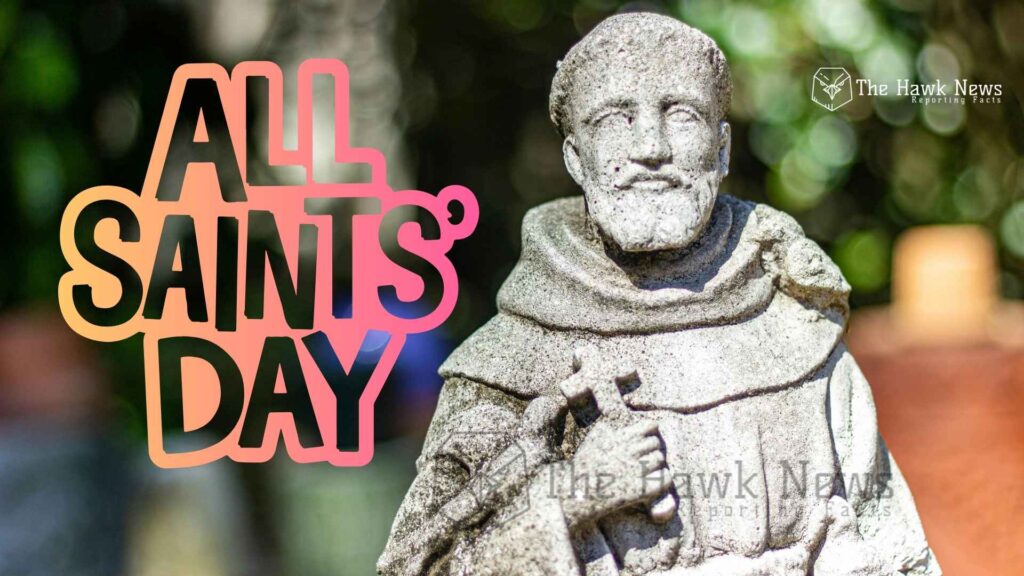
On the morning after Halloween’s glow fades — when the plastic fangs and synthetic cobwebs are swept from suburban porches — something quieter dawns across much of the world. Church bells toll. Candles flicker against marble gravestones.
And in the hush of November 1st, a different kind of remembrance begins — one that doesn’t celebrate fear or fantasy, but faith and fortitude.
This is All Saints’ Day — the feast of the forgotten faithful, the day when the world pauses to remember the ones who lived not loudly, but well.
A Feast Born from Fire and Faith
The roots of All Saints’ Day stretch deep into the early centuries of Christianity, back when persecution and martyrdom defined faith. Communities would gather secretly to remember those who had died for what they believed in. As Christianity spread and formalized, these local commemorations evolved into a global observance.
By the 9th century, Pope Gregory IV declared November 1 as the official day to honor all saints — not just the canonized heroes of the Church, but also the millions of unnamed souls who lived righteously in obscurity.
In a sense, All Saints’ Day became a counterbalance to the pagan Samhain festivals that marked the death of summer and the rise of darkness. The Church reoriented the gaze — from fear of the dead to faith in eternal life.
It was, at its heart, a celebration of light after night.
Beyond the Costumes: A Forgotten Pause
Fast forward to today, and the first of November often arrives quietly — overshadowed by Halloween’s sugar highs and social media scrolls. In most of the Western world, Halloween has become a billion-dollar industry of entertainment and excess. But for those who still keep the rhythm of older rituals, All Saints’ Day feels like a necessary exhale.
While Halloween parades the masks, All Saints’ Day removes them.
Where Halloween glorifies the skeletons, this day sanctifies the souls.
From the Philippines to Poland, families visit cemeteries carrying candles, flowers, and prayers. In some towns, graveyards glow like constellations under the night sky — a tender, luminous protest against forgetting. It is a communal reminder that remembrance itself is an act of resistance in a world too busy to pause.
The Journalism of the Unseen
In journalism, we often chase the stories that shout — scandals, disasters, the sensational and the shocking. But All Saints’ Day invites a different kind of storytelling — one that asks: What about the quiet ones?
The nurse who sits through the night beside a patient no one visits.
The teacher who buys school supplies for her students out of her own salary.
The single parent who chooses love over bitterness, again and again.
These are the saints of the ordinary — the invisible scaffolding of society.
They don’t trend, but they transform.
As much as All Saints’ Day belongs to the Church calendar, it also belongs to journalism — a reminder that the world’s goodness is often off-camera.
The Meaning Beneath the Rituals
The symbols of All Saints’ Day are simple but profound.
White, the color of light and resurrection, replaces Halloween’s black and orange.
Candles burn in memory, representing both the brevity and brilliance of life.
Bells toll not to mourn, but to awaken — to call the living toward reflection.
The theological undertone is clear: death is not the end. But in a cultural sense, the message is wider — life, when lived with conscience, leaves an imprint that outlasts fame or failure. The saints we honor are not superhuman; they are the proof that goodness can endure even in the most ordinary lives.
A Generational Shift: Gen Z and the Return to Meaning
Interestingly, Gen Z — the so-called “most digital generation” — is beginning to reclaim the idea behind days like All Saints’ Day. Beneath their memes and manifestos lies a deep hunger for authenticity and moral clarity.
They’re questioning the noise. They’re searching for what feels real.
The rise of minimalism, quiet quitting, mental health awareness, and even digital detoxes all signal something: a longing to remember what truly matters. All Saints’ Day, then, is not a relic of the past — it’s a mirror for the present. It whispers what Gen Z already feels in their bones: that legacy is not about likes, but light.
The Spiritual Economics of Attention
In an economy of endless distractions, the currency of attention has never been more precious. All Saints’ Day doesn’t ask for grand offerings — it asks for focus.
To light a candle and remember.
To think of those who chose good when it wasn’t easy.
To slow down and measure life not by what we achieve, but by what we become.
This act of remembrance recalibrates the heart. It reminds us that being good — truly, consistently good — is still the most radical act in a cynical age.
When the Quiet Are Remembered
In a world that glorifies volume, All Saints’ Day remains the anthem of the quiet. It teaches that the most powerful stories aren’t always headline-worthy; they are often whispered in prayer, lived in service, or buried in graves without marble.
It calls us to look beyond celebrity sainthood — to recognize the light still flickering in everyday humanity. Because every time someone chooses kindness over cruelty, forgiveness over fury, or patience over pride — the world gains another saint, even if their name is never known.
A Final Reflection
As dusk falls on November 1, the world will light its candles again — tiny flames against vast darkness. And in their glow, one truth stands clear: the soul of civilization has always been kept alive by those who chose quiet goodness over loud ambition.
In remembering them, we remember who we are meant to be.
In honoring their light, we keep our own from fading.