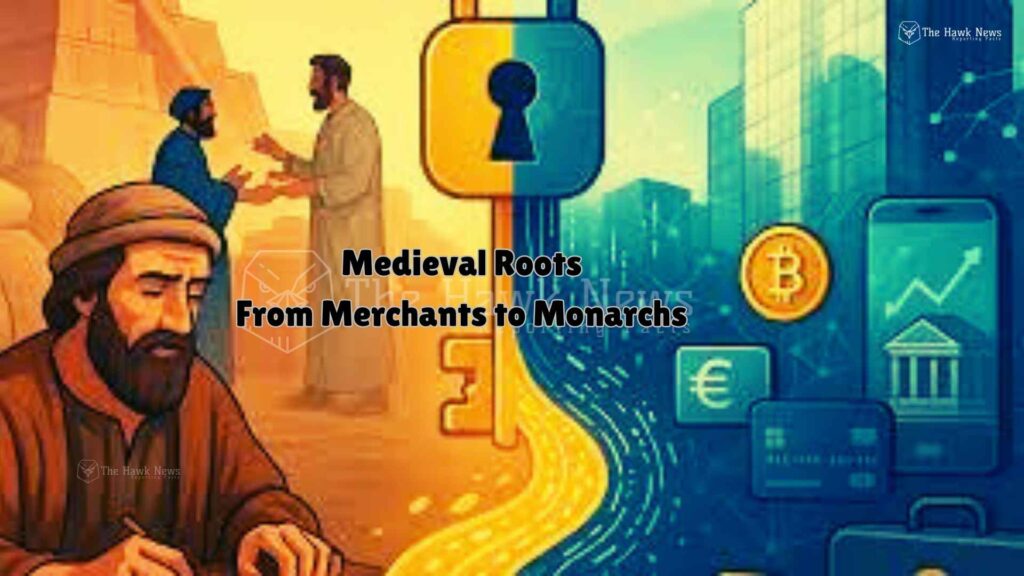
Money makes the world go round—or so the saying goes. But money, in its raw form, is only a tool. What really changed the course of human history was the invention of banking. From ancient temples storing grain to modern skyscrapers housing financial giants, banks have shaped civilizations, economies, and even empires.
But where did the idea of a bank come from? How did it evolve into the powerful institutions we know today? And in the end, are banks truly helping people—or simply reaping harvests beyond imagination?
The First Steps: Banking Before Banks
Long before credit cards and savings accounts, ancient civilizations were already practicing forms of banking. In Mesopotamia, around 2000 BCE, temples and palaces acted as the first “banks.” They stored grain, livestock, and precious metals—items of value that could be loaned out to farmers or traders with interest. Clay tablets served as the receipts and contracts.
The idea was simple but revolutionary: resources could be pooled, safeguarded, and redistributed in exchange for repayment with an added margin. This wasn’t charity—it was commerce with a sacred stamp of trust.
In ancient Greece, moneylenders known as trapezitai set up benches (trapeza) in marketplaces, exchanging coins, keeping deposits, and issuing loans. Rome followed suit, with private bankers (argentarii) who financed trade and even the military.
Banking, from its earliest days, wasn’t just about money—it was about power, trust, and influence.
Medieval Roots: From Merchants to Monarchs
The fall of the Roman Empire disrupted Europe’s financial networks, but by the Middle Ages, banking was reborn in the hands of merchants. Italian city-states like Florence, Venice, and Genoa became the cradle of modern banking.
The Medici family in Florence pioneered banking as we understand it today. With branches across Europe, they introduced the double-entry bookkeeping system, issued letters of credit, and financed both trade and politics. Popes borrowed from them. Monarchs depended on them. Wars were fought—and won—on Medici credit.
The idea of banking had moved beyond storage and lending. It had become an engine of international trade and statecraft.
Birth of Central Banking: The Bank of England
The 17th century saw banking leap to a new level: national institutions. In 1694, the Bank of England was established to raise funds for war against France. Citizens lent money to the government, and in return, the bank issued “banknotes”—early paper money.
This innovation transformed banking from a patchwork of private institutions into a powerful central system. Soon, other countries followed, creating central banks that could regulate currency, stabilize economies, and fund governments.
What began in temples as trust-based safekeeping had now become the backbone of national economies.
The Oldest Bank Still Standing
Among the many institutions that rose and fell, one holds the title of the world’s oldest surviving bank: Banca Monte dei Paschi di Siena, founded in 1472 in Italy.
Originally established to provide loans to the poor and struggling farmers, it embodied the ideal of banking as a support system for communities. Despite centuries of wars, financial crises, and political upheavals, it still operates today—though now as a modern corporate bank.
Its long survival is both inspiring and ironic: a bank founded to help the poor is today a player in the global financial system, subject to the same criticisms as its peers.
Banking for the People—or from the People?
On paper, banks serve a vital role. They provide safekeeping for money. They issue loans that help people buy homes, start businesses, or pursue education. They fuel economic growth by connecting savers with borrowers. Without banks, modern society would struggle to function.
But the story isn’t that simple. Banks also reap immense profits. Service fees, high interest rates, hidden charges, and speculative investments often place banks in direct conflict with the people they claim to serve.
The global financial crisis of 2008 was a chilling reminder: when banks gamble and fail, it is ordinary people who pay the price—through lost jobs, lost homes, and shattered savings. Yet banks themselves, deemed “too big to fail,” were bailed out by taxpayers.
The question, then, is unavoidable: do banks exist to support people, or do people exist to sustain banks?
The Dual Nature of Banking
The truth may lie somewhere in between. Banking has always been a double-edged sword:
- It enables dreams—but also enforces debts.
- It funds progress—but also fuels inequality.
- It protects wealth—but also concentrates it in the hands of a few.
This dual nature isn’t new. Even in Mesopotamia, loans came with interest. Even the Medici, patrons of art and architecture, charged kings and popes dearly for credit. What has changed is the scale. Modern banks operate on a global stage, moving trillions of dollars with keystrokes. Their reach is vast, their influence immense.
A Thoughtful Pause
As we reflect on the journey of banking—from sacred temples to multinational giants—we must ask ourselves: what is the true purpose of a bank?
If it is to safeguard wealth, then whose wealth is being protected?
If it is to empower people, then why do so many remain trapped in cycles of debt?
If it is to stabilize economies, then why are financial crises so often sparked by banks themselves?
The answers are complex, but the questions are necessary. For while banks have undeniably advanced human civilization, they also challenge us to rethink the balance between service and profit, between trust and exploitation.
Conclusion: Beyond Numbers
The story of banking is not just about ledgers and vaults. It is about humanity’s struggle to balance ambition with fairness, profit with responsibility.
From the grain loans of Mesopotamia to the skyscrapers of Wall Street, banks have been both lifelines and leeches. The oldest surviving bank, Monte dei Paschi di Siena, reminds us that the institution itself is not inherently evil or noble—it is what society demands of it.
And so, as citizens, the choice is ours. Do we continue to let banks reap harvests immensely, or do we push them to truly serve the people?
Because in the end, banks are not just about money. They are about trust. And trust, once broken, is the hardest debt to repay.