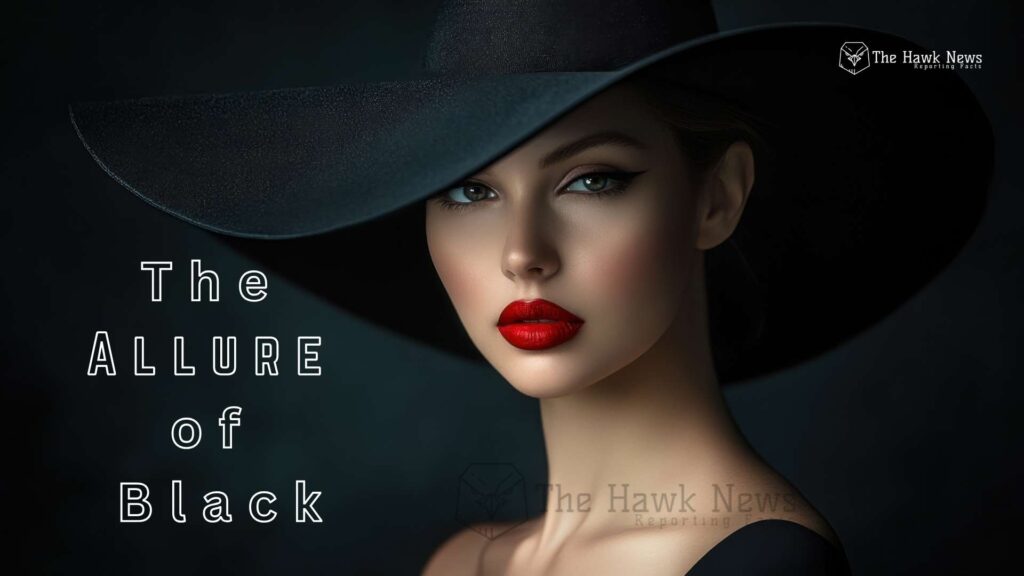
In a world bursting with colors, why does black continue to dominate wardrobes, interiors, and even personal accessories?
The answer lies not just in aesthetics or fashion trends but in the intricate psychology that connects us to this timeless shade.
Black is far more than a color; it’s a statement, a shield, and, for many, a comforting companion.
The Protective Power of Black
At its core, black offers a unique psychological comfort. Unlike brighter colors that draw the eye and invite judgment, black quietly absorbs attention.
Wearing black can feel like putting on armor—a protective layer that allows individuals to navigate social or professional spaces with confidence. It’s subtle, yet powerful, providing a sense of control in an often unpredictable world.
Psychologists explain that colors can influence our mood and self-perception. Black, in particular, conveys authority and sophistication. But beyond projecting an image, it also provides a feeling of safety.
When we dress in black, we’re unconsciously creating a boundary between ourselves and the outside world—a buffer that allows us to observe without being fully exposed. It’s no coincidence that many professionals, creatives, and even public figures favor black: it’s a color that commands respect without the need for loud declarations.
Concealment and the Confidence Boost
Black’s protective qualities extend into the practical realm. On a functional level, black is forgiving. It hides minor stains, marks, and imperfections, which can be a relief in both busy daily life and high-stakes social settings.
More than just camouflage, black subtly sculpts the body, providing a slimming effect that enhances confidence. For many, this dual function—concealment and flattering presentation—is irresistible.
This practical appeal ties seamlessly with psychological comfort. When we feel unseen in a protective yet stylish way, we’re more likely to carry ourselves with poise.
Black allows us to focus less on external judgment and more on our actions, interactions, and personal expression. It’s both a refuge and a reinforcement of self-assurance.
Black as a Cultural and Social Symbol
The allure of black also resonates through cultural and social narratives. From classic Hollywood elegance to the timeless black suit in corporate settings, black has historically symbolized sophistication, power, and subtle rebellion.
In art and design, black is used to create contrast, evoke drama, and highlight form. Across subcultures—from goth and punk to minimalism—black communicates identity, belonging, and even defiance.
Interestingly, black’s versatility strengthens its psychological appeal. Unlike colors tied to specific moods or seasons, black transcends context. It is equally appropriate at a high-profile business meeting, a casual outing, or an artistic performance.
This adaptability makes it an enduring choice for those who seek both practicality and self-expression.
The Emotional Connection to Black
Black also speaks to emotions and personal narrative. It can reflect introspection, mystery, or even a rebellious spirit. Some choose black during periods of change, uncertainty, or self-discovery, using the color as a tool for emotional grounding.
By surrounding themselves with black—whether through clothing, accessories, or interiors—people create a stable, controlled environment that fosters focus and self-confidence.
This emotional connection extends beyond the individual. Black often signals sophistication, seriousness, and authority to others.
The perception it creates allows individuals to navigate social hierarchies more effectively, whether in professional, creative, or personal settings. In essence, black is a color that empowers not just through appearance but through the silent signals it sends.
Why Black Endures in a Colorful World
In a society saturated with bright colors and fast-changing trends, black remains a constant. Its psychological comfort, practical advantages, cultural significance, and emotional resonance make it a uniquely enduring choice.
People are drawn to black because it provides a rare combination: protection, confidence, versatility, and aesthetic appeal. It is both a personal refuge and a statement to the world.
Moreover, black’s power lies in its subtlety. Unlike flamboyant hues that demand attention, black offers quiet strength.
It allows individuals to control perception, maintain elegance, and move through life with poise. Whether for the sake of comfort, concealment, or expression, black continues to hold a magnetic allure that few other colors can match.
Conclusion
Choosing black is not merely a matter of taste—it’s an intricate blend of psychology, practicality, and personal identity.
It shields, flatters, empowers, and communicates in ways that are both profound and understated. In every black outfit, accessory, or design choice lies a statement: a desire for comfort, confidence, and control in an unpredictable world.
Ultimately, black is more than a color; it is a companion, an armor, and a timeless expression of self. It is the choice of those who seek strength without noise, elegance without flash, and security without compromise.