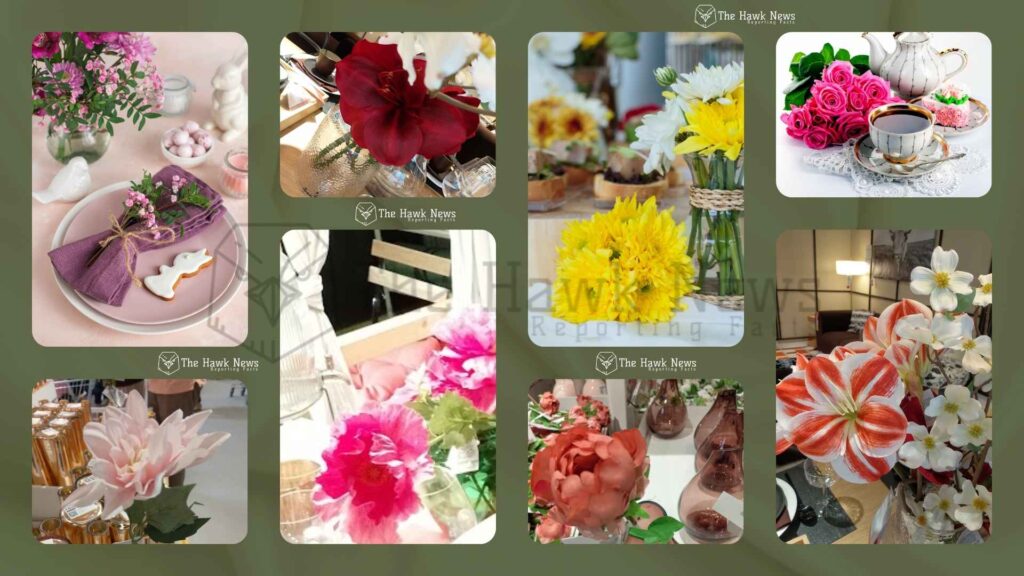
Setting the Scene
Before the first dish arrives, before the first glass is raised, the flowers on a dining table are already speaking.
A small vase of roses whispers intimacy, while a spread of marigolds hums with festivity. Lilies lend calm, tulips bring cheer, and orchids add refinement.
These blooms are not mere decoration; they are the unspoken language of dining etiquette, quietly shaping how we experience meals together.
In homes, restaurants, and banquet halls across the world, flowers placed at the heart of the table are a subtle reminder: eating is more than consumption—it is ritual, it is art, and it is connection.
A Tradition Rooted in History
Flowers have accompanied feasts for centuries. In ancient Greece and Rome, banquets were incomplete without garlands and wreaths, which symbolized abundance and hospitality.
In India, marigolds and jasmine are still woven into festive spreads, their fragrance marking purity and prosperity.
Victorian England brought its own twist with floriography—the coded “language of flowers.” Guests could read messages of love, gratitude, or even caution in carefully chosen blooms.
A rose signified affection, violets meant loyalty, and yellow carnations hinted at rejection. A dining table, then, became a canvas of emotion as much as cuisine.
Across the world in Japan, ikebana elevated floral arrangements into an art form. Its minimalist placements on dining tables reflect harmony and balance—principles that carry into the dining experience itself.
Meanwhile, in France, even the humblest café table might carry a seasonal bloom, symbolizing refinement and joie de vivre.
This shared tradition across cultures underscores a simple truth: flowers have always been about more than beauty. They are symbols of respect, welcome, and the host’s attentiveness to guests.
The Psychology of Blooms at the Table
Science, too, has something to say about this ancient custom. Studies have shown that flowers lower stress, spark positive emotions, and encourage social bonding. A table adorned with flowers feels warmer, more inviting, and more personal.
- Color psychology: Bright flowers like gerberas and sunflowers boost energy and laughter—perfect for lively gatherings. Softer hues like lavender or pale pink calm the senses and encourage deeper conversation.
- Scent: Fragrance subtly sets the tone. Jasmine and roses soothe, while citrus blossoms energize. But etiquette reminds us—never overpower. The flowers should complement the meal, not compete with it.
- Texture and form: A single stem in a slim vase communicates minimalism and focus; a lush bouquet suggests generosity and celebration.
In short, flowers quietly choreograph the dining atmosphere, priming guests for how the evening will unfold.
The Rules of Floral Etiquette
Though flowers are versatile, their role at the dining table comes with its own code of etiquette. These rules, passed down through time, ensure that beauty never oversteps its purpose:
- Keep it Low: Arrangements must never block sightlines across the table. Eye contact is the soul of conversation.
- Mind the Palette: Match blooms to the occasion—vivid and bold for festivals, pastels for intimate dinners, and whites or creams for formality.
- Seasonality Matters: Fresh, local flowers not only last longer but also signal sensitivity to time and place. A table dressed with seasonal blossoms feels authentic and thoughtful.
- Subtle Fragrance: Heavy perfumes interfere with food. Delicate scents enhance, but never dominate.
- Avoid Artificial Flowers at Formal Dining: They lack the vitality that etiquette demands. Dried flowers, however, are gaining acceptance in minimalist or rustic dining trends.
These small but significant gestures show the thoughtfulness of the host, who honors both beauty and comfort.
Modern Takes: Flowers in the Age of Instagram
In today’s era, flowers have found renewed popularity at the dining table—thanks in part to social media. A dinner table photographed with artful floral arrangements often says as much about lifestyle as the meal itself.
- Millennials and Gen Z are embracing florals not as tradition but as aesthetic. Pinterest boards overflow with mason jar arrangements, wildflowers in recycled bottles, or muted dried pampas grass.
- Sustainability has also entered the conversation. Local florists and eco-conscious diners prefer seasonal, pesticide-free blooms that leave a lighter footprint.
- Fusion styles are common: ikebana-inspired arrangements in Western homes, marigold garlands decorating fusion weddings, or eucalyptus paired with orchids on contemporary Indian tables.
Dining tables are no longer just functional—they are backdrops for stories, photographs, and shared experiences, with flowers often at the center.
A Guide for Today’s Host
For anyone looking to master floral etiquette at the table, here’s a practical guide:
- Everyday Meals: A single stem or a small bud vase brings elegance without effort. Try tulips in spring, or marigolds during festive months.
- Intimate Dinners: Opt for pastel roses or carnations in a slim arrangement—soft and subtle, never loud.
- Celebrations: Go lush with bold colors and layered textures. Sunflowers, gerberas, and orchids make a strong statement.
- Formal Occasions: Whites and creams—lilies, chrysanthemums, or hydrangeas—speak of sophistication and poise.
And always remember: the flowers should serve the meal, not overshadow it.
More Than Decoration
At its heart, the etiquette of dining flowers is not about rules but about intention.
When a host places fresh blooms at the table, it says: I thought of you. I wanted this moment to feel special. It is a gesture of generosity and grace.
As the conversation flows, glasses clink, and dishes are shared, the flowers remain quietly present, elevating the experience without demanding attention. They are the unsung companions of hospitality.
Closing Reflection
Floral etiquette is a reminder that dining is never just about food. It is about atmosphere, connection, and beauty woven into the ritual of eating together.
Flowers transform meals into memories, and tables into canvases of culture and care.
A single bloom can whisper, a bouquet can celebrate, and together, they remind us of something timeless: when we gather at a table, we are not just feeding the body—we are nourishing the soul.