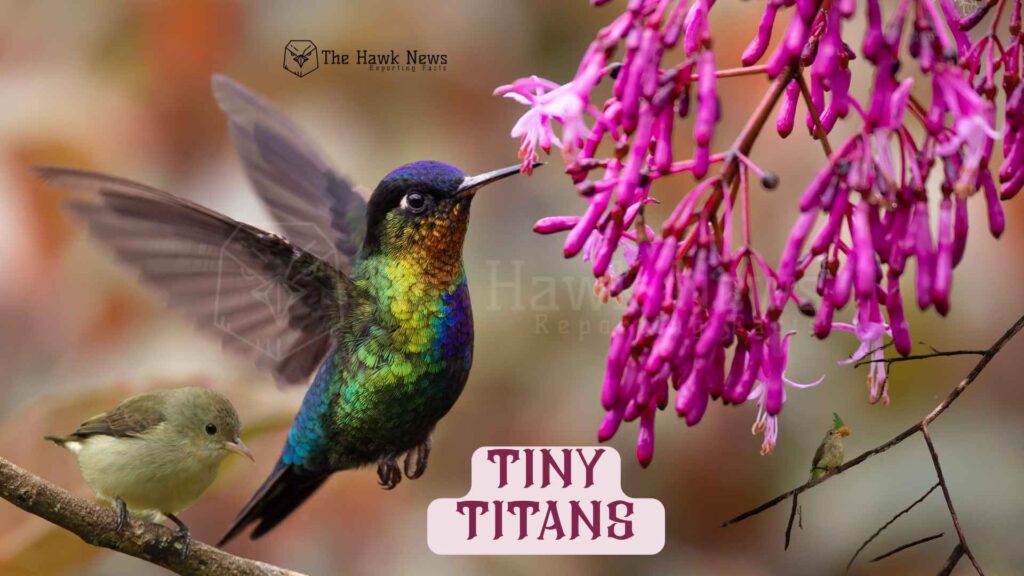
Introduction: Small Size, Big Wonder
When we think of birds, images of majestic eagles, elegant peacocks, or colorful parrots often come to mind. Yet, some of the most fascinating avian marvels are those that weigh less than a coin and could perch comfortably on your fingertip.
The world’s smallest bird, the bee hummingbird of Cuba, and India’s tiniest, the pale-billed flowerpecker, remind us that size does not determine significance.
These little creatures play crucial ecological roles, while also capturing human imagination with their delicate charm.
The World’s Smallest Bird: The Bee Hummingbird
A Natural Miniature
Found only in Cuba and the Isla de la Juventud, the bee hummingbird (Mellisuga helenae) holds the record as the world’s smallest bird. Adult males grow to just 5.5 cm in length and weigh around 1.6 grams — lighter than many insects. Even females, slightly larger at 6.1 cm, are smaller than a human thumb.
Iridescent Beauty
Despite its size, the bee hummingbird is a spectacle. Males flaunt fiery pink-to-red iridescent feathers around their throats, shimmering brilliantly in sunlight. Females, though less flamboyant, are equally enchanting with bluish-green upper parts and pale underbellies.
A Heart That Never Rests
What truly amazes scientists is the hummingbird’s metabolism. Its wings beat 80 times per second, and during courtship displays, this can reach 200 beats per second.
The bird’s tiny heart can thump over 1,200 beats a minute, burning energy at astonishing rates. To survive, it must feed constantly, sipping nectar and catching insects mid-air.
Conservation Challenges
Sadly, the bee hummingbird is classified as Near Threatened by the IUCN. Habitat loss in Cuba — through deforestation and agricultural expansion — threatens its survival.
Conservationists warn that without protection, this natural jewel could fade from our planet.
India’s Smallest Bird: The Pale-Billed Flowerpecker
Ubiquitous Yet Overlooked
In contrast to the bee hummingbird’s exclusivity, India’s smallest bird, the pale-billed flowerpecker (Dicaeum erythrorhynchos), is widespread and often overlooked.
Measuring about 8 cm and weighing 6–7 grams, it is larger than the bee hummingbird but still tiny compared to most backyard birds.
From city gardens to rural fields and dense forests, this little bird thrives across the Indian subcontinent. Its short, stubby tail and pale-colored bill give it a somewhat modest appearance, but its importance far outweighs its size.
Ecological Role: The Tiny Gardener
The flowerpecker feeds primarily on nectar and small fruits, especially mistletoe berries. By dispersing seeds and pollinating flowers, it acts as an essential “tiny gardener” of Indian ecosystems.
Many trees and plants rely on its activity for regeneration. Without such small pollinators, biodiversity would suffer significantly.
Easy to Miss, Delightful to Spot
Birdwatchers often remark how tricky it is to spot this fast-moving bird. Constantly hopping between branches, flitting around flowers, and rarely staying still, it demands patience to observe.
Yet, once seen, the pale-billed flowerpecker often sparks a sense of delight — a reminder of nature’s understated beauty.
Small Birds, Big Impact
At first glance, these tiny birds may seem insignificant compared to larger species. But their impact on ecosystems is outsized.
- Pollination: Both bee hummingbirds and flowerpeckers transfer pollen as they feed, helping plants reproduce.
- Seed Dispersal: By eating fruits and spreading seeds, they aid forest regeneration.
- Food Chain: Despite their size, they form a vital link in the food chain, supporting predators like snakes, larger birds, and mammals.
In short, their survival ensures the health of entire ecosystems.
Cultural and Symbolic Dimensions
Birds often hold symbolic weight in human culture, and small birds are no exception.
- In Cuba, the bee hummingbird is considered a national treasure — a symbol of resilience and uniqueness.
- In India, while the pale-billed flowerpecker may not yet enjoy peacock-level fame, it represents the quiet endurance of urban wildlife amid rapid urbanization.
Interestingly, in both cases, these birds remind humans of the beauty of subtlety — that not all treasures are grand or obvious.
Global vs Local: A Tale of Two Birds
Comparing the bee hummingbird and the pale-billed flowerpecker provides a fascinating perspective:
- The bee hummingbird, though smaller, is globally celebrated as the tiniest bird on Earth, yet it faces a precarious future.
- The pale-billed flowerpecker, slightly bigger but still tiny, is abundant across India, playing a steady, unsung role in daily ecology.
Both stories highlight how size doesn’t equate to importance. Both birds, despite their differences, remind us of the fragile balance of nature.
What These Birds Teach Us
- Value the Small: Just as in life, where small actions can have big consequences, these birds show how tiny beings sustain entire ecosystems.
- Hidden in Plain Sight: The flowerpecker teaches us to notice the often-overlooked aspects of nature, even in urban spaces.
- Conservation Urgency: The bee hummingbird warns us of how quickly human activities can endanger even the most remarkable species.
Conclusion: Celebrating the Tiny Titans
In a world obsessed with the large and spectacular, the bee hummingbird and the pale-billed flowerpecker are reminders that greatness often comes in the smallest packages.
They are not just birds; they are ecological guardians, cultural icons, and symbols of nature’s infinite creativity.
As India balances urban growth with ecological preservation, noticing and valuing even the tiniest residents of our ecosystems is vital.
Whether it’s the world’s smallest bird buzzing across Cuban flowers or India’s tiniest gardener hopping around city gardens, these avian wonders deserve both admiration and protection.