A Legend Born in Europe
When Czechoslovakian engineer František Janeček bought the motorcycle division of Wanderer in 1929, few could have predicted that the brand he christened Jawa would become one of the world’s most beloved names on two wheels. With its simple engineering, rugged reliability, and affordable pricing, Jawa quickly spread across Europe and Asia. But it was in India, starting in the 1960s, that the motorcycle would earn cult status.
The Indian Chapter: From Mysore to the Masses
Jawa’s entry into India came through Ideal Jawa India Ltd., set up in Mysore. The bikes rolled out of their factory with a charm that soon became irresistible. They were compact, lightweight compared to British heavyweights, and had a distinct sound that echoed through Indian streets.
By the 1970s and 80s, Jawa—and its later cousin, Yezdi—were household names. The bikes became synonymous with freedom, reliability, and youthful pride. Families relied on them for everyday travel, while adventurers trusted them for long, rugged journeys. The unmistakable “Jawa roar” wasn’t just an exhaust note; it was the heartbeat of a generation.
A Symbol in Pop Culture
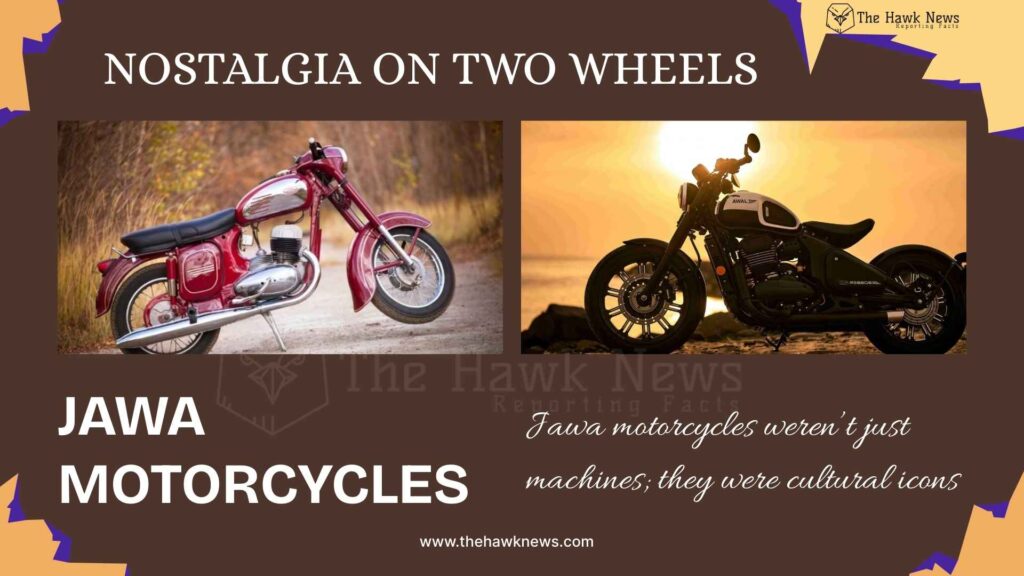
Jawa motorcycles weren’t just machines; they were cultural icons. In Bollywood, heroes raced into action astride their Jawas. In small towns, weddings were incomplete without a groom arriving in style on his bike. College students, saving every rupee, dreamed of owning one.
For many Indians, a Jawa wasn’t simply transport. It was a companion, a status symbol, and often a family heirloom—passed down from father to son, with stories etched into every dent and scratch.
The Fade Out
But by the 1990s, the roar began to fade. Stricter emission norms, lack of technological updates, and stiff competition from brands like Hero Honda and Bajaj pushed Jawa and Yezdi into decline. By 1996, Ideal Jawa shut its doors, and fans of the brand were left with only memories and vintage rides to cherish.
The Phoenix Rises: Jawa’s Revival
In 2018, nostalgia met opportunity. Classic Legends Pvt. Ltd., backed by the Mahindra Group, announced the return of Jawa motorcycles to India. The revival wasn’t just a marketing stunt—it was a carefully crafted blend of heritage and modern engineering.
The new Jawa lineup included three models:
- Jawa Classic 300 – a faithful throwback to the original, with retro styling.
- Forty-Two (42) – a slightly modernized version aimed at younger riders.
- Perak – a factory bobber, bold and unique, catering to enthusiasts.
Underneath their vintage looks lay modern technology:
- 293 cc liquid-cooled engine, producing ~27 bhp.
- Fuel injection, smoother ride dynamics.
- ABS for safety.
The revival sparked a frenzy. Showrooms saw long queues, waiting periods stretched into months, and nostalgia-driven bikers flooded social media with stories of their old Jawas alongside new ones.
Why Jawa Still Matters
- Emotional Value – Unlike many motorcycles, Jawa carries a sense of heritage. Riders often connect with their parents’ or grandparents’ stories.
- Retro Revival Trend – Globally, the motorcycle market has seen a resurgence of retro-styled bikes. Jawa’s re-entry fits perfectly into this demand.
- Competitor to Royal Enfield – For decades, Royal Enfield dominated India’s classic bike segment. Jawa now offers a refreshing alternative.
Jawa in Modern India
Today, Jawa motorcycles occupy a unique space in the Indian two-wheeler market. They appeal to:
- Young professionals who want a stylish yet affordable retro motorcycle.
- Middle-aged enthusiasts who once rode Yezdis and Jawas and want to relive their youth.
- Collectors and modifiers who see Jawa as a canvas for creativity.
Challenges Ahead
Jawa’s revival has been promising, but challenges remain:
- Production delays initially frustrated customers.
- Competition is fierce, with Royal Enfield’s Classic 350 still ruling the segment.
- Modern expectations around mileage, after-sales service, and spares availability need consistent attention.
Jawa Beyond Bikes: The Lifestyle Connection
Interestingly, Jawa is evolving into more than just motorcycles. Its branding leans heavily on lifestyle, nostalgia, and storytelling. Riding a Jawa isn’t just about commuting—it’s about owning a piece of history. Merchandise, clubs, and rider communities further strengthen this identity.
The Jawa Yezdi Nomads Club, for instance, organizes rides and meetups, celebrating not just bikes but camaraderie and shared passion. It’s this community-driven spirit that gives Jawa an edge in the long run.
Looking Ahead: Can Jawa Reclaim Glory?
The Indian motorcycle market is growing rapidly, with rising disposable incomes and a taste for premium bikes. Jawa has positioned itself smartly in the retro-premium category, priced between everyday commuters and high-end cruisers.
What works in Jawa’s favor:
- Mahindra’s backing ensures resources and scaling power.
- A loyal fanbase that spans generations.
- The rising retro wave in global fashion and design.
But success will depend on how consistently the brand innovates without losing its soul. As electric mobility looms, fans wonder: could we one day see an electric Jawa that still carries that legendary roar, digitally recreated for nostalgia?
Conclusion: More Than a Motorcycle
Jawa motorcycles are not just about steel, rubber, and fuel. They are about stories—a father teaching his son to ride, a bridegroom proudly arriving at his wedding, a traveler roaring through mountain roads, or an old man polishing his decades-old Jawa with love.
Its comeback proves something powerful: nostalgia, when mixed with innovation, can create magic. Jawa today is not just reviving a bike—it’s reviving memories, emotions, and an entire culture of riding.
And as you hear the signature hum of a new Jawa on the road, you realize it’s not just a machine returning—it’s history reborn.