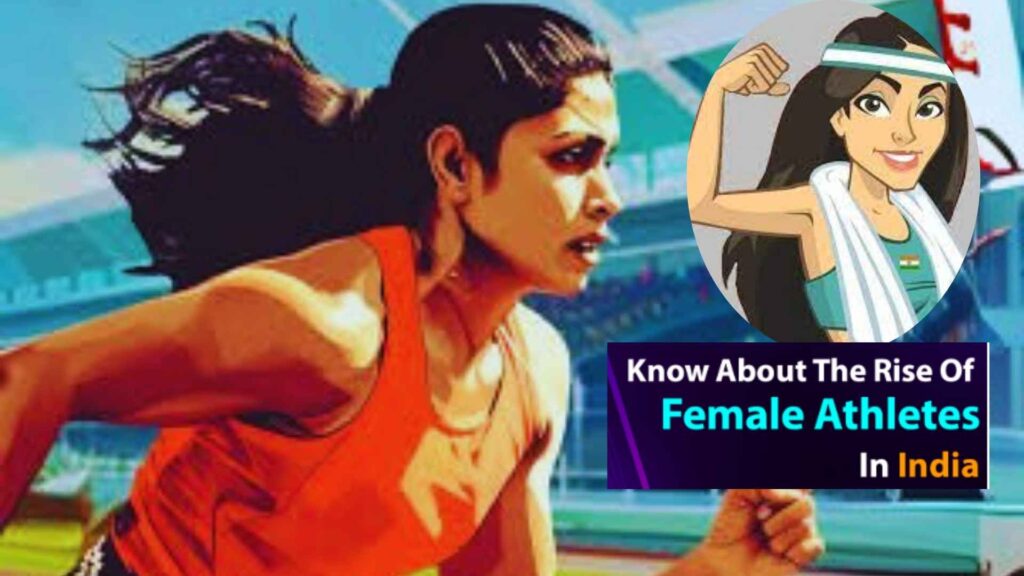
For decades, the story of women in sports has often been told through the lens of comparison: how well they “match up” to men, whether they “deserve equal pay,” or if their achievements are “exceptions to the rule.” But this framing misses the point.
Indian women athletes don’t step onto the field to prove they are equal to men. They play because they are born with excellence, resilience, and beauty in motion. They play because sports are as much their destiny as anyone else’s.
In recent years, India has witnessed a dramatic rise in the visibility and success of women athletes, from wrestling mats to boxing rings, badminton courts to cricket stadiums. Behind every medal, trophy, and headline is a story that goes far beyond competition—it is about redefining identity, breaking cultural barriers, and inspiring millions.
A Glimpse into the Past: From Confinement to Courage
Not too long ago, the idea of a girl training in wrestling, weightlifting, or boxing would have been dismissed in many Indian households. Sports were often considered the domain of boys, while girls were expected to focus on studies, chores, and marriage.
Opportunities were scarce, infrastructure inadequate, and social approval even scarcer.
Yet, even within those constraints, women carved out their space. From P.T. Usha, the “Payyoli Express,” who ran against the odds in the 1980s, to Karnam Malleswari, who brought India’s first Olympic medal in weightlifting in 2000, the seeds of a revolution were planted.
They were not trying to be like men—they were trailblazing as women, proving that talent knows no gender.
Rising Icons: Brilliance Beyond Comparison
The last two decades have seen a surge of women athletes who no longer linger in the shadows. Their names are household staples, their achievements etched in the nation’s memory:
- Mary Kom, the six-time world boxing champion, showed that motherhood and medals could go hand in hand. She fought not to mirror men but to embody the grit of a Manipuri woman who refused to be sidelined.
- P.V. Sindhu, with her Olympic silver and bronze, has become the face of badminton, inspiring thousands of young girls to pick up racquets in small towns and cities alike.
- Mirabai Chanu, the weightlifter from Manipur, lifted more than just weights at the Tokyo Olympics—she lifted an entire nation’s pride.
- Harmanpreet Kaur and the Indian women’s cricket team continue to challenge stereotypes in a sport long dominated by men, proving that cricket is not “men’s cricket” or “women’s cricket”—it’s simply cricket.
- Nikhat Zareen, the world boxing champion, embodies the new wave of fearless athletes who stand tall against cultural restrictions.
These women aren’t exceptions. They are proof that excellence is inherent and universal.
Beyond the Walls: Breaking Barriers Every Day
What makes these journeys so powerful is not just the medals but the barriers broken along the way. Many athletes come from villages and small towns where girls are rarely encouraged to pursue sports.
Families often faced ridicule—“Why should a girl wear shorts? Who will marry her? What future is there in this?”
But with every success, these doubts are silenced. Parents now proudly enroll daughters in academies, and communities rally behind their champions.
The rise of women athletes reflects not only individual brilliance but also a societal shift—a slow dismantling of the idea that women’s roles are confined to homes.
Policies, Platforms, and Progress
This transformation hasn’t happened in isolation. Government initiatives like Khelo India and schemes supporting Olympic hopefuls have provided funding and infrastructure.
Corporates and private leagues are slowly recognizing the commercial value of women’s sports, from badminton leagues to the long-awaited Women’s Premier League (WPL) in cricket.
Yet, challenges remain. Sponsorship is still skewed toward male athletes. Facilities in rural areas are patchy, and equal pay is a conversation still in progress. But momentum is building, and every victory on the world stage strengthens the case for more investment.
The Health of a Nation: Why Women’s Sports Matter
The impact of women’s sports extends beyond podiums. These athletes become role models for fitness, discipline, and confidence. In a country grappling with health challenges like obesity and diabetes, young girls watching Mirabai Chanu lift or Rani Rampal lead the hockey team are inspired to embrace active lifestyles.
Moreover, the presence of women in sports empowers entire communities. It challenges patriarchal norms, opens new career paths, and shows that strength and leadership are not bound by gender.
Not for Equality, But for Excellence
Here’s the heart of it: women athletes are not out to prove they are “as good as men.” That very premise is flawed. They play to prove something far greater—that every human being is born with potential waiting to be unleashed.
Their victories aren’t about comparison but about affirmation: women are strong, resilient, and brilliant simply because they are.
This is why their stories resonate so deeply. When Mary Kom steps into a ring, when P.V. Sindhu dives for a shuttle, or when the women’s cricket team faces Australia under the floodlights, they are not just competing. They are affirming that women’s sports are not a side note—they are the story.
The Road Ahead: From Inspiration to Normalization
The next challenge is to normalize women’s sports. To stop calling them “women athletes” and simply call them athletes. To give them equal airtime, funding, and recognition. To make a little girl picking up a bat or glove as ordinary—and as celebrated—as a boy doing the same.
The rise of Indian women athletes is not a temporary wave but a cultural shift. And it’s one that deserves to be sustained with policies, investment, and continued celebration.
Conclusion: Excellence as Identity
On this journey, the narrative must remain clear: women are not striving for a seat at the table. They are building their own arenas, where excellence is the only qualification. They do not play to match men—they play to match their own brilliance.
India’s women athletes are teaching us something profound: sports are not about gender, but about greatness.
And in every sprint, punch, lift, or swing, they remind us that women are not made for confinement within walls but are destined to conquer fields, courts, and stadiums with excellence written in every step.