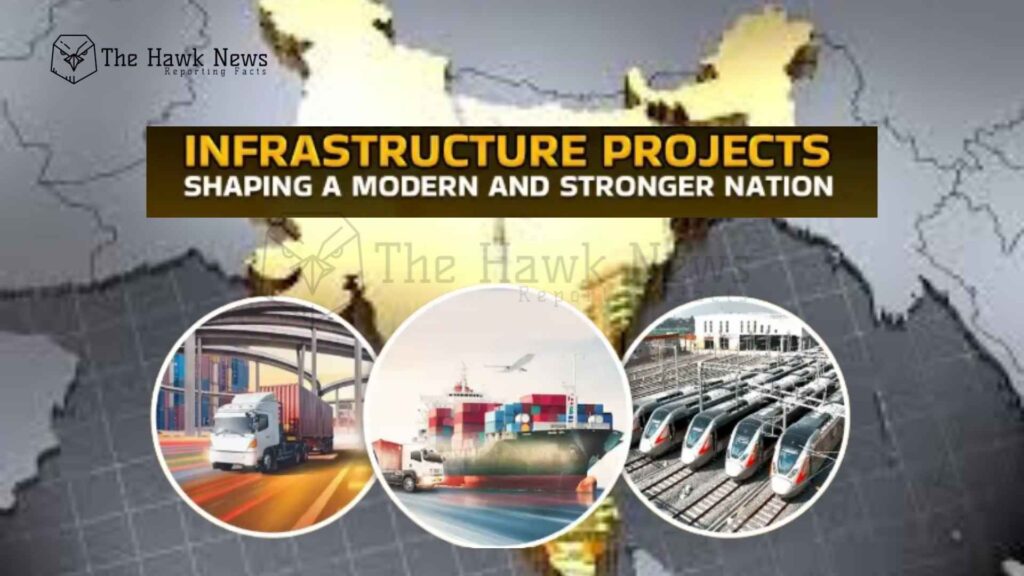
India is at a pivotal juncture in its journey toward economic transformation. With an urban population that continues to swell and an economy aspiring to become a global powerhouse, infrastructure development has emerged as a crucial driver of growth.
Over the past decade, ambitious projects such as the Smart Cities Mission and large-scale highway constructions have redefined the country’s landscape, promising improved connectivity, urban modernization, and regional development.
Yet, these projects are not without challenges, ranging from ecological concerns to funding and bureaucratic hurdles. This article explores the current and upcoming infrastructure projects in India, their potential economic impact, and the obstacles they face in shaping the nation’s growth trajectory.
Smart Cities Mission: A Vision for Urban Transformation
Launched in 2015, the Smart Cities Mission (SCM) represents one of India’s most ambitious attempts to modernize urban centers. The mission aims to create 100 smart cities that leverage technology to improve governance, urban mobility, sanitation, and overall quality of life for citizens. According to the Ministry of Housing and Urban Affairs, as of July 2025, over 7,600 projects amounting to ₹1.53 lakh crore have been sanctioned under the mission.
The impact of the SCM can already be seen in cities such as Pune, Ahmedabad, and Kochi, where smart traffic management, e-governance initiatives, and enhanced public transport have improved daily life for residents. Economically, these smart initiatives are expected to boost productivity, attract foreign investment, and create employment opportunities. Improved urban infrastructure also contributes to better housing, reduced congestion, and sustainable growth—factors essential for India’s long-term urban planning.
However, challenges persist. Many projects face delays due to complex approval processes, insufficient technical capacity within Urban Local Bodies (ULBs), and occasional cost overruns. The mission also demands strong citizen engagement and behavioral change, which can be difficult to implement at scale. Despite these hurdles, the SCM remains a cornerstone of India’s strategy to modernize urban life, combining technology, efficiency, and sustainability.
Major Highway Constructions: Connecting the Nation
India’s road network is undergoing a transformation, with major highway projects reshaping regional connectivity and trade routes. The Delhi-Mumbai Expressway, spanning over 1,300 kilometers, is designed to reduce travel time between the two economic hubs from 24 hours to just 12. Similarly, the Amritsar–Jamnagar Expressway, one of the longest greenfield expressways in India, improves connectivity between northern and western regions, facilitating smoother trade of goods and agricultural produce.
Infrastructure projects like the Char Dham Highway project in Uttarakhand aim to connect pilgrimage sites, providing economic benefits to local communities while boosting tourism. Highways not only reduce travel time and vehicle operating costs but also attract industrial investment in corridor regions, fostering regional economic growth.
Yet, constructing these highways is not without difficulties. Land acquisition remains a contentious issue, often delaying projects for years. Environmental concerns also pose significant challenges, particularly for highways cutting through ecologically sensitive areas like the Himalayas or the Western Ghats. Balancing infrastructure development with environmental sustainability has become a key consideration for planners and policymakers.
Economic Impact: Driving Growth and Employment
The economic implications of India’s infrastructure expansion are substantial. Highways and smart city projects contribute directly to GDP growth, primarily through employment generation in construction, logistics, and ancillary industries. For example, the Delhi-Mumbai Expressway is estimated to generate thousands of direct and indirect jobs during construction and operation phases.
Improved infrastructure also stimulates regional development. Cities connected by modern highways often witness increased industrial activity, rising real estate demand, and better access to education and healthcare. Smart city initiatives further enhance economic potential by attracting technology firms, startups, and foreign investment, creating urban hubs that are both productive and livable.
Moreover, modern infrastructure facilitates smoother trade routes, reducing transportation costs and enhancing supply chain efficiency. This has a cascading effect on the national economy, enabling Indian businesses to compete more effectively in global markets. From job creation to trade facilitation, the economic benefits of India’s infrastructure projects extend well beyond the immediate construction phase.
Challenges and Roadblocks: Navigating the Hurdles
Despite ambitious plans, India’s infrastructure projects face multiple challenges. Bureaucratic delays, often caused by overlapping approvals from central and state authorities, can stall progress. Funding issues, particularly for projects dependent on public-private partnerships (PPPs), sometimes limit scope or result in cost overruns. Resistance from local communities, whether due to land acquisition disputes or ecological concerns, can further complicate project execution.
Environmental considerations are increasingly critical. Projects like the Char Dham Highway have faced opposition from ecologists concerned about landslides, deforestation, and soil erosion. Similarly, highway expansions in biodiversity hotspots must be carefully planned to minimize ecological disruption. Urban projects under the Smart Cities Mission must also consider sustainable energy use, waste management, and water conservation to avoid long-term environmental pitfalls.
Another challenge is ensuring that infrastructure benefits are inclusive. Urban-centric initiatives must be balanced with rural development projects to prevent widening disparities between regions. Equitable distribution of benefits, along with capacity building in local governance, is crucial for sustainable growth.
The Path Forward: Strategies for Success
To maximize the benefits of India’s infrastructure projects, several strategies are essential. Streamlining approval processes and leveraging technology for project monitoring can reduce delays and enhance efficiency. Public-private partnerships must be strengthened, with transparent frameworks that ensure mutual accountability and risk-sharing.
Community engagement is another vital aspect. Early consultation with local stakeholders, transparent communication about project benefits, and environmental mitigation measures can help gain public support and reduce conflicts. Similarly, fostering innovation in urban planning and construction—through green building techniques, smart traffic management, and energy-efficient design—can ensure long-term sustainability.
Investments in capacity building within Urban Local Bodies and state agencies are critical. Skilled personnel who can manage modern infrastructure projects efficiently will accelerate project implementation and improve service delivery. Finally, integrating infrastructure planning with economic and social development goals ensures that projects generate maximum impact for citizens and businesses alike.
Conclusion
India’s infrastructure projects are much more than concrete, steel, and asphalt—they are the foundation for the nation’s future economic growth and social progress.
Ambitious initiatives such as the Smart Cities Mission and major highway constructions have the potential to transform urban life, enhance regional connectivity, and stimulate GDP growth. While challenges related to funding, environmental sustainability, and governance persist, India’s commitment to progress remains steadfast.
With continued focus on innovation, public-private collaboration, and sustainable planning, the country is well-positioned to realize its infrastructure vision.
From modern cities to highways connecting every corner of the nation, India’s infrastructure projects are shaping not just roads and buildings, but the very framework of a thriving, modern, and globally competitive nation.