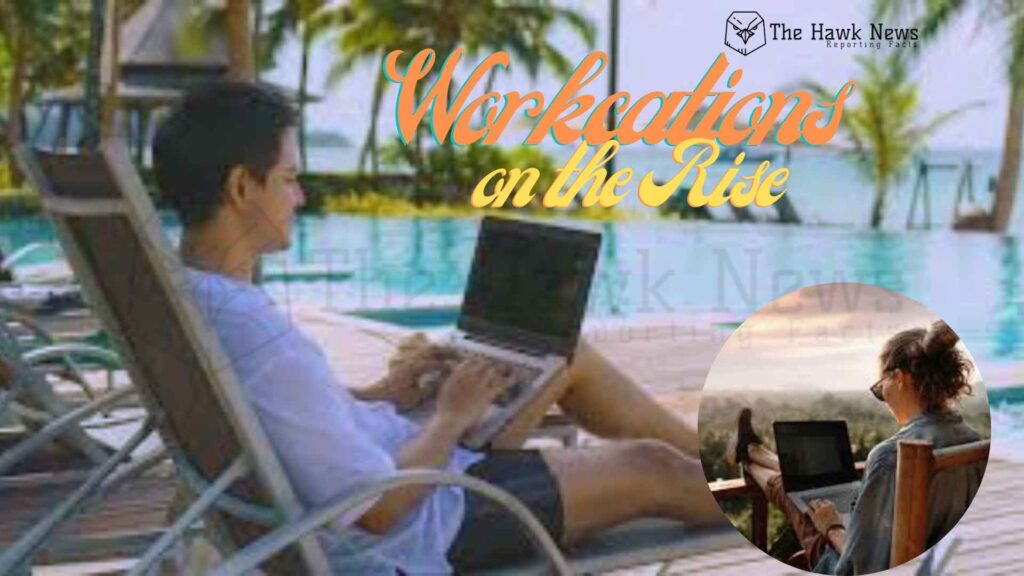
There was a time when vacations meant logging off completely—setting an auto-reply, packing sunscreen, and escaping work emails. But in 2025, the line between “work” and “vacation” is blurring.
Enter the age of the workcation: a lifestyle where laptops travel as easily as passports, and beachside cafés double as boardrooms.
Far from being a niche, workcations are reshaping travel, business, and even the way people view productivity. Remote workers are driving a booming market for digital nomad visas, co-living hubs, and laptop-friendly destinations—and countries are competing to attract them.
What Exactly Is a Workcation?
A workcation is the blending of work and vacation—spending extended time in a destination while continuing professional responsibilities.
Unlike a traditional holiday, where you disconnect entirely, workcations are about changing the scenery without losing productivity.
It’s not just a beachside fantasy. Imagine coding in Bali, attending Zoom calls from a Lisbon apartment, or writing reports in a Himalayan homestay.
What used to be a luxury for freelancers is now mainstream, thanks to widespread remote work adoption.
The Digital Nomad Visa Boom
To attract this new breed of traveler, more than 40 countries now offer digital nomad visas. Portugal, Estonia, Thailand, Costa Rica, and Greece are among the most popular. These visas typically allow remote workers to stay for six months to two years, providing legal residency while they continue working for foreign employers.
Why are countries so eager? Workcationers tend to spend more than tourists. They rent long-term apartments, shop locally, and contribute consistently to the economy. For smaller nations like Barbados or Croatia, nomad visas have become a tool to offset dips in traditional tourism.
As one Estonian official put it: “Digital nomads are not just visitors—they become part of the community.”
The Rise of Co-Living and Co-Working Spaces
Workcationers aren’t just looking for Wi-Fi—they want community. That has fueled the growth of co-living and co-working spaces tailored to digital nomads.
Global chains like Selina and Outsite now operate across continents, offering accommodation with built-in work hubs, yoga sessions, and networking events. Airbnb has leaned into the trend by promoting monthly stays, while boutique hotels are rebranding themselves as remote-work sanctuaries.
These spaces solve two problems: reliable internet and loneliness. By fostering collaboration, they transform travel into an experience of belonging.
Laptop-Friendly Tourism Takes Off
Tourism boards and hotels are adjusting. From the beaches of Goa to the islands of Bali, resorts now advertise “workcation packages”—bundled stays with high-speed internet, ergonomic desks, and extended-stay discounts.
Even cafés are joining in, branding themselves as “laptop-friendly” with charging ports and subscription-style memberships. The message is clear: whether you’re a copywriter, coder, or consultant, you’re welcome to stay as long as your battery lasts.
The Economic Ripple Effect
Workcations don’t just benefit workers—they reshape economies. Traditional tourism is seasonal, with peaks and drops. Digital nomads, however, bring year-round income.
Local communities benefit as nomads rent apartments, eat in neighborhood restaurants, and sometimes even collaborate with local startups. In Lisbon and Chiang Mai, expat entrepreneurs have spurred mini tech hubs, blurring lines between tourism and investment.
For governments, the appeal is obvious: digital nomads contribute without taking local jobs. They are economic catalysts, often bringing global income into local markets.
The Lifestyle Shift: Work-Life Blend
For many, workcations represent freedom. The ability to design one’s lifestyle around experiences rather than office walls is a dream realized.
Young professionals, in particular, are embracing this blend of productivity and pleasure. A morning swim before logging on, lunch breaks exploring new cuisines, evenings networking with fellow travelers—workcations embody the modern pursuit of balance.
However, the lifestyle isn’t without its challenges. The blurring of work and leisure can cause burnout. Time zones complicate communication. And for some, the lack of stability makes it hard to maintain relationships or routines.
The Business Side of Workcations
Startups and big companies alike are capitalizing on this trend. Travel-tech firms now offer curated workcation packages with everything from visa assistance to co-working memberships. Real estate developers are repurposing properties into hybrid “live-work-play” hubs. Even traditional airlines are rethinking marketing, positioning themselves as gateways to “work anywhere” lifestyles.
For corporations, the rise of workcations has sparked policy debates. Some employers see it as a perk that improves retention; others worry about compliance, cybersecurity, or productivity. But as long as talent demands flexibility, businesses must adapt.
The Flip Side: Challenges and Criticism
Not everyone is cheering. Critics argue that the influx of digital nomads can drive up rents, displacing locals in popular destinations. Cities like Lisbon and Mexico City have already seen housing protests linked to nomad-driven gentrification.
Infrastructure also remains a challenge. Rural regions may lack the bandwidth or co-working facilities that nomads expect. And while many nations welcome the economic boost, some worry about cultural homogenization as global nomad communities cluster in trendy areas.
The Future of Workcations
So, is this just a passing fad? Unlikely. With remote work firmly entrenched, the workcation represents a new chapter in global mobility. As companies adopt hybrid or fully remote structures, and as governments see the benefits of nomad visas, workcations will only expand.
Experts predict growth not just in coastal havens, but also in second-tier cities and rural destinations seeking to revitalize their economies. Imagine workcationers setting up in Moroccan deserts, Alpine villages, or African safari lodges.
In essence, the world is becoming an office without walls.
Conclusion
Workcations are more than a trend—they are a cultural shift redefining travel, work, and even identity. The traditional divide between vacation and office life is dissolving, replaced by a fluid model of global productivity.
For remote workers, it’s the chance to see the world without pressing pause on their careers. For nations, it’s an economic strategy. For the travel industry, it’s a reinvention.
And for the rest of us? Workcations are proof that the office of the future might not be a building at all, but a passport and a good Wi-Fi signal.