Introduction
In the age of laptops, cloud drives, and Zoom calls, the concept of the “office” has broken free from glass towers and cubicles.
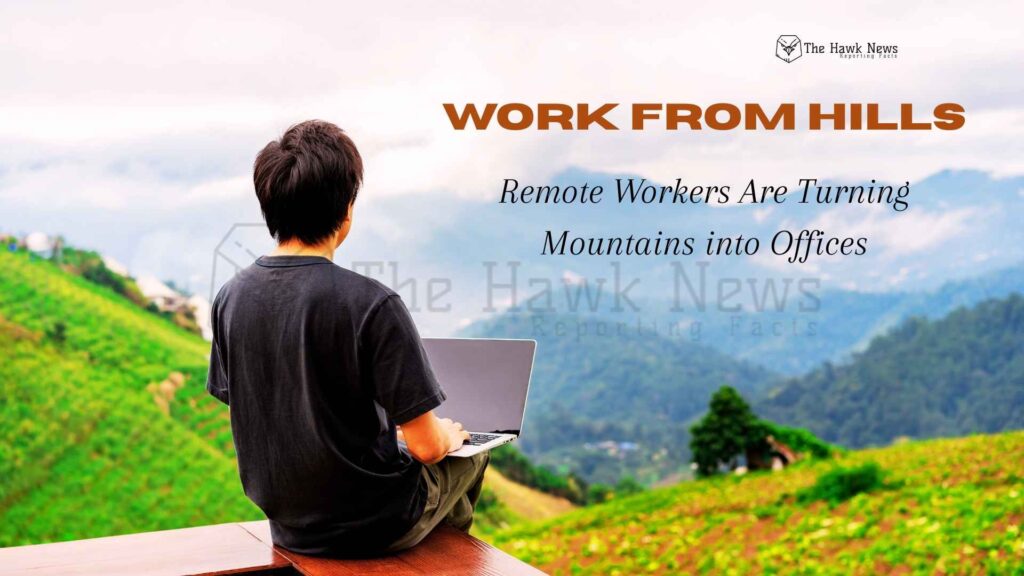
Today, many Indians are trading fluorescent lights for mountain sunrises, and traffic jams for pine-scented trails.
Welcome to the era of Work-from-Hills, a trend that’s transforming India’s work culture and tourism economy at once.
What started as a pandemic-driven experiment has now matured into a lifestyle movement—one where professionals are embracing scenic hill towns as their new workspaces.
From Himachal Pradesh to Sikkim, the mountains are fast becoming India’s alternative corporate hubs.
The Rise of the Work-from-Hills Culture
The roots of this movement can be traced back to the early months of the COVID-19 pandemic, when offices closed and employees discovered the possibility of working from anywhere. Initially, “workation packages” were marketed as short-term escapes.
But over time, many realized that the combination of fresh air, lower living costs, and natural serenity offered something city life never could: balance.
By 2023, the term “work-from-hills” had entered India’s lifestyle vocabulary. By 2025, it has become a full-blown trend, drawing not only freelancers and IT professionals but also entrepreneurs, creators, and remote-first startups.
Digital Infrastructure Climbs the Mountains
A trend like this wouldn’t be possible without reliable internet access. Over the last few years, India’s hill states have witnessed a quiet but steady digital transformation.
Fiber-optic cables, stronger mobile networks, and satellite-based connectivity have reached towns that were once offline for days during monsoons.
Government and private initiatives have stepped in too. In Sikkim, Yakten village in Pakyong district was recently unveiled as an official remote-work hub—equipped with high-speed Wi-Fi, consistent power supply, and homestays designed for long stays.
Similar models are emerging in Himachal Pradesh and Uttarakhand, turning hill communities into remote-friendly zones.
This connectivity upgrade has given professionals the confidence to swap city apartments for cottages in Dharamshala, Naukuchiatal, or Kasar Devi—without the fear of dropping out of a meeting.
Destinations Turning into Work Havens
Several Indian hill stations are reinventing themselves for this new demographic:
- Manali & Dharamshala (Himachal Pradesh): Already popular with backpackers, these towns now offer co-living hostels, cafes with backup internet, and dedicated co-working cottages.
- Mussoorie & Naukuchiatal (Uttarakhand): Known for their calm lakes and colonial charm, these places attract those seeking quieter environments.
- Kasar Devi (Almora, Uttarakhand): Once a spiritual hub for seekers, it is now a hotspot for digital nomads who want solitude with connectivity.
- Sikkim’s Yakten village: A government-supported model for the future, blending rural homestays with modern infrastructure.
What ties these places together is a conscious shift: instead of catering only to tourists, they’re creating ecosystems for long-term residents who bring laptops, not just cameras.
Lifestyle Shift: From Workations to Permanent Moves
Initially, professionals saw the hills as temporary retreats—a few weeks to recharge while staying on the payroll. But the movement is evolving. Increasingly, people are making longer-term commitments: renting cottages for six months, or even moving families into mountain towns.
For many, the decision is about more than scenery. Life in metros often means pollution, cramped apartments, and relentless pace.
The hills promise space, silence, and wellness. For creative workers—writers, designers, coders—the clarity that comes from nature often translates to sharper output.
It’s not just about productivity, though. Yoga sessions at sunrise, evening treks, and chai breaks overlooking valleys have turned the workday into a healthier, more mindful routine.
Economic & Social Impact on Hill Communities
The Work-from-Hills trend is not just reshaping the lives of professionals—it’s also rewriting the economies of hill towns.
- Boost to Local Businesses: Homestays, cafes, and local guides are seeing year-round income instead of seasonal tourism peaks. Grocery shops, transport services, and even local artisans are benefiting from a steady presence of urban professionals.
- Sustainable Tourism Shift: Unlike short-term tourists, remote workers stay longer, spend locally, and integrate with the community, leading to more balanced economic gains.
- Challenges: At the same time, the influx brings pressures—rising rents, risk of over-tourism in fragile ecosystems, and concerns about waste management.
For locals, the trend is both an opportunity and a balancing act. Some welcome the income and global exposure; others worry about cultural dilution and environmental strain.
Stories from the Hills
Ritu Sharma, a graphic designer from Bengaluru, moved to Manali for three months and never looked back. “I came here with just a laptop and suitcase.
The silence helped me focus, and the community of other remote workers kept me motivated. Now, I’m renting a cottage for a year,” she says.
Meanwhile, Pema Dorjee, who runs a homestay in Sikkim’s Yakten, has seen bookings double since the village was branded a work-from-hills destination.
“Earlier, guests stayed for two nights. Now, people come for two months. It changes everything—for us and for them.”
The Road Ahead
Experts believe the Work-from-Hills trend is not a fad but part of a global shift in how we define workspaces. With companies embracing hybrid and remote-first models, professionals will continue to seek environments that support both productivity and mental well-being.
Looking ahead, India may even see the rise of dedicated remote work villages, purpose-built for digital nomads—combining eco-friendly living, shared workspaces, and cultural immersion.
However, the future depends on careful planning. Policymakers, local communities, and businesses will need to collaborate to manage resources sustainably while keeping the mountains livable—for both residents and remote professionals.
Conclusion
The Work-from-Hills trend is more than just an Instagram aesthetic; it’s a profound reimagining of work-life balance.
For India’s professionals, the hills are no longer just holiday escapes—they’re becoming permanent addresses of ambition and peace.
As Wi-Fi signals stretch across valleys and office calls blend with birdsong, the line between work and lifestyle is being redrawn. The mountains, once distant from daily life, are now offices with a view.