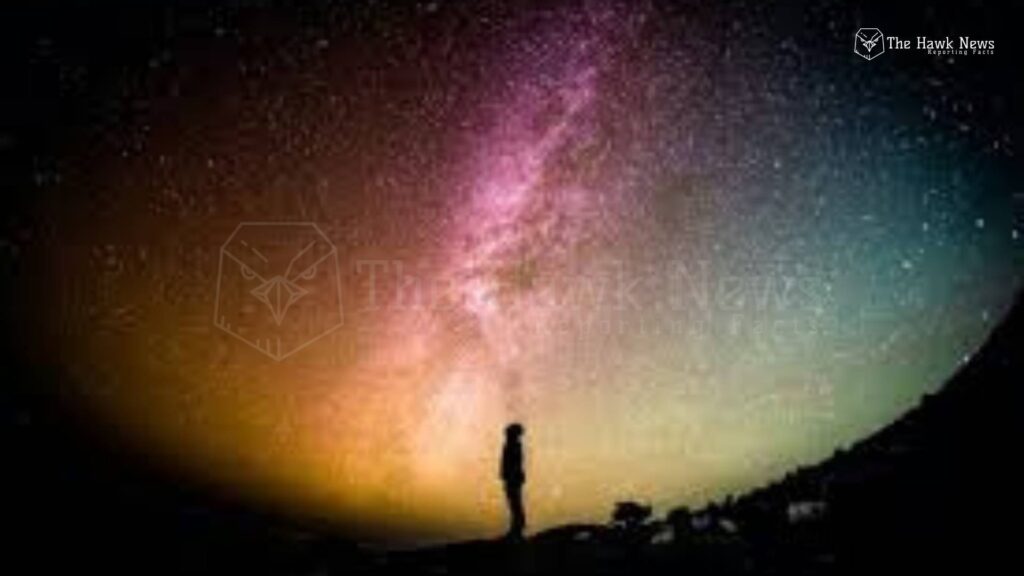
Look up at the night sky. Galaxies swirl, stars burn, planets rotate. Yet despite all this motion, there is no chaos—only harmony. The universe is in peace. Nothing rushes, nothing pushes, nothing worries. Planets don’t fight to shine brighter than stars, comets don’t cut in line to orbit faster, and galaxies don’t compete for attention.
And then, here we are—humans. Always rushing, always pushing, always worrying. The only part of creation that seems unable to find peace.
Why is that? And what can the universe teach us about checks, balances, and the necessity of equilibrium in our lives?
The Universe’s Quiet Symphony
Every star, planet, and black hole exists in balance. Gravity pulls, velocity resists, and together they create orbits that last billions of years. Even death in the cosmos has balance—when a star explodes, it doesn’t end in tragedy but in renewal, seeding the universe with the elements of new worlds.
Nothing in nature is in a hurry. Nothing in nature is in panic. The moon takes its time to complete its orbit. The earth never rushes its seasons. Trees do not worry about their leaves falling. And rivers don’t compare their speed to others—they flow according to the path laid before them.
Peace, then, is not stillness—it is balance.
Humans: Masters of Extremes
And yet, humanity has broken this cosmic rhythm.
We live in extremes.
- Too hardworking, and we collapse in burnout.
- Too idle, and we wither in waste.
- Too wise, and we risk arrogance.
- Too foolish, and we fall into ruin.
- Too generous, and we may empty ourselves.
- Too selfish, and we lose everyone else.
Life demands balance, but humans chase absolutes. We think the more of something—money, power, knowledge, productivity—the better. But just as too much water drowns and too much fire burns, excess in any form destroys.
Even virtues, when unbalanced, can become vices. Hard work without rest leads to exhaustion. Generosity without discernment leads to exploitation. Courage without caution leads to recklessness.
The universe survives because it checks itself. Humans struggle because we rarely do.
The Danger of Extremes
Extremes are seductive. They give us clarity: “If I just work harder, I’ll succeed.” “If I just give more, I’ll be loved.” “If I just hold on to control, I’ll be safe.” But life is rarely so simple.
Consider the sun. It gives light and warmth, making life possible. But if the earth drifted even slightly closer, the same sun would scorch the planet. If it drifted farther, we’d freeze. The sun is not good or bad—it is balance that makes it life-giving.
So it is with us. Too much discipline hardens into cruelty. Too much freedom collapses into chaos. Too much ambition blinds us to contentment. Too little ambition leaves us stagnant.
The middle ground is not weakness—it is wisdom.
Balance as a Necessity of Life
Checks and balances are not just political jargon—they are the foundation of survival. Just as governments need opposition to prevent tyranny, our lives need balance to prevent collapse.
- Work and Rest: Rest is not laziness; it is fuel for work. The earth itself rests each night. Why shouldn’t we?
- Speaking and Listening: Wisdom grows not in constant talking but in knowing when to hear others.
- Giving and Receiving: A river that only gives eventually runs dry. So do we.
- Joy and Sorrow: Sorrow teaches us depth; joy reminds us of light. To deny one is to weaken the other.
Balance does not mean mediocrity. It means wholeness. It means choosing harmony over extremes, rhythm over noise.
Why Humans Struggle with Peace
If balance is so natural, why do humans resist it?
Because we confuse speed with progress, noise with importance, and extremes with meaning. In a culture that glorifies “hustle,” we think rest is wasteful. In a society obsessed with productivity, silence feels awkward. In a world driven by comparison, enough never feels like enough.
Animals don’t rush, yet they survive. Trees don’t worry, yet they flourish. Rivers don’t compare, yet they reach the sea. Humanity, for all its wisdom, has lost the wisdom of balance.
Perhaps that is why we rarely feel peace—because we live in constant imbalance.
Lessons from the Cosmos
The universe whispers its lessons to us:
- Rhythm sustains life. Day follows night. Seasons follow each other. Life is healthiest when we honor rhythms—work, rest, growth, pause.
- Opposites are not enemies. Light needs darkness to shine. Joy needs sorrow to deepen. Balance is holding both, not rejecting one.
- Peace is not passive. Balance requires adjustment. Just as planets constantly pull against gravity, we too must constantly realign ourselves.
The question is whether we are willing to listen—or whether we’ll continue chasing extremes until they break us.
A Call to Balance
The whole universe is in peace. Only humans are restless.
But we don’t have to remain so. If we learn from the cosmos, if we honor checks and balances in our lives, we too can find peace. Not the peace of stillness, but the peace of balance—the harmony of opposites, the wisdom of enough.
In the end, balance is not just survival—it is freedom. Freedom from extremes, from endless rushing, from needless worry. It is the freedom to live in rhythm with the universe, not against it.
And perhaps then, at last, humans will stop being the only restless part of creation.