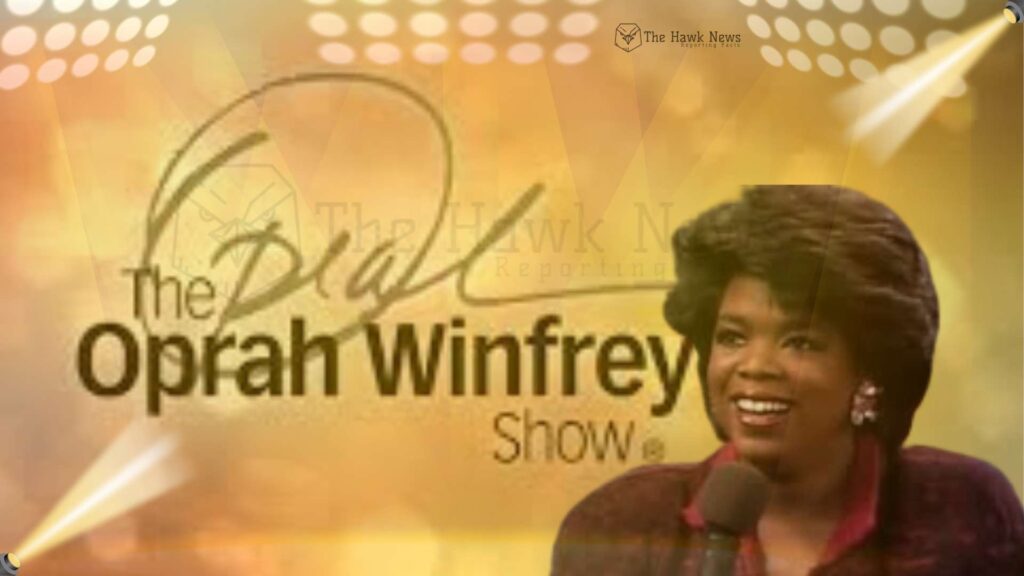
On November 7, 1988, The Oprah Winfrey Show went national. A day that quietly rewrote what influence, empathy, and storytelling would mean for the world.
Before streaming platforms, before viral content, before every phone became a broadcast studio, there was a woman on a stage — sitting in a humble studio chair, listening deeply, asking real questions, and creating something the world didn’t even know it needed.
Her name was Oprah Winfrey.
Her superpower wasn’t celebrity.
It wasn’t fame.
It wasn’t money.
It was storytelling — honest, unfiltered, humane storytelling.
On November 7, 1988, when The Oprah Winfrey Show went national, it didn’t just premiere in new cities. It entered living rooms, cracked open taboos, softened hard hearts, and created a global shift in how media could touch the human mind.
For millennials who watched her after school, for Gen Z who discovered her through clips, and for Gen Alpha who will inherit a world shaped by emotional intelligence — Oprah’s rise offers something rare: a blueprint for meaningful influence.
The Power of Showing Up As You Are
Long before authenticity became a hashtag, Oprah practiced it on live television.
She did not hide her trauma.
She did not pretend to be invincible.
She did not mask the pain in her past or the flaws in her story.
She brought her whole self on set — and the world felt seen because of it.
Millennials saw someone who mirrored the complexities of their own homes.
Gen Z sees someone who embodies the transparency they crave in leaders.
Gen Alpha now grows up in a world that values emotional honesty partly because Oprah made it acceptable.
She wasn’t just a host —
she was a mirror the world didn’t know it needed.
Storytelling That Changed the Language of Influence
Most shows followed a formula: ask questions, keep it light, move on quickly.
Oprah did the opposite.
She allowed silence.
She allowed tears.
She allowed doubt.
She allowed complexity.
Instead of turning stories into spectacles, she turned them into bridges.
Between:
- pain and healing
- shame and acceptance
- strangers and strangers
- hearts and hearts
People didn’t watch her show.
They felt it.
For millennials, she became comfort.
For Gen Z, she became context.
For Gen Alpha, she becomes history — the origin point of emotionally intelligent media.
From Daytime TV to Spiritual Classroom
Oprah didn’t build a media empire through ratings alone.
She built it through resonance.
Her show became:
- a classroom for empathy
- a temple for emotional healing
- a space where hard truths met soft landings
- a container where silence became wisdom
- a place where trauma was acknowledged, not hidden
She interviewed presidents, survivors, criminals, visionaries, and ordinary people who carried extraordinary truths. Every person, whether famous or unknown, left the room with dignity.
That is leadership.
That is storytelling.
That is vision.
What Millennials Can Learn From Oprah
Millennials lived through recessions, transitions, broken systems, and rebirths.
Oprah teaches them that healing is not weakness — it is strategy.
She reminds them:
- your past does not disqualify you
- your vulnerability is a form of power
- your voice can turn into legacy
Millennials didn’t grow up with mental health vocabulary.
Oprah’s show gave them one.
What Gen Z Can Learn From Oprah
Gen Z demands transparency, justice, rawness.
They’re skeptical of facades and allergic to performative leadership.
Oprah shows them:
- you don’t need shock value to make impact
- depth travels farther than virality
- empathy is not outdated
- fame is not influence — trust is
Gen Z, who live online, find in Oprah a reminder that human connection is the rarest currency.
What Gen Alpha Will Learn From Oprah
Gen Alpha is growing up with screens as their first teachers.
Their world is fragmented, fast-paced, and noisy.
Oprah becomes a counterweight —
a reminder that wisdom requires slowness, listening, reflection.
They will learn:
- how to communicate with depth
- how to speak from experience, not imitation
- how to lead with heart, not dominance
- how to influence without manipulating
Oprah’s legacy is the emotional IQ that their generation will one day need more than any other skill.
The Day She Went National, the World’s Emotional Compass Shifted
It wasn’t just a show airing across America.
It was a philosophy entering culture.
A philosophy built on:
- empathy
- deep listening
- human dignity
- courageous vulnerability
- the belief that no story is “too small”
Oprah democratized storytelling.
She made it safe to speak.
She made it meaningful to feel.
She made it powerful to heal.
The Rise of an Empire Built Not on Ratings — But on Humanity
Oprah’s empire spans film, books, philanthropy, digital platforms, and global influence.
But its foundation is something timeless:
A person who knows how to hold space becomes unforgettable.
Millennials grew strong because she held space.
Gen Z found identity because she held space.
Gen Alpha will discover wisdom because she held space.
In a world obsessed with content, Oprah teaches us to value connection.
In a world drowning in noise, she teaches us to honour truth.
In a world craving leaders, she teaches us the strength of compassion.
Why This Matters Today
Because today’s world is oversaturated with voices —
but starved of wisdom.
Everyone is talking,
but very few are listening.
Everyone is posting,
but very few are connecting.
Everyone is performing,
but very few are revealing.
Oprah’s rise isn’t nostalgia.
It is a map — one we desperately need.
Her message resonates across generations because it is built on something technology cannot replace:
Human soul meeting human soul.
Conclusion: The Legacy Millennials Felt, Gen Z Craves, Gen Alpha Will Inherit
November 7, 1988 wasn’t just a broadcast milestone.
It was the day storytelling grew a conscience.
The day talk shows evolved into emotional sanctuaries.
The day media discovered its moral responsibility.
Oprah didn’t just build a media empire.
She built a human empire —
one audience, one story, one heart at a time.
And in a world still struggling to understand itself,
her blueprint remains the most relevant one:
Tell the truth.
Feel deeply.
Listen closely.
Heal loudly.
And lead with a heart that doesn’t perform — but transforms.