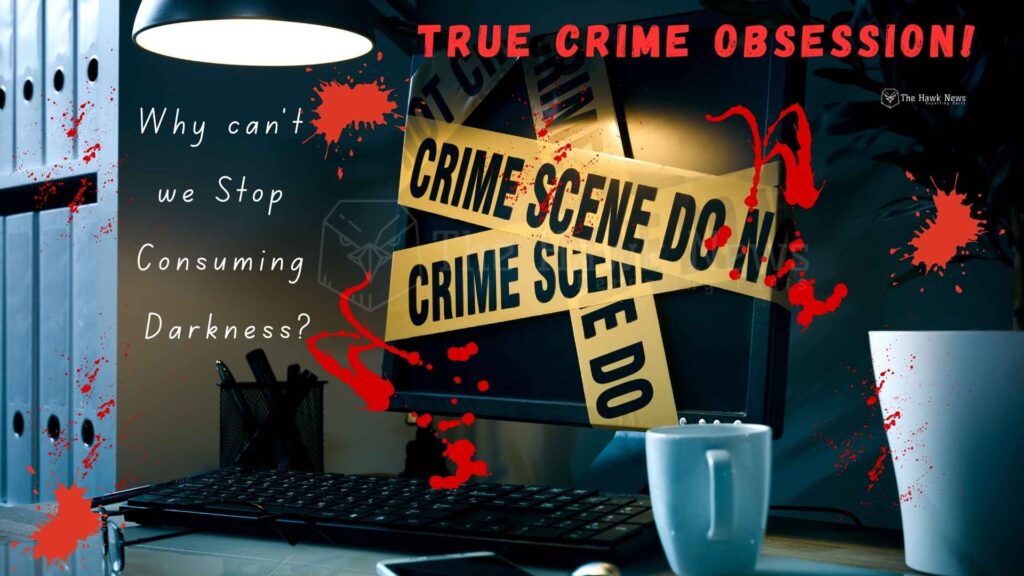
On any given evening, millions of people settle down not with a lighthearted comedy, but with a chilling murder documentary, a podcast on serial killers, or a dramatized series about infamous crimes.
True crime has exploded into one of the most popular entertainment genres of our time. From Netflix specials to bestselling books and top-ranking podcasts, society seems unable to look away from stories of evil, violence, and death.
But beneath the obsession lies a deeper question: Why are we drawn toward darkness when God has clearly invited us to choose life?
The Bible tells us in Deuteronomy 30:19, “I have set before you life and death, blessings and curses. Now choose life, so that you and your children may live.” And yet, our culture seems irresistibly fascinated by death, curses, and destruction.
Why? What does this reveal about us? And how do we resist the pull of darkness in a world so saturated with it?
The Rise of the True Crime Obsession
Statistically, true crime is one of the fastest-growing entertainment sectors. Crime documentaries dominate streaming platforms. Podcasts like Serial or My Favorite Murder have millions of listeners. Even TikTok has “crime communities” where users dissect cases, analyze suspects, and replay court footage.
What was once niche is now mainstream. Crime stories are no longer late-night television reruns; they’ve become prime-time addictions.
But why?
Part of the answer lies in psychology. True crime appeals to our curiosity. It shocks us, engages our emotions, and gives the illusion of control. By analyzing crimes, some feel safer, thinking, “If I understand how this happened, I can protect myself.” Others are drawn to the adrenaline rush of fear — consuming it safely from behind a screen.
Still, beyond psychology, there is a spiritual angle we cannot ignore.
The Pull of Darkness
The Bible reminds us of a sobering truth: “The light shines in the darkness, and the darkness has not overcome it” (John 1:5). Yet humanity often chooses darkness over light.
Jesus said in John 3:19, “This is the verdict: Light has come into the world, but people loved darkness instead of light because their deeds were evil.”
There’s something in our fallen nature that is magnetized to what is broken, corrupted, and twisted. Just as moths are drawn to a flame, people are drawn to narratives of evil. True crime feeds that hidden attraction.
Instead of being shocked into repentance, we consume stories of sin as entertainment. We watch murders unfold as though they were fiction, forgetting these are real victims, real families, real tragedies.
A Mirror of the Heart
Our obsession with true crime reflects something deeper about the human heart. Jeremiah 17:9 says, “The heart is deceitful above all things, and desperately wicked: who can know it?”
When we lean into darkness for entertainment, it reveals both our vulnerability to sin and our desensitization to evil. What once might have horrified us now merely entertains us.
This normalization of darkness is dangerous. Instead of cultivating compassion for victims, true crime often conditions us to feel numb. Instead of craving justice, we start craving details. Instead of turning to God’s Word for discernment, we turn to yet another “episode.”
The Cost of Consuming Darkness
At first glance, true crime might seem harmless — “just a story.” But repeated exposure carries a cost:
- It feeds fear. By constantly meditating on crimes, our worldview becomes shaped by suspicion and anxiety.
- It distorts justice. Crime becomes entertainment instead of tragedy, creating distance from the real human suffering involved.
- It dulls discernment. When we consume evil casually, we risk losing sensitivity to what is holy and good.
Paul warned in Philippians 4:8: “Whatever is true, whatever is noble, whatever is right, whatever is pure, whatever is lovely, whatever is admirable — if anything is excellent or praiseworthy — think about such things.”
But modern culture flips that upside down: we meditate on murder, betrayal, and evil instead of what is pure and life-giving.
Why We Must Choose Life
God, in His wisdom, has given us a choice: life or death, light or darkness. Entertainment is one of the arenas where we make this choice daily.
Choosing life doesn’t mean burying our heads in the sand or ignoring the reality of evil. Rather, it means refusing to feast on evil. It means we acknowledge sin without celebrating it, we lament tragedy without commodifying it, and we pursue justice without glamorizing violence.
In a world that constantly tempts us with death’s shadow, choosing life is radical. It means filling our minds with hope, truth, beauty, and goodness. It means pursuing stories of redemption, not ruin. It means fixing our eyes on Jesus, “the way, the truth, and the life” (John 14:6).
Breaking Free from the Darkness
If you find yourself caught in the true crime obsession, here are a few ways to break free:
- Check your appetite. Ask yourself: why am I drawn to this? Is it fear? Curiosity? A craving for adrenaline? Naming the hunger helps you discern it.
- Replace with life-giving input. Swap one podcast episode for a worship playlist. Trade one documentary for a testimony video. Slowly shift your diet from darkness to light.
- Practice empathy. When you do encounter crime stories, let them move you to pray for victims, families, and even perpetrators instead of treating them as entertainment.
- Feed your soul with Scripture. Let God’s Word re-sensitize your heart. Meditate on verses about justice, compassion, and life.
The pull of darkness is real, but so is the power of light. As Romans 12:21 reminds us: “Do not be overcome by evil, but overcome evil with good.”
Conclusion: Life or Death?
Every true crime show we binge, every documentary we watch, and every podcast we consume places us at a crossroad — life or death, light or darkness.
God does not force our hand, but He pleads with us: “Now choose life.”
So the next time the autoplay button tempts us toward yet another story of blood and betrayal, perhaps we can pause, reflect, and turn our gaze upward.
Because we were not made to be entertained by death. We were made to live in light.
Final Reflection:
True crime may tell us much about the evil that lurks in the world, but the Gospel tells us about the life that conquers it.
The real question is not, “What case will I watch next?” but “What choice will I make today — life or death?”