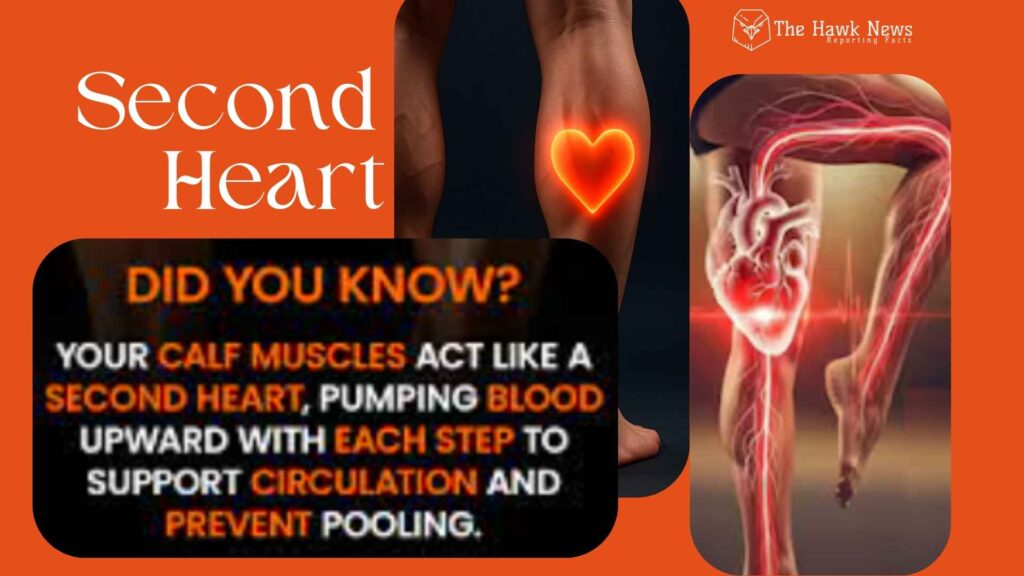
When we think about the heart, we imagine the powerful muscle in our chest that pumps blood throughout the body.
Yet, surprisingly, your body has another “heart”—not in your chest, but in your legs. Doctors and physiologists often call the calf muscles the “second heart” because of their critical role in blood circulation.
Understanding this hidden power in your legs could change the way you think about walking, exercise, and even long hours of sitting at your desk.
What Are the Calf Muscles?
Your calves are made up of two major muscles:
- Gastrocnemius – the larger, more visible muscle that gives your calf its curved shape.
- Soleus – a flatter, deeper muscle lying beneath the gastrocnemius.
Together, they connect to your Achilles tendon and play a major role in walking, running, and jumping. But beyond movement, they act like a built-in blood pump.
How the Calf Muscles Work as a Pump
Every second, your heart pumps oxygen-rich blood down through arteries to your legs and feet. The real challenge, however, is getting that blood back up to the heart—fighting against gravity.
Here’s where the calves step in:
- Your leg veins are equipped with one-way valves that keep blood moving upward.
- Every time you contract your calf muscles—whether walking, climbing stairs, or even flexing your feet—they squeeze the veins, pushing blood back toward your heart.
- This mechanism is called the calf muscle pump or the peripheral heart.
Without this system, blood would pool in your legs, causing swelling, discomfort, and potentially serious conditions.
Why the Calf Pump Is Vital for Circulation
Imagine sitting for hours on a plane, in an office chair, or even standing in one place for too long. You may notice your feet swelling or feeling heavy. That’s because your calf pump isn’t being activated enough to push blood back up.
Research shows that the calf muscle pump is essential for:
- Preventing swelling (edema) in the legs and ankles.
- Reducing the risk of varicose veins and chronic venous insufficiency.
- Lowering the chances of blood clots, such as deep vein thrombosis (DVT).
- Easing the load on the heart, especially in people with cardiovascular problems.
Essentially, your calf muscles are an assist system for your heart—ensuring your circulation doesn’t stall.
Health Risks When the Calf Pump Weakens
If the calf muscles are weak, underused, or compromised, blood circulation suffers. Some of the most common issues include:
- Varicose veins – twisted, swollen veins caused by blood pooling.
- Leg ulcers – in severe venous disease, poor circulation can lead to skin breakdown.
- DVT (Deep Vein Thrombosis) – dangerous blood clots that can travel to the lungs.
- Chronic venous insufficiency – when veins fail to send enough blood back to the heart.
Older adults, people with sedentary jobs, or those recovering from surgery are particularly at risk.
How to Keep Your “Second Heart” Healthy
The good news? Keeping your calf pump strong and active doesn’t require a gym membership. Small, consistent actions can make a big difference:
Daily Movement
- Walking: Even a brisk 10-minute walk every hour can reactivate blood flow.
- Calf raises: Rising onto your toes and lowering back down, repeated several times, strengthens the pump.
- Stair climbing: A natural, everyday way to keep calves working.
Desk or Travel Exercises
- Ankle flexes: Flex and point your toes under your desk or during long flights.
- Foot circles: Rotate your ankles to engage calf muscles without standing up.
Lifestyle Habits
- Avoid sitting or standing still for too long—move every 30–60 minutes.
- Stay hydrated—dehydration thickens the blood, slowing circulation.
- Wear compression stockings if prescribed—these help support vein function.
The Science Backs It Up
Medical studies highlight just how important calf pump function is:
- A study in Journal of Vascular Surgery found that weak calf pump performance was directly linked to chronic venous insufficiency.
- Research in Thrombosis Research noted that regular calf exercises significantly reduce the risk of DVT in immobile patients.
- Cardiology experts often recommend calf strengthening for patients with heart failure to reduce strain on the heart.
These findings underline a powerful truth: your calves aren’t just for looks or athletics—they’re life-savers.
Everyday Metaphor: Your Calves as Backup Generators
Think of your calves as a backup generator for your heart. When the main pump (your heart) pushes blood out, your calves step in to help return it. Without them, the system clogs, swells, and risks breaking down. With them, the system flows smoothly, fueling your health and vitality.
Why This Matters for You
In our modern lifestyle—filled with desk jobs, long commutes, and screen time—our calves are often underused. Yet, they hold the power to protect us from circulatory problems that can quietly become life-threatening. By simply moving, stretching, and respecting the work of this “second heart,” we not only protect our veins but also ease the burden on our real heart.
Final Word
The next time you take a step, climb a stair, or stretch your legs, remember: your calves are more than muscles—they’re guardians of your circulation. Caring for your second heart can add years of vitality to your life.
So get up, move, and let your calves do their job. After all, they’re not just carrying you forward—they’re pumping life itself.