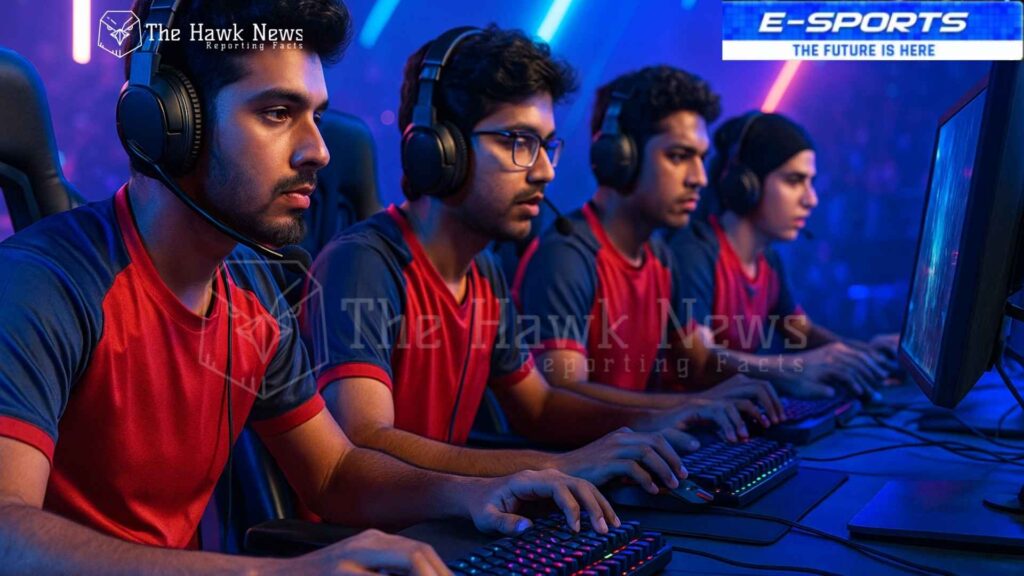
In a buzzing stadium, the crowd roars—not for a sixer or a goal, but for a digital headshot. Teenagers, headphones on, eyes glued to glowing screens, are cheered on like rockstars.
Prize money flashes on giant displays, and sponsors line up to be seen. This isn’t a cricket match or a football league.
This is E-Sports, the new face of competition, where India’s youth are making their mark on the global stage.
From Hobby to Profession
For decades, video games were seen as a pastime, something parents dismissed as “time-wasting.” But today, gaming has crossed that line. With over 400 million gamers in India, the country has become one of the largest gaming markets in the world.
Titles like Battlegrounds Mobile India (BGMI), Valorant, Call of Duty Mobile, and Free Fire have created communities of players who no longer see gaming as a hobby—it’s a career path, a passion, and in many cases, a livelihood.
This transformation has been fueled by affordable smartphones, cheaper data rates, and better internet access. The result? E-Sports is no longer an underground culture—it’s mainstream.
The Prize Money Revolution
Globally, E-Sports has already proven its mettle. Tournaments like The International (Dota 2) or League of Legends World Championship offer prize pools running into millions of dollars.
Even in India, competitions such as Nodwin Gaming’s BGMI Masters Series and Skyesports Championship are offering big payouts.
These aren’t small cash prizes anymore. We’re talking lakhs and crores in winnings, along with brand endorsements and sponsorship deals.
In short, Indian E-Sports athletes are no longer just “gamers”—they’re professional athletes in their own right.
Business of E-Sports: The New Economy
Behind the screen battles lies a booming industry. E-Sports in India is attracting heavy investment:
- Streaming Platforms: YouTube Gaming, Twitch, and Loco are hubs where streamers earn through views, ads, and donations.
- Sponsorships & Endorsements: From energy drink brands to tech companies, sponsors are pouring money into teams and tournaments.
- Training Academies: E-Sports bootcamps and cafés are sprouting up, giving young players the infrastructure to practice like professionals.
According to industry reports, India’s gaming market is expected to cross $8 billion by 2027, with E-Sports as one of its fastest-growing verticals.
Challenges Along the Way
Yet, the path isn’t free of hurdles. Many Indian E-Sports players face resistance from family and society. For the older generation, gaming is still seen as “distraction.”
Add to that inconsistent internet quality, lack of dedicated E-Sports infrastructure, and unclear government recognition—it makes the journey harder for aspiring professionals.
But change is coming. In late 2022, the Indian government officially recognized E-Sports under the Ministry of Youth Affairs and Sports.
This landmark decision means E-Sports will now be treated as an actual sport, paving the way for better regulations, funding, and legitimacy.
Health & Training: The Athlete’s Discipline
One of the biggest misconceptions about E-Sports athletes is that they just sit and play. The truth? Top players train rigorously—just like cricketers or footballers.
Reaction times, hand-eye coordination, mental stamina, and team communication all require hours of disciplined practice.
Moreover, many professional gamers follow strict physical fitness routines. Why? Because sitting for long hours without exercise can be dangerous. Yoga, running, and gym workouts are becoming part of a gamer’s lifestyle.
Mental health is also a rising concern, with burnout, stress, and performance anxiety being real challenges. Thankfully, E-Sports psychologists and wellness programs are emerging to support them.
India’s Footprint on the Global Map
Indian players are slowly making their way onto international stages. Teams from India have competed in global PUBG Mobile championships, Valorant qualifiers, and even Free Fire tournaments.
While India hasn’t yet lifted a world trophy, the progress is undeniable.
Big brands like ASUS, Red Bull, and Intel have entered the Indian gaming ecosystem, signaling confidence in its potential. Sponsorships and collaborations are growing, giving Indian players more exposure than ever before.
Why the Youth Are Hooked
E-Sports offers something traditional sports sometimes can’t—accessibility. Not everyone can afford cricket coaching or football academies. But with a smartphone and internet, anyone can compete. For many young Indians, E-Sports represents freedom, creativity, and the possibility of being seen globally, right from their homes.
Unlike traditional sports, E-Sports also bridges gender gaps. Female gamers and streamers are rising stars, proving that digital competition isn’t confined by physical boundaries.
The Future of E-Sports in India
Looking ahead, the future shines bright. Universities abroad already offer E-Sports scholarships; it’s only a matter of time before Indian institutions follow suit. With the integration of VR and AR, the gaming experience is bound to get more immersive, opening up even newer opportunities.
E-Sports could also boost India’s digital economy—creating jobs in event management, game design, broadcasting, and content creation. It’s not just about players anymore—it’s about building an ecosystem that supports thousands of careers.
Closing Note: A New Arena of Dreams
E-Sports is not here to replace cricket, football, or kabaddi. Instead, it’s carving its own arena. For a young, ambitious India, gaming isn’t “wasting time”—it’s about chasing glory, building careers, and putting the tricolor on the global digital stage.
The next time you see a teenager glued to their screen, remember: they might just be tomorrow’s digital athlete, ready to represent India in the world’s newest sporting frontier.