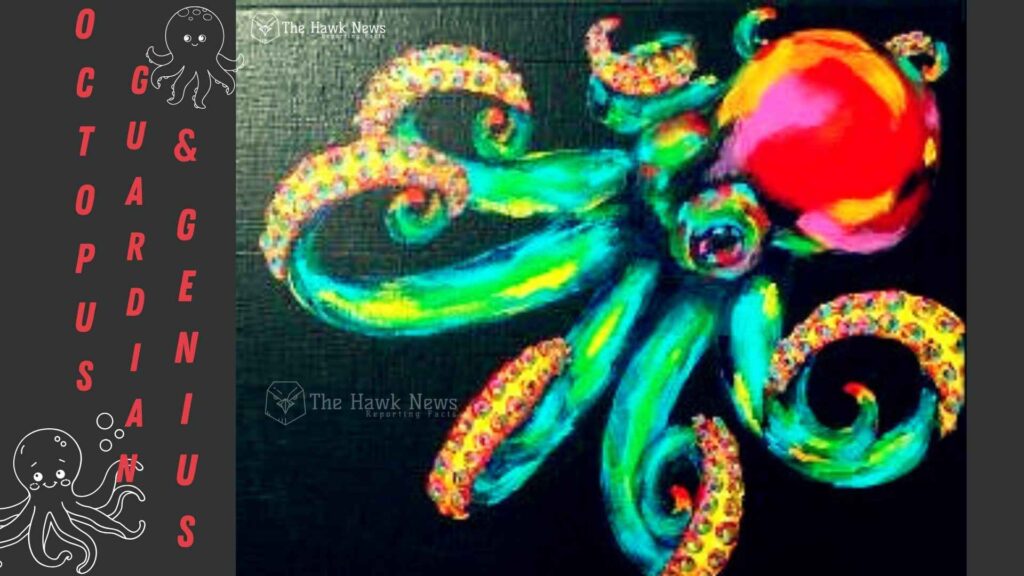
The ocean is filled with marvels — creatures so unique that they seem to belong to another world entirely. Among them, the octopus holds a special place.
With its eight flexible arms, shapeshifting abilities, and extraordinary intelligence, this soft-bodied wonder is both an enigma and a cornerstone of marine ecosystems.
Far from being just another sea creature, the octopus plays critical roles in the ocean, balancing life under the waves while also offering lessons for science, technology, and even human imagination.
Masters of the Food Web
The octopus is both predator and prey, and this dual role is essential to maintaining balance in marine ecosystems.
- As Predators:
Octopuses hunt with remarkable skill, using their sharp beaks to crack open crabs, lobsters, snails, and clams. Some species even immobilize prey with venom before devouring them. By keeping populations of shellfish and crustaceans under control, they prevent ecological imbalance and ensure that resources in their habitats aren’t depleted. - As Prey:
At the same time, octopuses are a crucial food source for larger animals such as sharks, dolphins, seals, and seabirds. Their abundance makes them an important mid-level link in the food web. Without octopuses, many predators would lose a primary food supply, potentially collapsing entire marine chains of survival.
In this way, the octopus plays a role akin to a “guardian” of balance — keeping both its predators and prey in check.
Nature’s Ecosystem Engineers
Beyond eating and being eaten, octopuses shape their environments in subtle yet profound ways. When they dig into sand or rocky crevices to find food, they stir up sediments, releasing nutrients back into the water. This process, though invisible to the casual observer, helps smaller organisms thrive.
Their dens — called “octopus gardens” — often become microhabitats.
After vacating them, these spaces are used by fish, crustaceans, and other marine life as shelters. In fact, some researchers describe octopuses as ecosystem engineers — creatures whose very way of living enhances biodiversity.
The Shapeshifting Marvels
An octopus is a living magician. Its ability to blend seamlessly with surroundings is one of nature’s finest acts of camouflage. Specialized skin cells called chromatophores, iridophores, and leucophores allow it to change colors, textures, and patterns in fractions of a second.
This isn’t just about hiding from predators — it’s also communication. Octopuses use color flashes to warn rivals, signal readiness to mate, or confuse prey. By imitating coral, rocks, or even poisonous sea creatures, they embody survival through creativity.
For scientists, this shapeshifting ability has inspired research into military camouflage, smart fabrics, and adaptive technologies. Once again, the octopus proves it is more than a sea dweller — it’s a teacher of innovation.
The Brainpower Beneath the Waves
Among invertebrates, the octopus stands alone in intelligence. With over 500 million neurons, most of them distributed in its arms, it can multitask in ways that rival mammals. Each arm can “think” independently, allowing the octopus to open a jar with one while exploring with another.
Experiments show octopuses can:
- Solve puzzles and mazes.
- Use tools (such as coconut shells as mobile homes).
- Escape enclosures with uncanny problem-solving ability.
- Display personalities — some are shy, others bold, some playful.
These feats have made scientists rethink the boundaries of animal intelligence. For humans, the octopus is living evidence that brains and brilliance don’t look the same across species.
Life’s Short Flame
Despite their intelligence, octopuses live surprisingly short lives — most species only survive 1–2 years. After mating, females guard their eggs tirelessly, refusing food until they die. This cycle of short yet intense existence keeps populations fresh and prevents ecological over-dominance.
It’s a reminder that every creature, no matter how powerful, plays its role in a greater rhythm of life.
Cultural and Spiritual Significance
Throughout history, the octopus has fascinated human imagination:
- In Hawaiian mythology, the octopus is believed to be a survivor from a previous world.
- In Mediterranean folklore, it’s a symbol of mystery and the unknown.
- In modern culture, it represents adaptability, resilience, and hidden intelligence.
Its elusive nature — emerging from the depths, vanishing in clouds of ink — has earned it a reputation as the ocean’s trickster, a being both feared and revered.
The Modern Connection: Science and Inspiration
Today, octopuses are not only ecological wonders but also subjects of intense research. Scientists study them to understand neurobiology, camouflage technology, and robotics. Their flexible bodies inspire soft robotics that can navigate spaces traditional machines cannot.
Their camouflage has applications in defense and design. Even their distributed nervous system challenges our understanding of consciousness itself.
In short, octopuses are not just part of the ocean — they are part of our future.
Are Octopuses at Risk?
Sadly, the intelligence and utility of octopuses don’t shield them from human threats. Climate change, ocean acidification, and overfishing endanger their habitats.
Though some species are resilient, large-scale exploitation could upset the balance they help maintain.
Sustainable fishing practices and marine conservation efforts are vital to ensure that these guardians of the sea continue to thrive. Without them, ecosystems could lose both a predator and prey link, unraveling the delicate balance of marine life.
Lessons for Humanity
So, what is the purpose of the octopus? It isn’t only about feeding predators or preying on crabs. Their role transcends biology:
- They remind us that intelligence takes many forms.
- They show that survival is not always about brute force, but about adaptability and creativity.
- They embody the principle that even short lives can leave lasting impact on ecosystems and cultures.
In their camouflage, we see resilience. In their intelligence, we see curiosity. In their existence, we see a vital link in the chain of life beneath the waves.
Conclusion: Guardians and Geniuses
The octopus, in all its mystery and brilliance, is both guardian and genius of the ocean. Its ecological purpose ensures balance, its intelligence inspires innovation, and its very existence invites awe. To protect the octopus is to protect the ocean’s heartbeat.
In a world where humanity often seeks purpose in grand achievements, perhaps the octopus offers a humbler lesson: true greatness lies in balance, adaptation, and quiet brilliance.