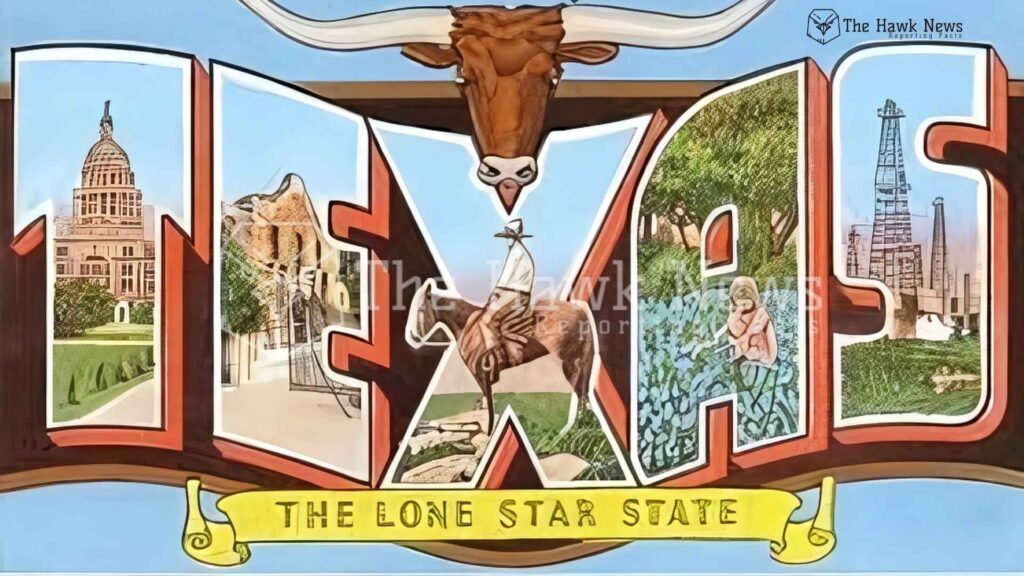
Texas, the second-largest state in the United States, has a history as vast and diverse as its landscape.
From its earliest inhabitants to its role as a modern economic powerhouse, the story of Texas is one of resilience, cultural fusion, and relentless ambition.
Its journey spans thousands of years, shaped by indigenous peoples, European colonization, revolutions, annexation, and economic transformations.
Indigenous Peoples and Early Cultures
Long before European explorers arrived, Texas was home to a rich tapestry of indigenous peoples. Groups such as the Caddo in the east, the Karankawa along the Gulf Coast, the Comanche and Apache in the plains, and the Jumano in the west established thriving communities.
These tribes practiced agriculture, hunting, and trade, creating intricate social and political systems.
The Caddo, for instance, were known for their sophisticated mound-building practices and complex religious ceremonies, while the Comanche dominated the plains with their unmatched horseback skills, becoming formidable warriors and traders.
These indigenous cultures laid the foundation for the land’s unique identity, even as later waves of settlers and conquerors arrived.
European Exploration and Colonization
The 16th century marked the beginning of European contact in Texas. Spanish explorers, including Álvar Núñez Cabeza de Vaca and Francisco Vásquez de Coronado, traversed the region in search of wealth and new territories.
They mapped rivers, documented native peoples, and established early settlements, introducing Christianity and European agriculture.
In the 17th and 18th centuries, Spain established missions and presidios, notably in San Antonio and along the Rio Grande, to solidify its control. The French briefly explored the region as well, claiming parts of eastern Texas, though their influence was limited.
These early colonial efforts set the stage for a contested land, caught between Spanish, French, and later Mexican interests.
Mexican Rule and the Path to Independence
Following Mexico’s independence from Spain in 1821, Texas became a part of the Mexican state. The Mexican government encouraged Anglo-American settlers to colonize the area under the empresario system, granting land to empresarios who brought families to develop the region. Stephen F. Austin, known as the “Father of Texas,” played a key role in establishing American settlements.
However, tensions grew as Mexican authorities clashed with Anglo settlers over issues like governance, slavery, and cultural differences. These tensions culminated in the Texas Revolution of 1835–1836, a pivotal struggle for independence.
Famous battles such as the Alamo and Goliad highlighted the bravery and sacrifice of the Texan fighters, including figures like Sam Houston and Davy Crockett. The decisive victory at the Battle of San Jacinto on April 21, 1836, secured Texas’ independence from Mexico.
The Republic of Texas
After the revolution, Texas existed as an independent nation, the Republic of Texas, from 1836 to 1845. During this period, it established a constitution, elected presidents, and navigated complex international relations. Sam Houston, the republic’s first president, worked tirelessly to stabilize the economy, establish a military, and seek recognition from other nations.
Despite its sovereignty, the republic faced challenges including financial instability, conflicts with Native American tribes, and ongoing tensions with Mexico, which refused to recognize Texas’ independence. Nonetheless, the Republic of Texas laid the groundwork for the state’s enduring identity: independent, ambitious, and culturally distinct.
Annexation and Statehood
In 1845, Texas joined the United States as the 28th state, a decision that was both celebrated and controversial. Its annexation contributed to the outbreak of the Mexican-American War (1846–1848), which reshaped the boundaries of the Southwest.
Texas’ vast lands and rich resources made it a crucial addition to the growing United States, though debates over slavery and state rights foreshadowed future conflicts.
Texas in the Civil War and Reconstruction
During the Civil War (1861–1865), Texas seceded from the Union and joined the Confederate States of America. Its strategic location and resources, particularly cattle, played a key role in supporting the Confederate war effort. The war’s end brought Reconstruction, during which Texas faced political, social, and economic adjustments. Freed African Americans sought rights and opportunities, while the state rebuilt its economy and infrastructure.
Reconstruction in Texas was a tumultuous time, marked by political power struggles, racial tensions, and efforts to reintegrate the state into the Union. Despite these challenges, Texas emerged with a resilient spirit, ready to embrace economic and cultural growth.
The Cattle Industry and Frontier Expansion
The late 19th century saw Texas’ transformation through the cattle industry and frontier expansion. Longhorn cattle herding became synonymous with Texas identity, with cowboys driving herds across vast plains. Trails such as the Chisholm Trail facilitated trade, connecting Texas ranches to markets in Kansas and beyond.
Ranching and cattle drives shaped the cultural mythos of Texas, inspiring literature, music, and film. Towns grew around railroads and trading hubs, marking the transition from a frontier territory to an economically connected region. This era also intensified conflicts with Native American tribes, gradually displacing many indigenous communities.
The Oil Boom and Modern Economy
The discovery of oil at Spindletop in 1901 transformed Texas into an economic powerhouse. The oil industry fueled urban growth, attracted investment, and solidified Texas’ place in the national economy. Cities like Houston, Dallas, and Austin expanded rapidly, supported by new infrastructure and industrial development.
Beyond oil, Texas diversified into agriculture, technology, aerospace, and energy sectors. The state became a hub for innovation and trade, balancing its historical roots with modern growth. Today, Texas boasts one of the largest economies in the United States, driven by energy, technology, and global commerce.
Cultural and Demographic Evolution
Texas’ history is reflected in its diverse population and rich cultural heritage. Spanish, Mexican, Native American, African American, and European influences merge in Texas’ music, cuisine, language, and traditions. Tejano music, barbecues, rodeos, and festivals celebrate this multicultural identity.
Demographically, Texas has experienced waves of migration and settlement, making it one of the most ethnically and culturally diverse states in the country. This diversity continues to shape politics, education, and urban development.
Texas Today: Legacy and Identity
The history of Texas is more than a timeline of events—it is a story of resilience, independence, and cultural fusion. From its indigenous roots to modern innovation, Texas embodies a unique blend of heritage and progress. Its historical milestones—revolutions, statehood, wars, and economic booms—continue to influence the state’s identity, pride, and vision for the future.
Texans today embrace a legacy that celebrates freedom, entrepreneurship, and cultural richness, making Texas a symbol of both historical significance and contemporary achievement.
Understanding this history allows residents and observers alike to appreciate why Texas remains a cornerstone of American identity.