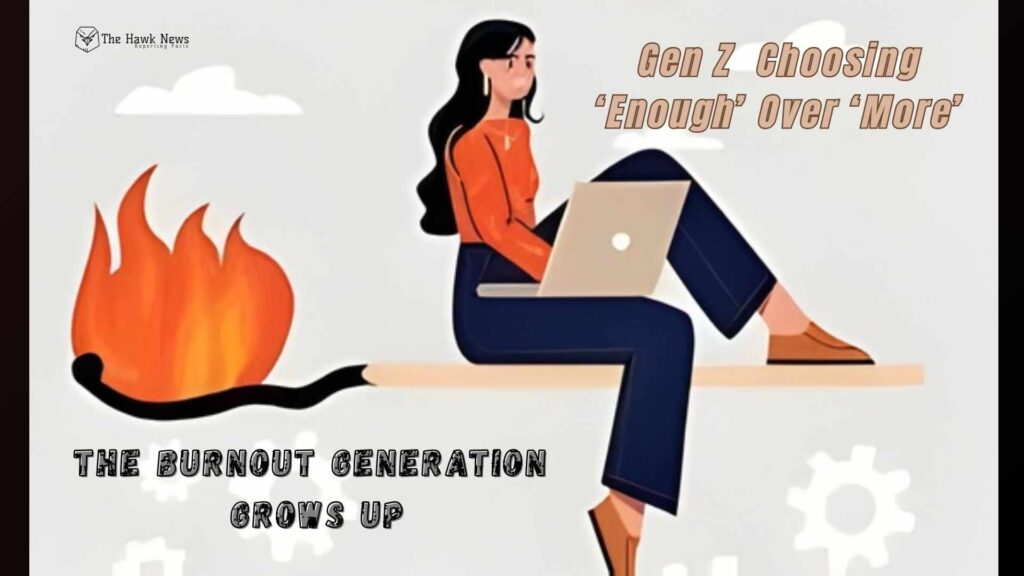
For decades, success followed the same script: work harder, climb higher, earn more, repeat. But one generation is stepping off the conveyor belt — not out of laziness, but out of survival. Gen Z, now entering adulthood in a world marked by economic instability, climate anxiety, and digital hyper-stimulation, is quietly rewriting the definition of success.
This isn’t a rebellion. It’s a recalibration.
The Generation Born Tired
Gen Z grew up watching the fallout of hustle culture in real time — parents burnt out, millennials overwhelmed, workplaces glorifying exhaustion. By the time they reached adulthood, burnout wasn’t an event; it was a baseline.
A Deloitte survey showed Gen Z reports the highest levels of stress of any generation. Rising living costs, job insecurity, and a constant stream of bad news have hardened them early. The result? A generation that refuses to romanticize struggle.
If millennials were the “dream big” generation, Gen Z is the “be okay” one.
“I don’t want to be rich,” many young adults say.
“I just want to live.”
Their ambitions aren’t smaller — they’re more grounded. Stability over status. Sanity over speed. Enough over more.
Success, Rewritten
Gen Z is pioneering something previous generations never dared to prioritize: emotional sustainability.
To them, success looks like:
- Work that doesn’t consume their identity
- Spaces where they can breathe
- Pay that allows a basic, dignified life
- Relationships that aren’t transactional
- Time — the true wealth of the 21st century
They are rejecting the myth that ambition must equal imbalance. They’re choosing a life that feels good, not one that only looks good.
The Rise of “Soft Living”
Across social media, a new language has emerged:
soft life, slow productivity, emotionally safe workplaces, mental-health boundaries.
They are not anti-work; they are anti-exploitation.
They choose:
- Remote work flexibility
- Hybrid careers
- Passion-driven side gigs
- Skills over job titles
- Multiple income streams instead of one draining job
And that terrifies traditional work cultures that survived by stretching employees past breaking points.
Yet research shows Gen Z’s approach may pave the way for more resilient, humane workplaces.
The Great Trade-Off
Older generations might call Gen Z unrealistic — but the reality is sharper: Gen Z understands the cost of burnout better than anyone. They are willing to trade prestige for peace, climb slower for clarity, earn less for longevity.
This is not a generation stepping back.
This is a generation stepping wise.
A Subtle Revolution
Ironically, by refusing to be consumed by work, Gen Z may reshape modern productivity. Companies are already responding:
- Mental-health leave is becoming standard
- Four-day workweeks are being tested
- Flexibility is a top hiring incentive
- Toxic management is increasingly exposed
Gen Z didn’t burn the system.
They simply stopped believing in it.
And that is its own form of revolution.