Across the world today, nations wrestle with the looming crisis of water scarcity. From drought-hit California to the parched fields of Africa, the search for sustainable solutions dominates headlines.
But centuries before modern engineers began sketching blueprints, ancient India had already mastered the art of harvesting, storing, and preserving water.
Their solution? The stepwell — a breathtaking fusion of geometry, engineering, and art that ensured water security in some of the driest regions of the subcontinent.
What Exactly Is a Stepwell?
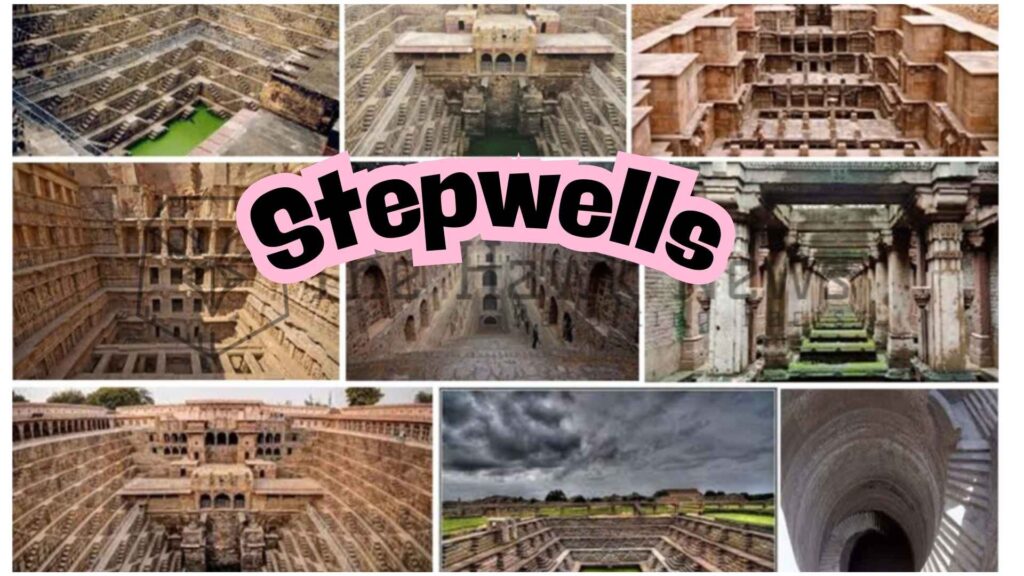
At first glance, a stepwell looks like a grand stairway descending into the earth. Rows upon rows of steps lead down to a central well, allowing people to access water no matter how low the level dropped. These structures, known as baolis in Delhi, vavs in Gujarat, and pushkarnis in Karnataka, were far more than wells — they were living monuments of water wisdom.
The genius of stepwells lay in their ability to collect and store rainwater during the monsoon, safeguarding it for the blistering dry months ahead. Built with stone masonry and often adorned with intricate carvings, these marvels combined functionality with beauty, turning the act of drawing water into a spiritual and communal experience.
Ancient Engineering That Stood the Test of Time
How did stepwells succeed where modern systems often fail? The secret lay in their design. Stepwells were often several stories deep, descending 20–30 meters below ground. Their depth reduced evaporation in the hot desert climate. Sloping staircases ensured accessibility throughout the year, even in the driest months.
Some stepwells also had filtering mechanisms, where rainwater was guided through channels that filtered out debris before storing it. Others were designed in such a way that underground aquifers could recharge naturally. By harnessing monsoon rains and preventing water runoff, stepwells transformed scarcity into abundance.
Stepwells Across India: Monuments of Ingenuity
Stepwells were once spread across India, numbering in the thousands. Each region adapted the design to its geography.
- Rani ki Vav, Gujarat: Perhaps the most famous, this 11th-century stepwell is now a UNESCO World Heritage Site. It is an inverted temple, adorned with over 1,500 sculptures depicting Hindu deities and mythological figures — proof that utility and artistry coexisted.
- Chand Baori, Rajasthan: One of the deepest stepwells in the world, with 3,500 narrow steps arranged in precise symmetry. Its labyrinth-like structure has appeared in films and remains a symbol of Rajasthan’s resilience against drought.
- Agrasen ki Baoli, Delhi: Located in the heart of India’s capital, this stepwell showcases how urban centers too relied on these ingenious reservoirs. Today, it is a protected monument and popular heritage site.
- Pushkarnis, Karnataka: Attached to temples, these stepwells provided water for rituals and communities, reinforcing the sacredness of water in Indian culture.
Each of these sites tells a story — of kings, queens, and communities that understood water was not just a resource, but life itself.
Community Hubs, Not Just Wells
Stepwells were more than reservoirs. They were social and cultural hubs where people gathered, prayed, celebrated festivals, and sought respite from the heat. The deeper levels of stepwells stayed cool, offering a natural air-conditioned space. Women collected water, travelers rested, and rituals were performed, turning these places into vibrant centers of daily life.
Architecturally, they also reflected India’s mastery of geometry and aesthetics. Intricate carvings, sculptures, and symmetrical patterns transformed utilitarian structures into spiritual sanctuaries. Water, after all, was sacred — and stepwells treated it with reverence.
Why Did Stepwells Decline?
If stepwells were so effective, why did they fade into obscurity? The answer lies in changing times. With the arrival of colonial rule, centralized piped water systems were introduced, and stepwells were neglected. Many fell into disrepair or were abandoned. Urban expansion buried some under concrete jungles. Others became dumping grounds, stripped of their original purpose.
Yet, their decline was not due to inefficiency. On the contrary, stepwells were victims of modernization — forgotten in the rush for newer technologies.
Lessons for Today’s Water Crisis
Ironically, as modern cities face water shortages, experts are now looking back at stepwells with renewed interest. Their principles — rainwater harvesting, groundwater recharge, passive cooling, and community-based management — align perfectly with sustainable water practices.
In an era when climate change makes rainfall unpredictable and aquifers are overexploited, stepwells remind us of a crucial truth: water management is not just about technology, but also about respect for natural cycles. Ancient India recognized this balance, and the results were enduring.
Revival and Restoration
Thankfully, stepwells are staging a comeback. Restoration projects across Gujarat, Rajasthan, and Delhi are breathing life back into these forgotten marvels. Rani ki Vav, restored and celebrated as a World Heritage Site, has become a symbol of pride and a tourist attraction. NGOs and eco-architects are studying stepwells to inspire modern rainwater harvesting systems.
In Bengaluru, for instance, eco-conscious builders are using stepwell-inspired designs for urban water storage. Across India, schools and communities are planting the idea of rainwater harvesting modeled on ancient systems.
The wisdom of the past is slowly resurfacing to guide the present.
A Legacy Written in Stone
Stepwells are not relics of a bygone era. They are reminders that sustainable solutions don’t always come from futuristic inventions — sometimes, they are etched in the stones of our history. As the world struggles with water scarcity, ancient India’s stepwells stand as both monuments and manuals, teaching us how to live in harmony with nature’s rhythms.
Conclusion: The Future in the Past
The question is no longer “Did ancient India solve water scarcity?” but “Why aren’t we listening to them today?” Stepwells, with their brilliant design and cultural integration, are not just archaeological wonders but living blueprints. They prove that humanity, when guided by respect for nature, can find solutions to even the harshest challenges.
As modern societies search for ways to survive in a warming world, perhaps it’s time we walked down the stone steps of history — and found wisdom waiting in the cool shadows of a stepwell.