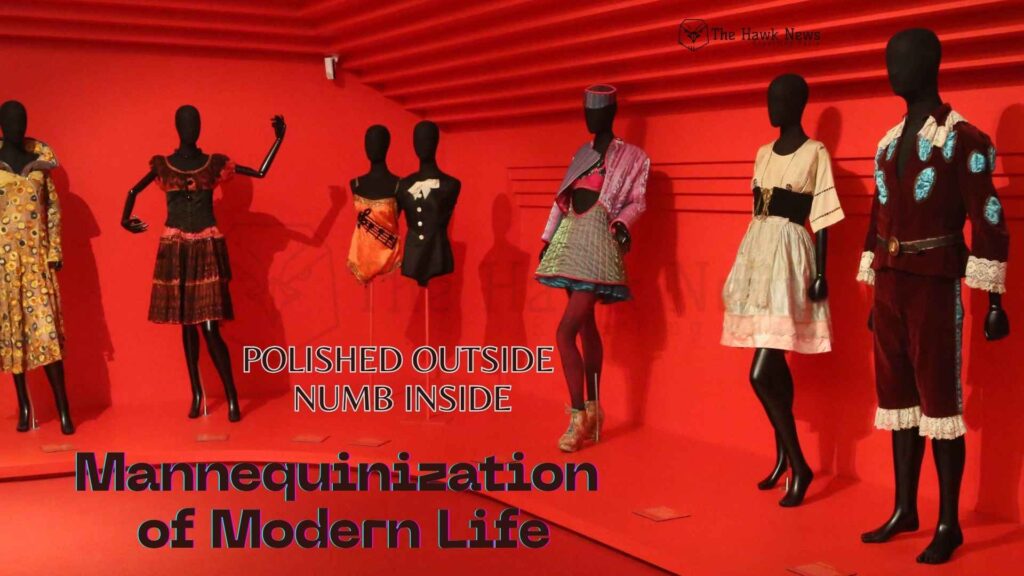
Yesterday, I was on a drive, and my eyes fell on a vast glass showroom. Rows of mannequins stood behind the glass, their poses poised, their clothes impeccable, their faces frozen in permanent, flawless expressions.
Each seemed ready for a camera, ready to sell a lifestyle, ready to exist without a heartbeat. For a moment, I laughed at their perfection — and then, the unsettling thought struck: Are we becoming mannequins ourselves? Polished outside, but numb inside?
In today’s world, we are increasingly curated products, constantly displayed for others to see. Instagram feeds, LinkedIn profiles, TikTok reels — these platforms reward us for our “flash-ready” selves, encouraging a life of perpetual polish.
Flaws are filtered out, struggles repackaged as trendy anecdotes, individuality compressed into an aesthetic. Just as mannequins exist to sell a story, we feel pressured to sell ourselves — not as we are, but as the versions we think others will admire.
The Rise of the ‘Plastic Persona’
The modern social landscape celebrates visibility and performance over vulnerability. Each selfie, each highlight reel, becomes a meticulous act of self-curation.
Emotional depth, complexity, and authenticity are often sacrificed at the altar of optics. We scroll, we post, we “like,” and in the process, we learn to hide our raw edges.
Consumerism feeds this cycle. Advertisements have always sold lifestyles, but social media has made it intimate. Your own life becomes a billboard. You are encouraged to package yourself neatly, to fit into a mold of success, happiness, and style.
And in striving to meet this invisible standard, the real, messy, human parts of us — the parts that feel, hurt, and grow — slowly recede into the background.
Emotional Numbness in a Fast-Paced World
Ironically, as we “express” more online than ever before, our inner emotional landscape is shrinking. Anxiety, burnout, and detachment have quietly become companions to our polished selves. Constant self-curation is exhausting.
Psychology calls this emotional labor: the effort of presenting a controlled exterior while managing internal stress and feelings. Over time, the performance becomes the mask, and the mask begins to feel like the only reality.
We forget that humans are wired for connection, not display. Vulnerability is the bridge to empathy, intimacy, and meaning. Yet, in a culture that prizes perfection, vulnerability is often buried. What remains is a sleek, photogenic exterior — a mannequin of life, moving through its routines without fully experiencing them.
Mannequin as a Cultural Symbol
Mannequins are fascinating cultural objects. Lifeless, yet designed to look alive. They stand in stillness, yet communicate a story. They exist to be admired, but they cannot feel. Today, many of us mirror this paradox. We function, perform, and exist on multiple platforms, but our inner lives — our emotions, our reflections, our quiet joys — are often muted.
We admire surfaces: flawless outfits, elegant homes, curated feeds. But how often do we pause to admire souls? To notice the tremble of someone’s laugh, the warmth behind a weary gaze, the subtle poetry in ordinary gestures? The modern world teaches us to perform vitality without actually inhabiting it.
The Cost of Becoming ‘Plastic’
There is a price to living life as a mannequin. Authenticity fades. Conversations become transactional. Empathy weakens. Relationships, both online and offline, risk becoming shallow — interactions valued more for optics than for connection.
Moreover, the loss is personal. Each polished exterior hides a vulnerable self longing for recognition, for acceptance beyond likes and comments. The gap between how we appear and how we feel can grow vast, creating an internal loneliness that even the brightest Instagram filter cannot hide.
Reclaiming Humanity
Yet, hope is possible. Unlike mannequins, humans are designed to feel, to break, to heal, and to grow. Reclaiming authenticity requires conscious effort:
- Normalize flaws: Celebrate the messy, the awkward, the imperfect moments of life.
- Value depth over display: Prioritize meaningful conversations and genuine experiences over the urge to “post” everything.
- Seek stillness: Moments of reflection, solitude, and silence reconnect us with our inner selves.
By allowing ourselves to be imperfect, we open the door to connection — to empathy, to laughter that reaches the heart, to tears that heal, and to joy that is unfiltered.
Conclusion: The Drive Home
As I drove past that showroom yesterday, the mannequins remained frozen, eternally poised. Yet I realized I had a choice: I could continue polishing my exterior for the world, or I could live with the messy, vibrant authenticity that defines being human.
Perhaps it’s time we stop living like mannequins in display windows, and start living like humans again — imperfect, vulnerable, and alive. Because while glass and plastic can shine without soul, we cannot. And it is precisely our imperfections, our emotions, our depth, that make life luminous.