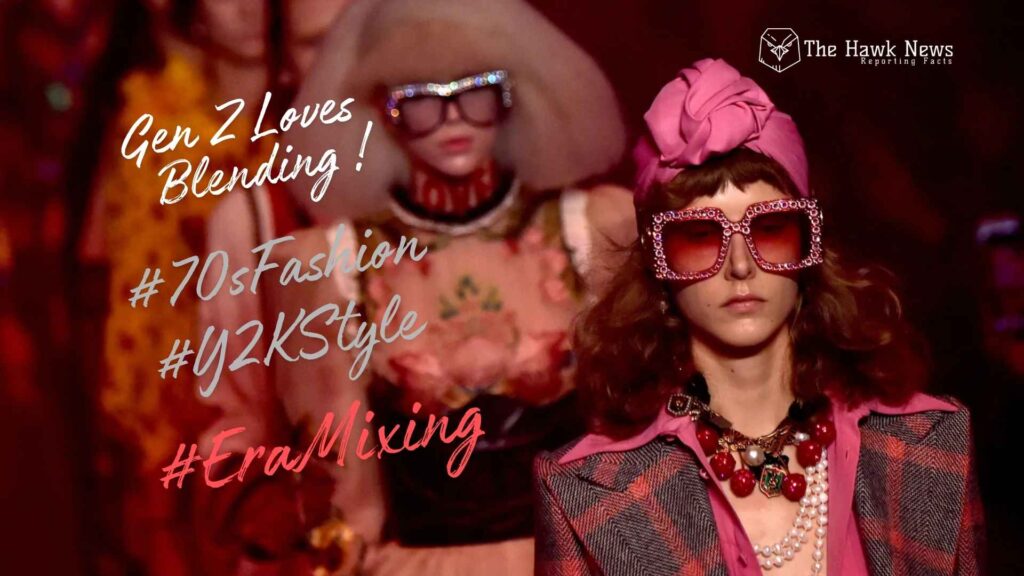
Walk through any college campus, music festival, or TikTok “Get Ready With Me” video, and one thing becomes clear: Gen Z isn’t interested in dressing by the rulebook of a single era.
Instead, they’re gleefully pulling from multiple decades, fusing aesthetics into something both nostalgic and fresh.
A prime example? Oversized ’70s sunglasses paired with playful, candy-colored Y2K jewelry.
This hybrid accessorization trend reflects much more than quirky fashion choices. It’s a generational philosophy: identity through remixing.
The ’70s Sunglasses Revival
The 1970s are remembered for disco lights, bohemian silhouettes, and iconic eyewear. Think Jackie O’s oversized round frames, Elton John’s flamboyant tinted shades, or John Lennon’s signature wire-rims. Sunglasses from this era weren’t just about UV protection—they were about attitude and character.
Fast-forward to today, and these bold frames are everywhere again. Gen Z gravitates toward tinted yellows, oranges, and gradient lenses, pairing them with everything from athleisure sets to denim-on-denim.
The appeal lies in their retro cool factor: they evoke nostalgia while still making a statement in an age of Instagram selfies and festival aesthetics.
“Big shades are confidence armor,” says fashion stylist Aditi Rao. “They add drama to even the simplest outfit and carry a vintage charm that feels authentic.”
Y2K Jewelry: Playful and Pop-Culture Fueled
On the other end of the spectrum is Y2K jewelry—loud, colorful, and unapologetically fun. Born from the early 2000s, this style thrives on plastic beads, chunky rings, butterfly clips, and charm-laden chokers. It was the jewelry of mall rats, teen pop idols, and MTV culture.
Now, thanks to TikTok nostalgia loops and Pinterest boards, Y2K accessories are staging a comeback. For Gen Z, they represent both irony and sincerity—playful reminders of childhood mixed with the aesthetics of Britney Spears, Lizzie McGuire, and Spice Girls.
Unlike luxury fine jewelry, Y2K pieces are intentionally accessible and DIY-friendly—easy to make, thrift, or buy from Instagram shops. This democratization makes them especially appealing to a generation that values creativity and personalization over perfection.
Why the Fusion Works
At first glance, ’70s glam and Y2K kitsch couldn’t be more different. One is sleek, bohemian, and soulful; the other is hyperactive, candy-coated, and digital-era bright. Yet, it’s precisely this contrast that appeals to Gen Z.
An oversized amber-tinted aviator paired with a neon beaded necklace creates visual tension—one accessory grounds, the other pops. The result is eclectic self-expression, which is the hallmark of Gen Z fashion.
“Every accessory tells a story,” notes culture critic Maya Singh. “When Gen Z blends decades, they’re not just borrowing—they’re remixing histories to craft their own.”
TikTok, Instagram & The Algorithm Effect
Digital platforms have turbocharged this fusion trend. TikTok hashtags like #70sFashion, #Y2KStyle, and #EraMixing showcase styling tutorials where creators combine wide-leg jeans, aviators, and jelly rings in under 15 seconds.
Instagram reels amplify the look through aesthetic edits, while Pinterest boards catalog “retro-Y2K fusion” as an emerging micro-trend.
Algorithms love nostalgia, and Gen Z delivers. By recycling trends through short-form content, fashion eras collapse into one scrollable feed—making it easy for a ’70s tinted shade to sit next to a Y2K beaded necklace on the same mood board.
Thrift Culture & Sustainability
Another driver of this fusion is Gen Z’s embrace of thrifting and sustainable shopping. Vintage sunglasses are often sourced second-hand, while Y2K jewelry can be upcycled or handmade.
Instead of buying head-to-toe fast fashion looks, young consumers mix one vintage piece with another budget-friendly accessory, creating a unique signature style.
This approach not only reduces waste but also rejects the idea of seasonal fashion cycles. In Gen Z’s world, all eras are open for remixing.
Influencers and Celebrities Leading the Way
Like most trends, hybrid accessorization gets a boost from celebrity culture. Dua Lipa’s Instagram features both tinted aviators and playful Y2K jewelry in festival fits. Bella Hadid has been photographed pairing retro sunglasses with chunky plastic necklaces. K-pop idols—known for daring styling—regularly layer eras, mixing platform boots, 2000s hair clips, and vintage eyewear.
When celebrities mix decades, fans follow—and fast fashion brands rush to produce lookalike accessories within weeks.
The Psychology of Accessorizing
Fashion is always about more than clothes—it’s about identity. For Gen Z, accessories are low-stakes ways to experiment. Mixing eras reflects their broader cultural mindset: flexible, eclectic, and self-curated.
Psychologists note that nostalgia plays a role too. Wearing Y2K beads reminds them of childhood or early internet innocence, while ’70s sunglasses project coolness and timelessness. Together, the look says: “I am everything, all at once.”
The Market Responds
Brands aren’t missing the signal. Retailers like Urban Outfitters and ASOS now push “Retro Fusion” collections. Small-scale jewelry businesses on Etsy and Instagram thrive on custom Y2K-inspired orders, while vintage eyewear resellers report booming sales.
Even luxury houses are responding: Gucci’s tinted sunglasses campaigns nod to ’70s glam, while Miu Miu’s quirky jewelry channels early-2000s energy. The hybrid accessorization trend isn’t fringe anymore—it’s entering mainstream commerce.
A Global Street Style Movement
From Seoul’s Hongdae district to London’s Shoreditch and Mumbai’s Bandra, hybrid accessorization is visible across global street fashion. Each city gives it a twist—Tokyo’s Harajuku crowd goes maximalist, while Paris youth keep it understated with one vintage piece as the focal point.
The universality of this mix shows how fashion, once dictated top-down by designers, is now democratized and co-created by digital communities.
What’s Next for Era-Blending?
If the 2010s were about minimalism and monochrome, the 2020s are shaping up as the decade of maximalist nostalgia. Mixing eras may become Gen Z’s defining legacy—an antidote to rigid categories and prescriptive trends.
Tomorrow’s accessorization may not stop at sunglasses and jewelry. Already, TikTok creators are layering ’80s scrunchies with ’90s chokers, or pairing Edwardian lace gloves with neon rings. Fashion historians suggest Gen Z is pioneering a “post-era” style culture—where time periods collapse and co-exist on a single outfit.
Conclusion
By blending ’70s sunglasses with Y2K jewelry, Gen Z isn’t just chasing trends—they’re rewriting how fashion works. This accessorization is less about nostalgia as pure imitation and more about nostalgia as raw material, a toolkit for endless remixing.
In a world where individuality is currency, this playful mash-up of decades is both a statement and a symbol: Gen Z is not bound by time—they wear all of it, all at once.