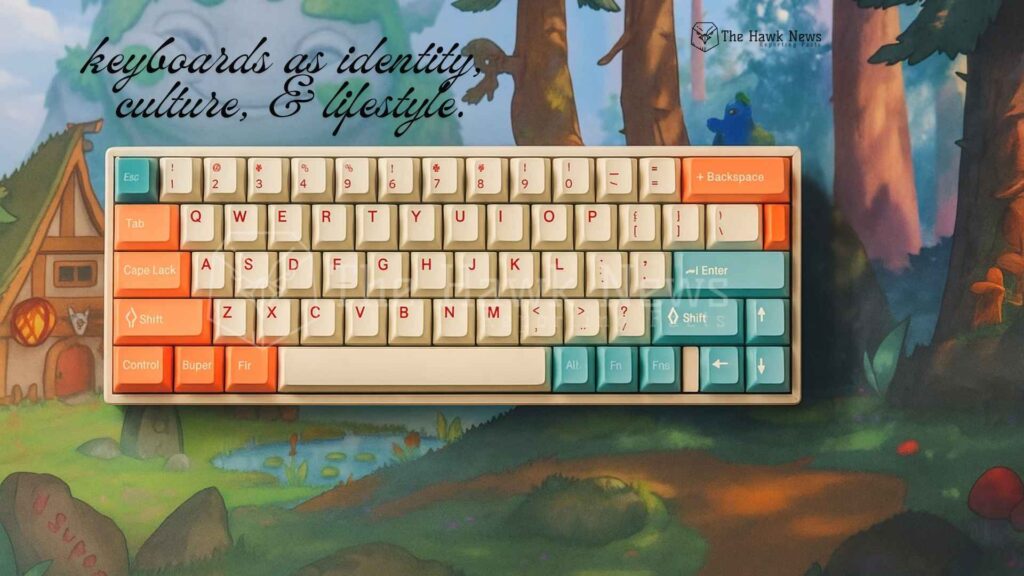
Walk into any modern workspace—or scroll through TikTok, Reddit, or Instagram—and you’ll notice something fascinating: the humble keyboard has transformed.
No longer just a beige plastic slab meant to input text, keyboards have become cultural canvases, lifestyle statements, and even status symbols.
From rainbow-lit gaming rigs to minimalist Scandinavian setups, from anime-inspired artisan keycaps to ergonomic splits, the keyboard has quietly staged a revolution on our desks.
It is no longer just about typing; it’s about identity, self-expression, and culture.
The Keyboard as Identity: Typing Who You Are
For decades, keyboards were invisible—standardized, utilitarian, and identical from one desk to another. But today, personalization has flipped that script.
- Gamers opt for RGB mechanical keyboards with lightning-fast switches.
- Writers and coders seek tactile keys with a nostalgic typewriter “click.”
- Minimalists prefer sleek, low-profile boards in muted shades.
- Collectors spend hundreds—or thousands—on artisan keycaps shaped like dragons, ramen bowls, or galaxies.
The choices go beyond function; they are a way of saying: This is me. This is my style.
In essence, every keystroke is no longer just a mechanical action—it’s an imprint of identity.
The Silent Desk Revolution: From Tools to Lifestyle Icons
The COVID-19 pandemic and the rise of work-from-home culture changed how we see our desks. Suddenly, the home office wasn’t just a functional corner; it was a sanctuary, a creative hub, even a showcase of personality.
The keyboard became central to this transformation. Unlike monitors or CPUs, keyboards are touched every day, a tactile extension of our digital lives. As a result, people started investing in boards that made them feel good, not just work faster.
This shift mirrors what happened with watches, sneakers, or even coffee mugs—objects once ordinary turned into lifestyle markers. The keyboard is now:
- A status symbol (“I own a limited-edition GMK keycap set”).
- A wellness tool (ergonomic designs that prevent strain).
- A creative accessory (matching color schemes with room décor).
In short, keyboards have quietly gone from background objects to frontline lifestyle icons.
Cultural Aesthetics: A Global Language of Keys
Perhaps the most intriguing aspect of keyboard personalization is its deep cultural influence. Around the world, communities have adapted keyboards to reflect their own aesthetics, traditions, and identities.
- Japan & East Asia → Anime-themed keycaps, cherry blossom motifs, and pastel colorways dominate. These keyboards often double as collectibles, merging pop culture with functionality.
- Scandinavian influence → Clean lines, monochrome colors, and functional minimalism reflect the Nordic design philosophy of simplicity and calm.
- American maker culture → DIY mechanical keyboard kits, artisan keycaps, and hobbyist communities thrive, turning typing into craft.
- India & Southeast Asia → Bold colors, intricate motifs, and festival-inspired designs are beginning to emerge, reflecting regional vibrancy.
Keyboards have, in effect, become mirrors of culture, blending global tech with local artistry.
Why Personalization Matters
Skeptics might argue: Why spend so much time or money on something as trivial as a keyboard? But that misses the deeper truth. Personalization is about ownership, creativity, and emotional well-being.
- Psychological uplift → Studies show that customizing tools improves motivation and a sense of belonging.
- Creativity boost → A keyboard that sparks joy encourages people to spend more time creating, coding, or writing.
- Cultural pride → Keyboards adorned with local designs or cultural aesthetics keep traditions alive in digital form.
- Digital self-expression → Just as we curate Instagram feeds or fashion styles, our keyboards have become extensions of our digital identity.
In an age when much of life happens online, the keyboard is the bridge between human thought and digital creation. Why wouldn’t we want it to reflect who we are?
The Future of Personalized Keyboards
Where is this revolution headed? Trends suggest the future of keyboards will only get more personalized, blending function, fashion, and culture.
- Sustainability – Eco-friendly keyboards made of bamboo, recycled plastics, or biodegradable materials will rise as climate awareness grows.
- AI-powered adaptability – Imagine a keyboard that learns your typing style and adjusts sensitivity, lighting, or shortcuts to match your mood.
- Cross-cultural collaborations – Designer brands, artists, and regional craftspeople will increasingly enter the keyboard market, much like sneakers became canvases for art and fashion.
- Health-first designs – With growing awareness about posture and wrist health, ergonomic and split keyboards will go mainstream—but in personalized, stylish forms.
The keyboard of tomorrow won’t just be about what you type—it’ll be about what you stand for.
Conclusion: More Than Keys, It’s Culture
From identity to lifestyle to culture, keyboards have evolved into something far greater than tools. They are silent storytellers of who we are, what we value, and how we belong to a global community.
Every custom keycap, every chosen color scheme, every ergonomic layout whispers a message: This is not just a keyboard. This is me.
So the next time you hear the click of keys, don’t just think of text appearing on a screen. Think of culture being expressed, identities being typed out, and a global revolution that’s rewriting what personalization really means.
In the end, personalization is not about vanity—it’s about humanity. And the humble keyboard, once overlooked, has become one of its most poetic instruments.